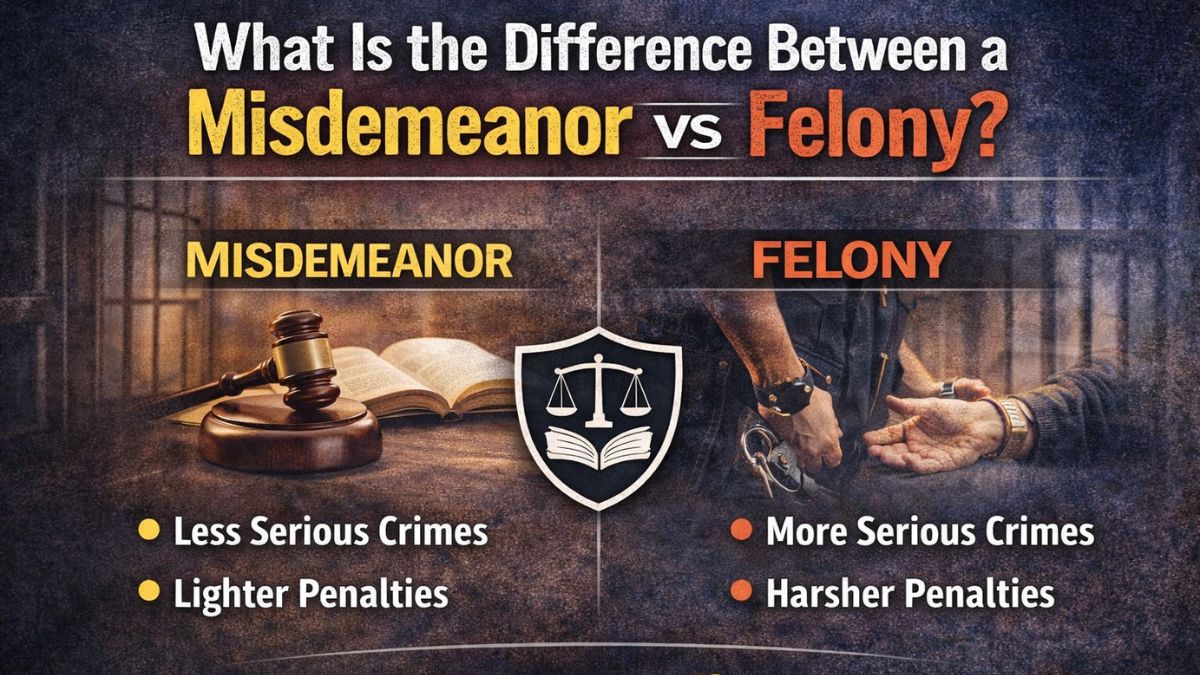
The distinction between a misdemeanor vs felony comes down to the severity of the crime, the potential punishment, and the long-term legal consequences. In plain terms, misdemeanors are less serious criminal offenses typically punishable by up to one year in local jail, while felonies are more serious crimes that can result in more than one year in state or federal prison.
Understanding this difference is not just important for criminal defendants. In real life, the label attached to a charge — misdemeanor vs felony — can determine whether someone keeps their housing, qualifies for employment, or passes a background check. For tenants and landlords alike, classification often has consequences that extend far beyond the courtroom.
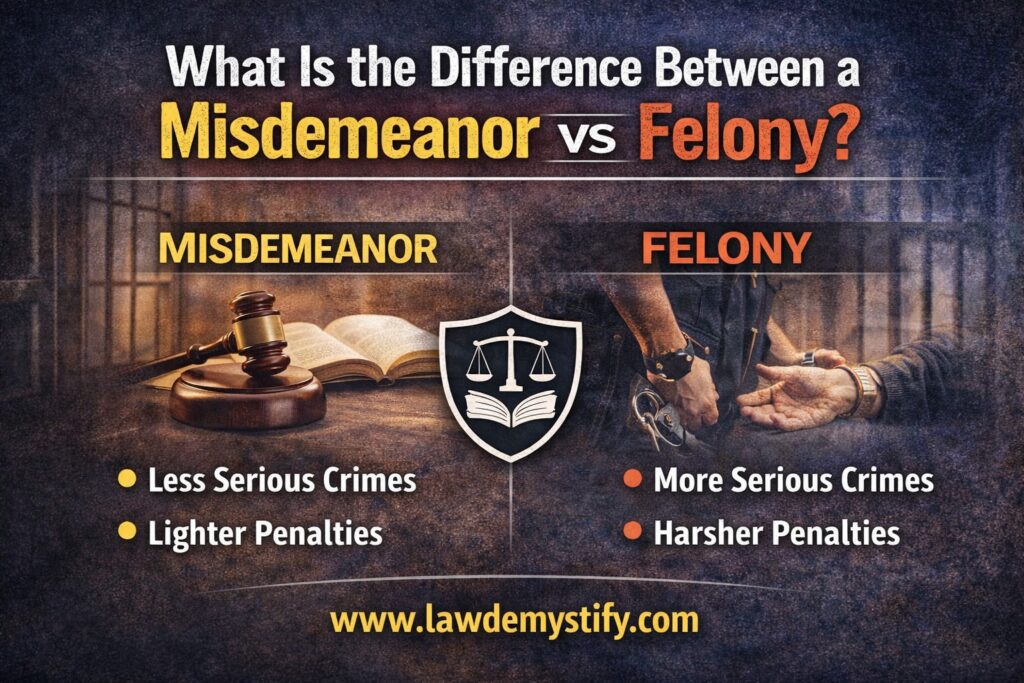
At its core, the difference between misdemeanor and felony is a matter of criminal offense classification under U.S. law. However, the impact extends far beyond the courtroom. Housing law, consumer protection rules, and fair housing regulations often intersect with criminal records in ways that both tenants and landlords must understand.
This guide explains how criminal classifications work, how penalties differ, and how these distinctions affect rental housing, background checks, credit decisions, and legal rights.
Misdemeanor vs Felony: Side-by-Side Comparison
| Category | Misdemeanor | Felony |
| Maximum Jail Time | Up to 1 year (local jail) | More than 1 year (state or federal prison) |
| Severity | Less serious offense | More serious offense |
| Examples | Petty theft, simple assault | Robbery, burglary, aggravated assault |
| Long-Term Consequences | Limited civil restrictions | Possible loss of civil rights, licensing barriers |
| Housing Impact | Often case-by-case review | Frequently triggers stricter screening policies |
| Expungement Possibility | More commonly available | Often restricted or limited |
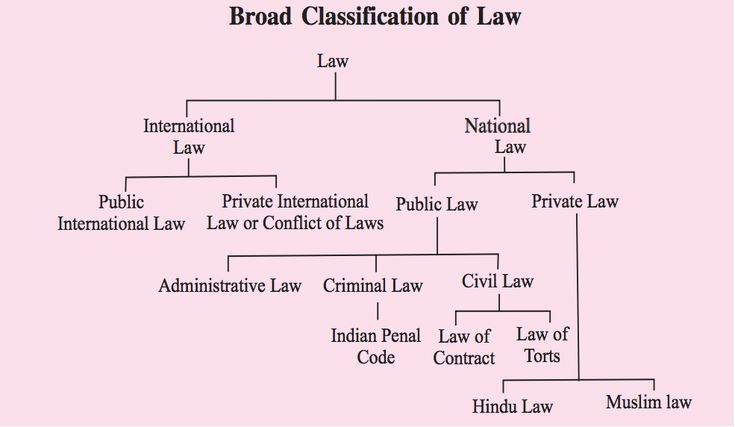
How Criminal Offense Classification Works in the U.S.
In the United States, criminal law operates at both the state and federal levels. Each state defines crimes and penalties in its own statutes, while federal law governs offenses involving interstate commerce, federal property, immigration, or national interests.
Under the broader system of criminal offense classification in the USA, crimes are generally divided into three main categories:
- Infractions (minor violations, often fines only)
- Misdemeanors
- Felonies
The dividing line in a misdemeanor vs felony analysis is usually the length and place of incarceration. If the maximum sentence exceeds one year and is served in prison rather than local jail, the offense is typically classified as a felony.
However, classification can vary significantly by state. What qualifies as a felony in Texas may be charged differently in California or New York. Federal law has its own independent definitions. The U.S. Supreme Court has repeatedly recognized that criminal classifications affect constitutional rights, sentencing exposure, and collateral consequences.
This distinction becomes especially important in housing law because landlords often rely on criminal background checks when screening tenants. Whether an offense is labeled a misdemeanor or felony can determine:
- Eligibility under rental policies
- Compliance with Fair Housing Act guidance
- Risk assessment for property safety
Understanding how classification works helps both tenants and landlords navigate legal compliance responsibly.
What Is a Misdemeanor Offense?
A misdemeanor is a criminal offense considered less serious than a felony but more serious than a civil infraction. When people ask what is a misdemeanor offense, the answer usually involves crimes that carry limited jail time, fines, probation, or community service.
Typical examples include:
- Petty theft
- Simple assault
- Disorderly conduct
- First-time DUI in many states
- Minor drug possession
Most states limit misdemeanor jail time to 12 months or less in county or municipal jail. These limits are central to understanding misdemeanor jail time limits, which vary slightly by jurisdiction but rarely exceed one year.
Misdemeanors are often divided into classes, such as:
- Class A (most serious misdemeanor level)
- Class B
- Class C (often fine-only in some states)
For housing purposes, landlords frequently consider misdemeanor history differently from felony records. However, blanket policies automatically denying applicants for any misdemeanor may raise legal concerns under federal fair housing guidance.
What Is a Felony Charge?
A felony represents the most serious category of criminal offense. When someone asks what is a felony charge, the defining characteristic is the potential for more than one year of incarceration in state or federal prison.
Common felony offenses include:
- Burglary
- Robbery
- Aggravated assault
- Large-scale drug distribution
- Fraud involving significant financial harm
- Certain repeat DUI offenses
Felonies are often categorized into degrees or classes depending on severity. For example:
- First-degree felony (most serious)
- Second-degree felony
- Third-degree felony
Federal felonies follow separate sentencing guidelines based on offense level and criminal history.
In a misdemeanor vs felony comparison, felony convictions carry broader civil consequences beyond incarceration. In practice, a felony conviction can follow a person for years. Individuals often discover that the consequences extend beyond jail time — affecting job offers, housing applications, and professional licenses.
- Loss of firearm rights
- Restrictions on voting (in some states)
- Barriers to professional licensing
- Immigration consequences
- Difficulty obtaining housing
From a rental law perspective, felony records frequently trigger denial under landlord screening policies. However, overly broad policies that automatically exclude anyone with a felony conviction may violate federal anti-discrimination standards.
What Are the Key Differences in Penalties?
The central distinction in felony vs misdemeanor penalties involves incarceration length, supervision terms, fines, and collateral consequences.


Jail vs Prison
Misdemeanor sentences are typically served in local jail facilities. Felony sentences are served in state or federal prisons.
Length of Incarceration
Misdemeanor maximums generally cap at one year. Felony sentences often begin at one year and can extend to decades or even life imprisonment.
Fines
While both categories may involve fines, felony financial penalties are usually higher, especially in cases involving fraud or financial misconduct.
Probation and Supervision
Both misdemeanors and felonies can result in probation. However, felony probation often includes stricter reporting requirements and longer supervision periods.
Long-Term Consequences
This is where the difference between misdemeanor and felony becomes especially significant for tenants and landlords. Felony convictions may:
- Appear prominently on background checks
- Affect insurance underwriting
- Trigger additional compliance obligations for subsidized housing providers
Misdemeanors, while serious, often carry fewer lasting legal restrictions.
How This Works in Real Life
Understanding misdemeanor vs felony classifications becomes critically important in housing situations.
In practice, this usually means a tenant applying for housing may be denied based solely on how an offense is labeled. For example:
A tenant with a five-year-old misdemeanor theft conviction applies for an apartment. The landlord’s policy states that applicants with felony convictions within seven years are automatically denied, but misdemeanors are reviewed individually.
In that scenario, the classification directly determines eligibility.
This becomes especially important when landlords rely on third-party screening companies. Errors in classification can lead to improper denials, which may violate the Fair Credit Reporting Act (FCRA) if adverse action procedures are not properly followed.
For landlords, misclassifying offenses can create legal exposure. Blanket bans on all felonies, without considering nature, severity, and time elapsed, may conflict with federal guidance from the U.S. Department of Housing and Urban Development (HUD).
Example:
A tenant convicted of misdemeanor disorderly conduct five years ago may pass a rental screening if the landlord considers time elapsed and evidence of rehabilitation. However, a recent felony conviction for burglary may trigger additional review due to safety concerns related to property access. The classification influences risk evaluation, but individualized assessment remains essential.
These decisions rarely happen in calm, controlled environments. A housing application may be pending while a criminal background check is being processed. A landlord may be balancing property safety concerns with fair housing compliance. In those moments, understanding the misdemeanor vs felony distinction becomes more than a legal definition — it becomes a risk assessment decision.
Pending Charges vs Convictions: Key Differences
A pending criminal charge is not the same as a conviction. In housing screening, this distinction is critical. A person may be arrested and charged with either a misdemeanor or felony, but until a court enters a conviction, the case remains unresolved.

HUD guidance cautions housing providers against denying applicants solely based on arrests without convictions. Arrest records do not prove criminal conduct and may disproportionately affect certain protected groups.
For tenants, understanding this difference is essential when applying for housing during an ongoing case. For landlords, relying on conviction records rather than mere charges reduces legal risk.
Can a Misdemeanor Become a Felony?
Yes, in certain circumstances, a misdemeanor can escalate. When asking can a misdemeanor become a felony, the answer depends on state law and specific conduct.
Common escalation situations include:
- Repeat offenses (for example, multiple DUI convictions)
- High monetary damage thresholds
- Aggravating factors such as use of a weapon
- Domestic violence with prior convictions
Many states use “wobbler” offenses — crimes that prosecutors may charge either as a misdemeanor or a felony depending on the circumstances.
This flexibility highlights the practical impact of a misdemeanor vs felony classification. A charge initially filed as a misdemeanor may later be amended to a felony if additional evidence emerges.
For tenants, this can significantly affect housing applications during pending cases. For landlords, relying on arrest records rather than convictions can present fair housing risks.
What Is Worse: Felony or Misdemeanor?
When people ask what is worse felony or misdemeanor, the legal system clearly treats felonies as more serious. Felonies carry:
- Longer incarceration
- Greater fines
- More extensive civil restrictions
- Broader reputational impact
However, the real-world impact varies. A misdemeanor involving violence may concern a landlord more than a non-violent felony from many years ago.
In a misdemeanor vs felony analysis, severity is not just about punishment. It also involves collateral consequences — the indirect effects that follow conviction.
For example:
A felony fraud conviction may affect a person’s ability to obtain certain financial services or professional licenses. A misdemeanor disorderly conduct conviction may have minimal long-term impact.
How Long Does a Felony Stay on Your Record?
One of the most common concerns is how long does a felony stay on your record. In most states, felony convictions remain on a criminal record indefinitely unless expunged, sealed, or pardoned.
Expungement eligibility varies widely by state:
- California allows certain non-violent felony reductions.
- Texas provides limited nondisclosure orders.
- Florida restricts sealing of many felony convictions.
- New York offers sealing after ten years under specific conditions.
Federal felony convictions are significantly harder to remove.
In a misdemeanor vs felony context, misdemeanors are generally more likely to qualify for expungement. Felonies often require longer waiting periods or may be ineligible entirely.
For landlords, compliance with the FCRA requires accuracy when reporting criminal history. For tenants, understanding record-clearing options may improve housing opportunities.
How Long Do Background Checks Show Crimes?
While criminal convictions may remain on court records indefinitely, consumer reporting agencies are subject to federal and state limits. Under the Fair Credit Reporting Act (FCRA), non-conviction records generally cannot be reported after seven years. Some states impose additional reporting restrictions.
However, felony convictions may still appear in certain searches beyond seven years, depending on state law and the type of background check performed.
Understanding these reporting limits is especially important for tenants applying for housing and for landlords seeking to comply with federal consumer protection rules.
Many tenants are surprised to learn that even old convictions can appear in certain types of background searches. Likewise, some landlords mistakenly assume they can rely on any report without verifying compliance with federal and state consumer reporting laws. Understanding these limits protects both applicants and housing providers from costly legal mistakes.
How Do Criminal Classifications Affect Rental Housing?
Criminal records intersect with landlord-tenant law in complex ways. The Fair Housing Act prohibits policies that have a discriminatory effect based on race, national origin, or other protected characteristics.
HUD guidance emphasizes that landlords must consider:
- Nature and severity of the offense
- Time elapsed since conviction
- Relevance to resident safety
An automatic denial based solely on a felony label, without individualized assessment, may raise compliance concerns.
The misdemeanor vs felony distinction often forms the foundation of screening policies. However, policies must be narrowly tailored and consistently applied.
Subsidized housing programs, such as public housing or Section 8, may have mandatory exclusions for certain felony convictions, particularly drug-related or violent crimes. These federal requirements differ from private landlord discretion.
Courts have emphasized that housing policies must be based on legitimate safety interests rather than assumptions tied solely to criminal labels.
Federal vs State Authority in Criminal Classification
Criminal law authority is divided between state and federal systems.
State law governs most crimes affecting rental housing, such as assault, theft, or property damage. Federal law applies to offenses like interstate fraud, large-scale drug trafficking, or crimes on federal property.
In a misdemeanor vs felony comparison, classification depends on the jurisdiction prosecuting the case.
For example:
- A federal fraud case involving wire transfers across state lines may result in a felony under federal sentencing guidelines.
- A similar low-value fraud confined to one state may be charged as a misdemeanor under state law.
Housing providers operating in multiple states must understand these differences to ensure consistent compliance.
Common Mistakes People Make About Criminal Classification
Many tenants and landlords misunderstand how classification works.
One common mistake is assuming all felonies are violent. Many felony convictions involve non-violent financial crimes.
Another mistake is believing misdemeanors never affect housing eligibility. Some misdemeanor offenses, particularly those involving violence or property damage, may raise legitimate safety concerns for housing providers.
A third mistake is failing to follow proper adverse action procedures when denying housing based on criminal history. Under federal consumer protection law, applicants must receive proper notice if a background report influences a denial.
Misunderstanding the misdemeanor vs felony distinction can therefore create legal and financial consequences for both parties.
What Are the Long-Term Consequences of a Felony Conviction?
When evaluating misdemeanor vs felony, the long-term effects of a felony conviction are typically more extensive. These felony conviction consequences may include loss of civil rights, professional licensing barriers, immigration impacts, and reduced access to credit.
In housing, some landlords view felony convictions as indicators of risk. However, federal guidance discourages overly broad exclusions that fail to consider individual circumstances.
The severity of consequences often depends on:
- State restoration laws
- Type of offense
- Time since completion of sentence
- Evidence of rehabilitation
Understanding these factors allows for more accurate and lawful housing decisions.
Frequently Asked Questions
Does a misdemeanor show up on a background check?
Yes. Most criminal background checks report both misdemeanors and felonies, subject to state reporting limits and federal consumer reporting laws.
Can a landlord deny housing for a past felony?
Landlords may consider felony convictions, but policies must comply with fair housing laws and avoid discriminatory impact.
Are all felonies punishable by prison time?
Felonies carry potential prison sentences exceeding one year, though some cases result in probation instead of incarceration.
Can a felony be reduced to a misdemeanor?
In some states, certain offenses may be reduced after sentencing or through post-conviction relief procedures.
Do misdemeanor convictions affect professional licenses?
They can, depending on the nature of the offense and the licensing authority’s regulations.
Is expungement available for felony convictions?
Eligibility varies widely by state, and many serious felonies cannot be expunged.
Are federal felony rules different from state felony rules?
Yes. Federal offenses follow federal statutes and sentencing guidelines, which operate independently from state criminal systems.
Final Educational Note
Understanding misdemeanor vs felony distinctions is essential for tenants, landlords, and consumers navigating housing and financial systems. Criminal classification affects incarceration exposure, record permanence, and collateral consequences that extend into rental eligibility and consumer rights.
Because criminal laws and housing regulations vary by state and evolve over time, individuals should consult qualified legal professionals or authoritative state resources for guidance tailored to their specific circumstances.
This guide is intended for educational purposes only and does not provide legal advice or guarantee any particular outcome.