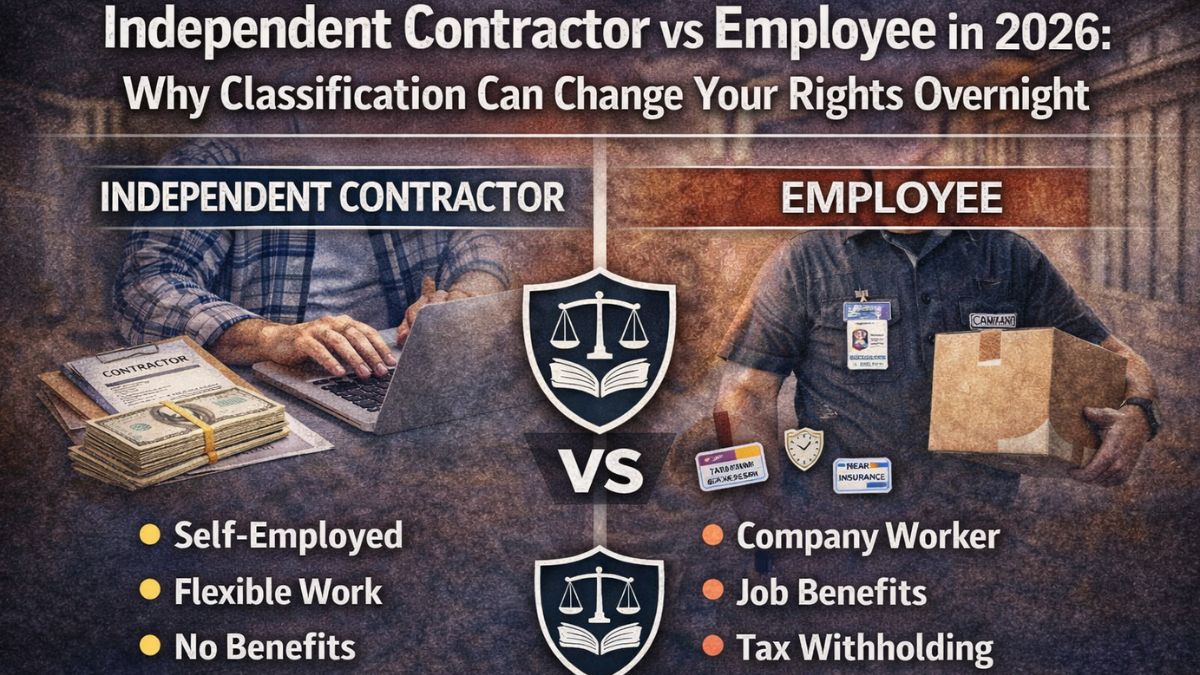
When a Job Title Quietly Changes Everything
Jone works full-time for a logistics company. He reports to a supervisor every day, follows company procedures, and depends on this job for his income.
But on paper, the situation looks different. He is labeled an “independent contractor.”
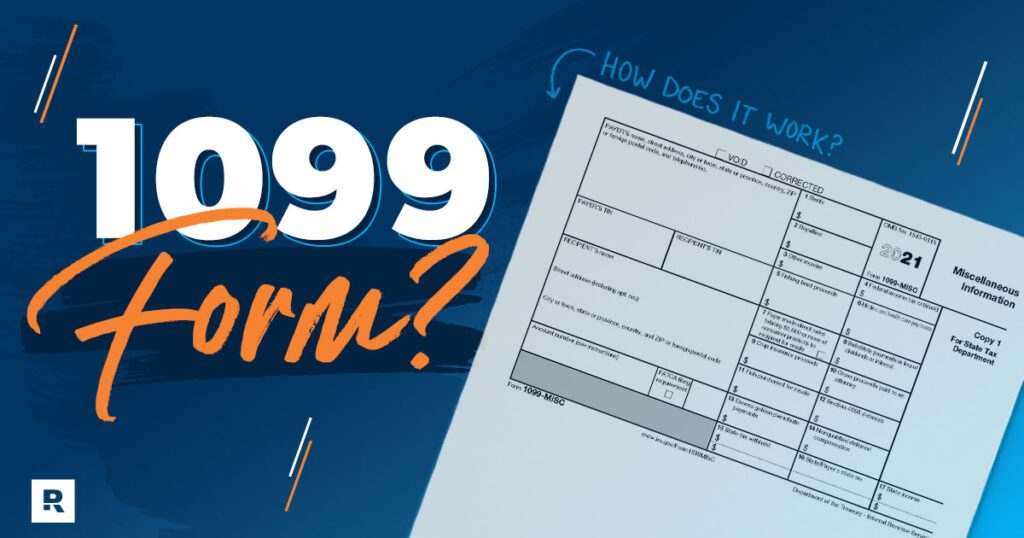
He receives a 1099 form, not a W-2. He receives no overtime pay and no guaranteed minimum wage. No unemployment insurance. No workers’ compensation coverage.
When his hours are cut and he asks about overtime pay, the company responds: “You’re a contractor. Overtime doesn’t apply to you.”
That single label — contractor instead of employee — can change nearly every workplace protection.
And in 2026, worker classification disputes remain one of the fastest-growing areas of employment litigation.
In practice, many workers only discover a classification problem after something goes wrong — an injury, unpaid overtime, or a sudden termination. At that point, the label on tax paperwork suddenly becomes a major legal issue.
The critical legal question is not what your company calls you. The question is what the law considers you to be.
How Misclassification Removes Legal Protections
Worker classification determines whether you are protected by laws such as:
- Fair Labor Standards Act of 1938 (minimum wage and overtime)
- National Labor Relations Act of 1935 (right to organize)
- Title VII of the Civil Rights Act of 1964 (anti-discrimination protections)
- Americans with Disabilities Act of 1990 (disability protections)
Independent contractors generally do not receive these protections.
Employees generally do. That distinction has practical consequences, including:
- Overtime eligibility
- Minimum wage guarantees
- Payroll tax contributions
- Unemployment benefits
- Workers’ compensation
- Anti-discrimination protections
- Family and medical leave rights
Misclassification can mean the loss of thousands of dollars in wages and benefits.
Labels Don’t Control — Legal Tests Do
Employers sometimes assume that issuing a 1099 form automatically makes someone an independent contractor.
It does not.
Courts and agencies apply legal tests to determine classification. The most influential federal framework comes from the U.S. Department of Labor’s interpretation of the Fair Labor Standards Act of 1938, which focuses on the “economic reality” of the relationship.
Common factors include:
- Degree of control over work
- Opportunity for profit or loss
- Permanence of the relationship
- Level of skill required
- Investment in equipment or tools
- Whether the work is integral to the business
If a worker is economically dependent on the company, they are more likely to be considered an employee — regardless of contract language.
The 2026 Landscape: Increased Scrutiny
Federal and state agencies continue to increase enforcement against misclassification, particularly in industries such as:
- Logistics
- Construction
- Gig economy platforms
- Healthcare staffing
- Technology services
Some states apply stricter standards than federal law. For example, California uses a version of the “ABC test” in many contexts, which makes it more difficult to classify workers as independent contractors.
As a result, a worker may be considered:
- A contractor under one federal standard
- An employee under state wage law
- Something different for tax purposes
Classification is not always uniform across legal systems.
Why Companies Misclassify Workers
Misclassification may occur intentionally or unintentionally. Motivations can include:
- Avoiding payroll taxes
- Reducing overtime costs
- Limiting benefit obligations
- Increasing operational flexibility
However, misclassification can lead to:
- Back pay liability
- Liquidated damages
- Civil penalties
- Attorney’s fees
- Class or collective action lawsuits
For employers, the financial exposure can be significant.
If You Suspect Misclassification
If your day-to-day work resembles that of a traditional employee — fixed schedule, supervision, company-provided tools, long-term engagement — but you are labeled a contractor, the label alone does not settle the issue.
You may consider:
- Reviewing your contract terms
- Comparing your role to statutory classification factors
- Consulting an employment attorney
- Filing a complaint with the U.S. Department of Labor
- Evaluating potential state-law remedies
Reclassification can sometimes result in recovery of unpaid overtime, minimum wages, and related damages.
The Core Principle
Worker classification is not about job titles. It is about economic reality and legal standards.
In 2026, that distinction can change your rights overnight — from protected employee to unprotected contractor — or vice versa.
Understanding the difference is not just technical.
It determines whether workplace law protects you at all.
Why Legal Status Changes Everything
Worker classification determines whether core workplace protections apply to you.
If you are legally classified as an employee, you are generally entitled to protections such as:
- Minimum wage under the Fair Labor Standards Act of 1938
- Overtime pay for eligible hours worked beyond 40 per week
- Anti-discrimination protections under laws like Title VII of the Civil Rights Act of 1964
- Workers’ compensation coverage for on-the-job injuries (under state law systems)
- Unemployment insurance benefits if you lose your job
If you are legally classified as an independent contractor, most of those protections do not apply.
Typically:
- You are responsible for paying your own self-employment taxes.
- You are not covered by federal overtime and minimum wage protections.
- You are not entitled to unemployment insurance.
- You are generally outside the scope of many employment statutes.
This is why misclassification is such a serious legal issue.
For employers, classifying workers as contractors can reduce payroll taxes, overtime obligations, benefit costs, and administrative burdens.
For workers, that same classification can eliminate fundamental rights and financial safeguards.
The legal difference is not symbolic. It determines whether workplace law protects you — or leaves you largely on your own.
The Legal Test: It’s About Control
Courts do not rely on job titles or contract labels. They examine the reality of the working relationship.
Under federal wage law, the central question is economic dependence. The U.S. Department of Labor interprets the Fair Labor Standards Act of 1938 using what is commonly known as the “economic reality test.”
The core inquiry is straightforward:
Is the worker operating an independent business — or are they economically dependent on the company?
Key Factors Courts Consider
No single factor determines the outcome. Instead, courts apply a totality-of-the-circumstances analysis, weighing multiple elements together.
Common factors include:
- Degree of control the company exercises over how and when the work is performed
- Opportunity for profit or loss based on the worker’s managerial skill
- Level of skill and initiative required
- Permanence of the relationship
- Worker’s investment in equipment or materials
- Whether the work is integral to the company’s business
Control Is Often Central
If the company sets schedules, supervises daily work, restricts outside clients, and integrates the worker into core operations, those facts may suggest employee status.
By contrast, a worker who:
- Sets their own hours
- Negotiates pricing
- Markets services to multiple clients
- Bears business risk
is more likely to be viewed as an independent contractor.
No Single Factor Controls
Courts repeatedly emphasize that classification is not mechanical. A worker might satisfy some contractor factors and some employee factors. The final determination depends on the overall economic reality of the relationship.
The question is not what the contract says.
The question is who truly controls the work — and whether the worker is running a business or working as part of one.
What Real Independence Looks Like
A true independent contractor operates an independent business — not simply under a different label.
Typically, a genuine contractor:
- Sets their own schedule
- Works for multiple clients
- Uses their own tools and equipment
- Controls how the work is performed
- Bears the risk of profit or loss
This model reflects business independence rather than economic dependence.
For example, a freelance graphic designer who contracts with several companies, negotiates rates, invoices clients, and decides how projects are completed is more likely to qualify as an independent contractor under the standards applied to the Fair Labor Standards Act of 1938.
But if that same designer:
- Works exclusively for one company
- Follows strict internal policies and daily supervision
- Uses company-provided systems
- Has no independent marketing or client base
classification becomes legally questionable.
The closer the relationship resembles traditional employment — ongoing, supervised, and economically dependent — the more likely the law will treat the worker as an employee, regardless of contract language.
True independence is defined by operational control and economic risk — not simply by receiving a 1099 form.
The Gig Economy Complication
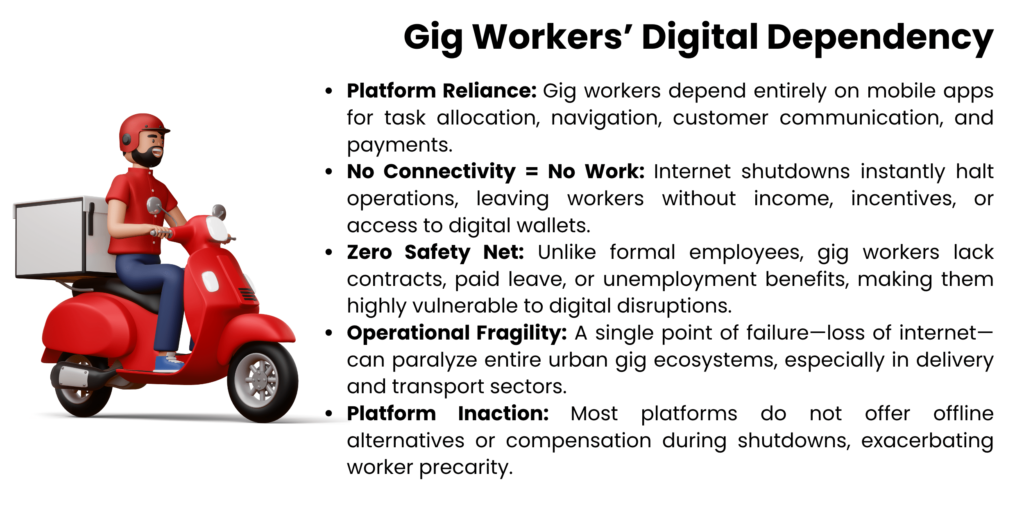
Ride-share drivers, delivery workers, and app-based service providers have significantly blurred traditional classification lines.

Companies often argue that gig workers function as independent contractors because they:
- Choose when to log in
- Decide how long to work
- Can theoretically reject certain assignments
Workers, however, argue that modern platform structures create a different reality. Algorithmic management systems can:
- Control pricing
- Assign or restrict work opportunities
- Monitor performance metrics
- Impose deactivation policies
When pricing, access to customers, and continued platform access are tightly controlled, workers may contend that this resembles employer-level control — even without a traditional supervisor.
State Law Variations
States vary widely in how they evaluate gig worker classification.
Some states apply stricter “ABC tests,” which make it more difficult for companies to classify workers as independent contractors. For example, California has adopted an ABC-style framework in many wage contexts, placing a heavier burden on businesses to justify contractor status.
Other states continue to apply balancing tests similar to the federal “economic reality” analysis under the Fair Labor Standards Act of 1938.
A Compliance Patchwork
This legal patchwork creates complexity for companies operating nationwide. A worker could be:
- A contractor under one state’s law
- An employee under another state’s wage statute
- Treated differently again for tax purposes
For gig workers, the classification question often turns on how much real independence exists beneath the technology layer.
In the modern economy, control does not always look like a supervisor standing nearby. It can be embedded in algorithms, rating systems, and platform rules.
And courts increasingly examine that reality.
Real-World Misclassification Scenario
Consider a construction company that hires workers but labels them as “independent contractors.”
In practice, however, the company:
- Sets their daily schedule
- Requires company uniforms
- Provides tools and equipment
- Prohibits working for competitors
- Pays them weekly
Despite the contractor label, these workers function operationally like employees.
Under the standards applied to the Fair Labor Standards Act of 1938, courts examine the economic reality of the relationship — not the wording of the contract. When a company exercises substantial control and integrates workers into its core business, employee status becomes more likely.
If challenged, a court or agency may reclassify the workers as employees.
Potential Financial Consequences of Reclassification
Reclassification can trigger significant liability, including:
- Unpaid overtime compensation
- Minimum wage violations
- Employer payroll tax obligations
- Workers’ compensation premiums and penalties
- Possible liquidated damages and attorney’s fees
For employers, misclassification exposure can multiply quickly — especially if multiple workers are affected.
Misclassification is not merely a technical paperwork issue. It can reshape wages, benefits, and long-term financial stability.
It is a legal determination with real financial consequences for businesses and real rights implications for workers.
Why Companies Misclassify
Misclassification happens for different reasons. Sometimes it is intentional cost-cutting. Classifying workers as independent contractors can reduce payroll taxes, overtime obligations, benefit expenses, and administrative burdens.
Other times, it is a simple misunderstanding. Small and mid-sized businesses often rely on informal advice or industry habits, assuming that if others classify workers as contractors, it must be legally acceptable. That assumption can be costly.
Small businesses frequently assume that issuing a 1099 form automatically makes someone an independent contractor. That assumption is legally incorrect.
Tax classification standards applied by the Internal Revenue Service are related to — but not identical with — labor law standards applied under the Fair Labor Standards Act of 1938.
Different agencies evaluate different legal questions:
- The IRS focuses on tax withholding and reporting obligations.
- The U.S. Department of Labor focuses on wage-and-hour protections.
- State agencies may apply their own statutory tests for unemployment insurance or workers’ compensation.
As a result, a worker could be treated one way for tax purposes and another way under wage law.
One label does not control every legal context.
Classification depends on the governing statute and the factual reality of the working relationship — not just the form issued at year-end.
What Courts Actually Examine
Courts focus on the reality of the working relationship, not just what a contract says.
Even if you signed an agreement labeling you as an independent contractor, that label alone does not automatically determine your status. Judges look at how the work is actually performed.
Key questions courts typically ask include:
- Who controls your daily work?
- Can you realistically work for other clients or companies?
- Are you performing tasks integral to the company’s core operations?
- Do you operate your own business independently, or are you economically dependent on the company?
If the company dictates schedules, methods, and key operational aspects, courts are more likely to classify the worker as an employee — regardless of contractual language.
The central principle is clear: substance outweighs form.
Contracts can suggest intent, but courts weigh economic reality and control over titles and paperwork.
Remote Work and Digital Control
In 2026, employer control often occurs digitally rather than physically.
Companies may:
- Monitor login times and active system usage
- Track productivity through software platforms
- Assign and manage tasks digitally
- Restrict outside clients or competing work through platform rules
Even without a supervisor physically present, these forms of digital oversight can demonstrate employer-level control. Courts increasingly recognize that algorithmic management and platform policies are relevant in determining worker classification.
Financial Consequences of Misclassification
When workers are reclassified as employees, the financial stakes for employers can be significant:
- Back pay for overtime
- Adjustments for minimum wage violations
- Liquidated damages equal to unpaid wages in some cases
- Payroll tax liability (employer portion of Social Security, Medicare, and unemployment taxes)
- Civil penalties for willful violations
If multiple workers are affected, disputes often escalate into collective or class actions, which can multiply exposure.
Misclassification is not only a legal risk — it can reshape entire business models and increase operational costs significantly.
For Workers: Warning Signs You May Be Misclassified
Certain patterns in your work may indicate that you are economically dependent rather than truly independent. Watch for these warning signs:
- You work exclusively for one company
- You must follow strict schedules set by the company
- You cannot negotiate your rates or payment terms
- You have little independent decision-making over how work is performed
- Your work is integral to the company’s core operations
If several of these factors apply, your classification may warrant closer legal scrutiny.
Emotional Reality: Why Workers Hesitate to Challenge
Even when misclassification seems obvious, many workers hesitate to raise concerns. Common reasons include:
- Fear of losing current contracts or income
- Dependence on the employer for livelihood
- Lack of understanding of legal rights and protections
- Concern about retaliation, even though laws prohibit it
Recognizing these emotional and practical barriers is important. Understanding your legal rights is the first step toward making informed decisions about challenging misclassification or seeking reclassification remedies.
Many workers tolerate questionable classification for years because steady income feels more urgent than legal accuracy. Unfortunately, the financial consequences often surface only after the relationship ends.
What Happens When You Challenge Your Classification
Most misclassification disputes do not start in a courtroom. They usually begin quietly:
- A worker notices unpaid overtime
- Someone compares paychecks or tax forms
- A former contractor applies for unemployment benefits and is denied because the company reported them as self-employed
These events often trigger questions about proper classification.
If a worker believes they have been misclassified, there are typically three paths forward:
- Filing a complaint with the U.S. Department of Labor (DOL)
- The Wage and Hour Division investigates wage violations, including misclassification tied to overtime, minimum wage, and related protections.
- The DOL can audit payroll records, interview witnesses, and calculate unpaid wages.
- Filing a complaint with the Internal Revenue Service (IRS)
- The IRS evaluates whether a worker was improperly classified for tax purposes, focusing on control and independence.
- While tax classification is a separate issue, it often overlaps with labor law analysis.
- Filing a private lawsuit in federal or state court
- Workers may sue individually or collectively when multiple individuals are similarly misclassified.
- Private litigation can seek unpaid wages, benefits, liquidated damages, and attorney’s fees.
The chosen path often depends on:
- The number of workers affected
- The amount of potential back pay and benefits
- Strategic considerations, including timing and evidence
Challenging classification can be complex, but it is often the only way to secure employee rights and compensation.
The Financial Impact of Reclassification
When a court determines that a worker labeled as a contractor should have been classified as an employee, the financial consequences for the employer can be substantial.
Key Liabilities
- Unpaid wages and overtime
- Employers may owe back pay going back two years under federal law, or three years if the violation is deemed willful.
- The statute of limitations for wage claims under the Fair Labor Standards Act of 1938 governs the recovery period.
- Employers may owe back pay going back two years under federal law, or three years if the violation is deemed willful.
- Liquidated damages
- Courts often award liquidated damages equal to unpaid wages, effectively doubling the employer’s liability.
- Courts often award liquidated damages equal to unpaid wages, effectively doubling the employer’s liability.
- Payroll taxes and benefits contributions
- Employers may owe back payroll taxes, unemployment insurance contributions, and workers’ compensation premiums.
- Collective exposure
- If dozens or hundreds of workers were misclassified, liability multiplies, often leading to collective or class action lawsuits.
Why Misclassification Cases Escalate Quickly
Even small misclassification errors can compound over time and across multiple workers. The combination of unpaid wages, liquidated damages, and additional employer obligations means financial exposure can be massive — sometimes exceeding the company’s short-term cost savings from misclassification.
Proper classification is therefore both a legal requirement and a financial necessity for employers operating in multiple jurisdictions.
Real Litigation Example: The Domino Effect
Consider a regional delivery company that classifies all drivers as independent contractors.
In reality, the drivers:
- Wear company-branded uniforms
- Follow fixed delivery routes
- Must accept assignments from a central dispatch system
- Cannot negotiate rates
- Cannot work for competitors
One driver files a complaint.
An investigation uncovers that every driver operates under the same conditions. The case escalates into a collective action, exposing the company to:
- Unpaid overtime and minimum wage claims
- Penalties for payroll tax underreporting
- Potential liquidated damages and attorney’s fees
What began as a single complaint transforms into a structural business problem, highlighting how misclassification issues can ripple through an entire organization.
Employer Defenses: How Companies Respond
Employers rarely admit misclassification outright. Common defenses include:
- Arguing that workers maintained control over schedules or could theoretically work for other clients
- Emphasizing contract language stating the worker agreed to independent status
- Citing industry norms, noting that similar companies classify workers the same way
However, courts consistently hold that labels and contracts do not override economic reality.
The legal focus is practical:
- Who truly controls the work?
- Who is economically dependent on whom?
If the company dictates the essential aspects of the work and the worker is financially dependent, employee classification is likely — regardless of paperwork.
Retaliation Risks
Raising concerns about misclassification or wage issues can sometimes create tension between workers and employers.
Common retaliation scenarios include:
- Reduction in assignments or hours
- Termination of contracts shortly after complaints
- Negative performance evaluations following complaints
Under federal law, retaliation for asserting wage and labor rights is unlawful. For example:
- If a worker complains about unpaid overtime and is terminated soon afterward, that may give rise to a separate retaliation claim, independent of the underlying misclassification issue.
Protecting Yourself
Documentation is critical for protection:
- Keep records of emails, messages, and calls related to complaints
- Track dates and timelines of any adverse employment actions
- Maintain copies of pay stubs, schedules, and contracts
Clear documentation strengthens your position if a dispute escalates to a government agency complaint or legal action.
The Gig Economy in 2026: A Legal Crossroads
Gig platforms remain at the center of worker classification debates.
- Some states have adopted stricter standards that make it harder for companies to classify gig workers as independent contractors.
- Other states continue to follow more flexible or federal-style tests.
Courts increasingly examine whether algorithmic control — including:
- Pricing rules
- Rating systems
- Deactivation policies
— functions like traditional employer supervision.
While technology has transformed how work is performed, the legal principles remain the same: courts focus on control and economic dependence.
As the gig economy grows, classification disputes are likely to remain a significant legal issue.
What Workers Should Ask Themselves
Before challenging classification, workers should assess the economic reality of their relationship with the company:
- Do you set your own rates or accept company-determined pricing?
- Can you freely work for multiple clients or companies?
- Do you invest in your own tools, marketing, and business infrastructure?
- Or do you rely primarily on one company for income and follow their rules daily?
The more economically dependent the relationship, the stronger the argument that you may be legally an employee, entitled to wage protections and benefits.
Emotional Reality: The Fear Factor
Many workers hesitate to challenge misclassification, even when it affects wages and benefits. Common reasons include:
- Fear of losing income or current contracts
- Signed agreements they may not fully understand
- Feeling replaceable or powerless within the company
However, remaining silent can allow long-term underpayment and missed protections to continue.
Why Understanding Matters
- Recognizing misclassification is not about confrontation, but about clarity and informed decision-making.
- In some cases, employers voluntarily correct mistakes once concerns are raised.
- In other situations, formal action — such as a complaint with the Department of Labor, IRS, or a lawsuit — may be necessary to secure rights.
The key is awareness and documentation, which allow workers to make strategic choices without unnecessary risk.
Frequently Asked Questions – Independent Contractor vs Employee
Does signing a contractor agreement make me a contractor?
No. Courts focus on actual working conditions, not just the labels or contracts used by the company.
Can I recover overtime if I was misclassified?
Yes. If you were legally an employee and worked overtime without proper pay, you may be entitled to back wages.
How far back can I recover unpaid wages?
Under federal law, typically two years, or three years for willful violations. State laws may allow longer recovery periods.
Can I be fired for questioning classification?
No. Retaliation for asserting wage and labor rights is generally unlawful under federal and state laws.
Does working remotely affect classification?
Yes. Location and digital oversight may influence whether a worker is economically dependent. Remote work does not automatically make someone a contractor.
Can misclassified workers claim benefits like unemployment or workers’ compensation?
Potentially. If reclassified as an employee, workers may be eligible for benefits retroactively, including unemployment insurance, workers’ compensation, and retirement contributions.
How do state laws impact classification?
Some states have stricter tests (like the ABC test in California) that make it harder for companies to label workers as contractors. Classification can vary by state.
What should I do if I suspect misclassification?
Keep detailed records of hours, assignments, communications, and contracts. Consider filing a complaint with the Department of Labor, IRS, or a state agency, and consult an employment attorney for guidance.
Why Classification Defines Workplace Rights
The distinction between independent contractor and employee is far from semantic.
It determines whether you are entitled to:
- Minimum wage protections
- Overtime pay
- Unemployment benefits
- Workers’ compensation
In 2026, classification disputes highlight a broader tension between flexible business models and worker protections.
For Employers
- Careful legal analysis is essential before labeling workers as contractors.
- Misclassification can result in substantial financial and legal liability.
For Workers
- Understanding economic dependence versus true independence is the first step toward safeguarding rights.
- Job titles alone do not define legal status; the reality of the working relationship does.
In many cases, classification disputes are not resolved by labels or assumptions, but by documentation, economic realities, and careful legal analysis. What feels like a simple tax designation can ultimately determine whether workplace law protects you at all.
Classification is about substance, not paperwork — and in the modern workplace, reality determines rights.
Courts and agencies will always examine the facts behind the label — not just the paperwork.