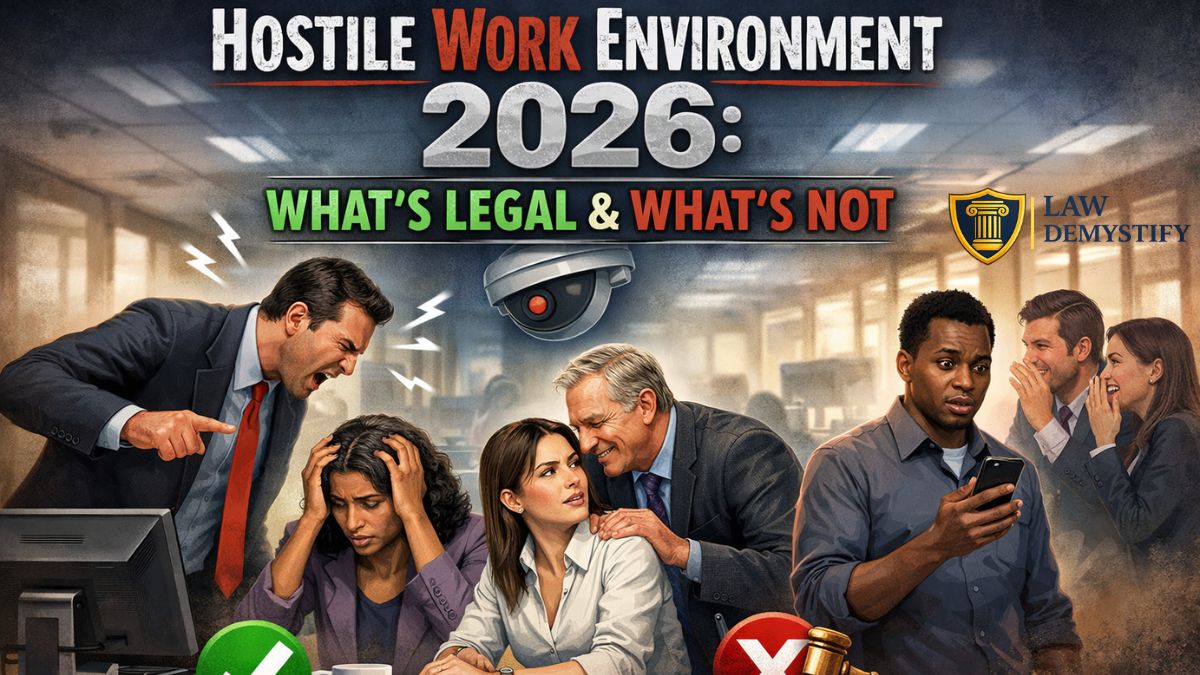
Not Every Toxic Workplace Is Illegal

If you’ve ever felt uncomfortable, disrespected, or mentally exhausted at work, you’re not alone. Many employees assume that a toxic workplace automatically means something illegal is happening.
But in reality, the law draws a very clear line — and not every unfair or stressful situation crosses it.
Hostile work environment law does not regulate bad management, personality conflicts, or rude coworkers. It specifically addresses harassment that is severe or pervasive and based on a protected characteristic.
Many employees experience workplace hostility, but only certain types of behavior rise to the level of unlawful harassment. Understanding this distinction is critical before filing a complaint or pursuing legal action.
What Is a Hostile Work Environment?
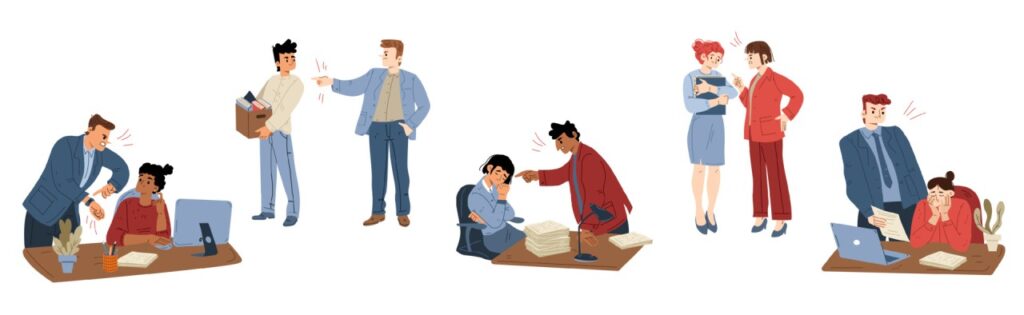
In real life, this often doesn’t start as something obvious. It usually builds slowly — comments, jokes, behavior — until the environment becomes difficult to tolerate.
A hostile work environment is a form of unlawful harassment under federal anti-discrimination law. It occurs when:
- Harassing conduct is based on a protected characteristic
- The conduct is severe or pervasive
- The behavior that alters the terms or conditions of employment
Protected characteristics include:
- Race
- Sex (including pregnancy and gender identity)
- Religion
- National origin
- Disability
- Age (40 and older)
- Others recognized under federal or state law
These protections are enforced primarily by the Equal Employment Opportunity Commission (EEOC).
The key legal standard is “severe or pervasive.” Courts consider both frequency and intensity when determining whether a hostile work environment exists.
Severe vs. Pervasive: When One Incident May Be Enough
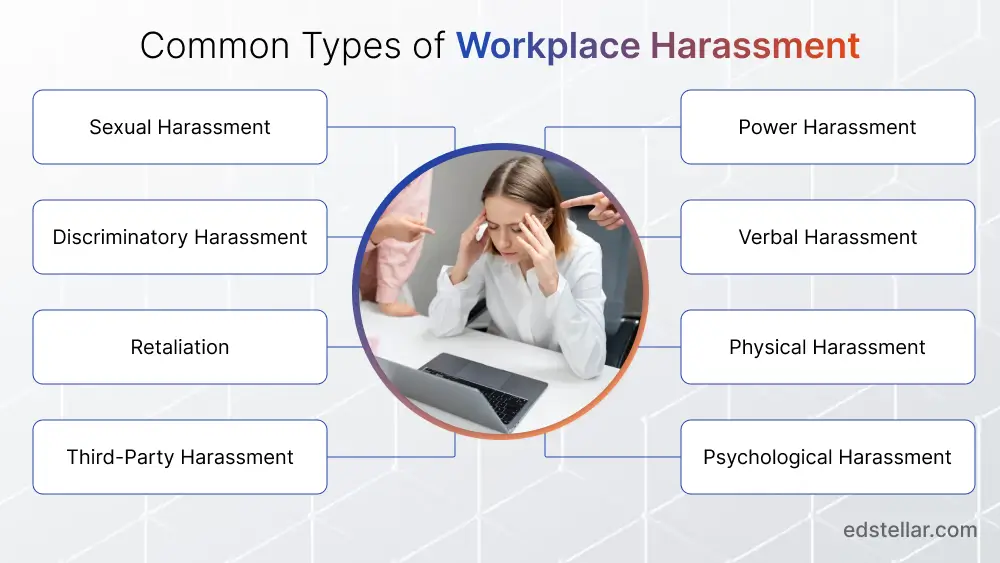
In many cases, employees ignore early signs, thinking “it’s just part of the job.” But legally, patterns matter — and what seems small in isolation can become serious over time.
Most hostile work environment claims involve repeated conduct over time.
However, in certain situations, a single incident can be sufficient if it is extremely severe. Examples include:
- Physical assault
- A serious racial slur combined with a threat
- Sexual coercion by a supervisor
Courts evaluate the context and impact. A single offensive joke usually does not meet the legal threshold, but repeated offensive jokes over months might.
The law focuses on whether the work environment became objectively hostile, not just personally uncomfortable for the employee.
Objective and Subjective Standards
Courts apply a two-part test when evaluating hostile work environment claims:
- Subjective perception: Did the employee personally perceive the environment as hostile?
- Objective standard: Would a reasonable person in the same position also find the environment hostile?
Both elements must be satisfied:
- If the employee was not personally affected, the claim fails.
- If the employee was sensitive but a reasonable person would not view the conduct as hostile, the claim also fails.
This objective standard ensures that every workplace disagreement or minor conflict does not trigger litigation, focusing legal protection on truly unlawful harassment.
This is why two people can experience the same situation differently — but the law ultimately focuses on what a reasonable person would feel, not just individual perception.
Conduct That Commonly Leads to Hostile Work Environment Claims
In real workplaces, harassment rarely looks dramatic at first. It often appears in everyday interactions like:
Hostile work environment claims often arise from repeated or severe conduct, such as:
- Repeated racial or ethnic slurs
- Sexually explicit comments or jokes
- Unwanted touching or sexual advances
- Mocking religious beliefs or practices
- Ridicule based on disability
- Displaying offensive imagery in the workplace
Context matters. The legal weight of the conduct depends on:
- Frequency and severity
- Power dynamics between the parties
- The role of the harasser (supervisor vs. coworker)
Conduct by a supervisor carries higher legal risk than similar behavior by coworkers due to the potential for direct employer liability.
The Supervisor Factor

From a practical standpoint, employees often hesitate to report supervisors due to fear of retaliation — which is why these cases are taken more seriously under the law. When a supervisor creates a hostile environment, the employer may be directly liable.
- If the harassment leads to a tangible employment action (e.g., demotion, termination, or pay reduction), the employer is often strictly liable.
- If no tangible action occurs, employers can defend themselves by showing:
- They exercised reasonable care to prevent and correct harassment, and
- The employee unreasonably failed to use internal complaint procedures.
This “preventive care plus reporting” defense framework has been a cornerstone of court decisions for decades, shaping how hostile work environment claims are evaluated.
Coworker Harassment
Many cases become weak simply because nothing was formally reported. Even a simple email complaint can make a significant difference later.
When harassment originates from a coworker rather than a supervisor, the legal standard for employer liability is different:
- Employers are liable only if they knew or should have known about the harassment and failed to take prompt corrective action.
- This makes reporting harassment critical.
- Documentation of complaints—emails, messages, or formal reports—often determines the strength of a claim.
Without reporting, proving employer liability becomes significantly more difficult.
Remote Work and Digital Harassment
With remote work becoming normal in 2026, many employees don’t realize that inappropriate behavior online is treated the same as in-person misconduct.
Harassment is not limited to physical offices in today’s hybrid work environment. Examples include:
- Offensive messages on Slack or Teams
- Sexual comments during Zoom or virtual meetings
- Discriminatory jokes in group chats or social media work platforms
Courts increasingly recognize that digital communication platforms are extensions of the workplace.
- If harassment occurs through employer-controlled communication systems, it may support a hostile work environment claim.
- While the medium may be virtual, the legal standards remain the same: the conduct must be severe or pervasive and based on a protected characteristic.
Real-World Scenario: When It Feels Wrong — But Isn’t Illegal
An employee faces occasional rude comments and micromanagement that are unrelated to any protected characteristic.
- The manager criticizes performance harshly and creates stress.
- The employee feels targeted and uncomfortable.
Legal reality: Unless the conduct is tied to race, gender, religion, disability, or another protected characteristic, it does not qualify as unlawful harassment.
Unfair treatment, general stress, or personality conflicts alone are not enough to support a hostile work environment claim.
Real-World Scenario: When the Line Is Clearly Crossed
An employee is repeatedly subjected to racial slurs by coworkers.
- The employee reports the conduct.
- Management dismisses the complaint as “just joking.”
- The harassment continues for months.
Legal outcome: The combination of repeated conduct, connection to a protected characteristic, and employer inaction may create liability.
In short: Pervasiveness + failure to act = potential legal exposure.
Emotional Impact vs Legal Threshold
This gap between emotional experience and legal standards is one of the most frustrating aspects for employees. Hostile work environment cases often involve emotional trauma, but courts focus on objective legal criteria:
- Was the conduct severe or pervasive?
- Was it tied to a protected characteristic?
- Did it alter the terms or conditions of employment?
- Did the employer fail to respond appropriately?
This legal filter explains why some experiences that feel painful or unfair may not result in a successful legal claim.
Retaliation Overlap
Many hostile work environment claims evolve into retaliation claims.
- Example: An employee reports harassment and is demoted, disciplined, or excluded shortly afterward.
- Retaliation for reporting harassment is unlawful under federal laws enforced by the Equal Employment Opportunity Commission (EEOC).
- In many cases, the retaliation claim may be stronger than the original harassment claim.
- Timing is often a key factor in establishing retaliation.
Documentation: The Critical Factor
In real cases, documentation often becomes the difference between a strong claim and a dismissed one. Strong hostile work environment or retaliation claims rely heavily on evidence. Important documentation includes:
- Saved emails or messages showing harassment or retaliation
- Witness statements from coworkers
- Formal complaints submitted to HR
- HR responses—or lack thereof
Without documentation, cases often become credibility contests. Courts evaluate patterns of conduct, not isolated feelings. Evidence transforms perception into legal proof.
Filing a Hostile Work Environment Claim
If harassment reaches the legal threshold of a hostile work environment, the first formal step is typically filing a Charge of Discrimination with the EEOC.
In most cases, you cannot go directly to federal court without first completing this step.
The EEOC process may include:
- Filing the charge
- Employer response
- Possible mediation
- Investigation
- Issuance of a “Right to Sue” letter
Deadlines are strict:
- Most states: 180 days from the date of the last act of harassment
- States with local fair employment agencies: up to 300 days
- The clock usually starts from the last discriminatory act, not the first.
Missing the deadline can permanently bar your claim.
What the EEOC Actually Investigates
When the EEOC investigates a hostile work environment claim, the focus is on patterns and objective evidence, not isolated feelings. Investigators typically examine:
- Frequency of the conduct – How often did it occur?
- Severity of behavior – Was it extreme, threatening, or harmful?
- Whether the conduct was reported – Did the employee raise the issue with management or HR?
- Employer response – Was the complaint addressed promptly and appropriately?
- Impact on others – Were other employees affected similarly?
Investigators review emails, HR files, witness statements, and internal complaint records.
- If the employer had a harassment policy and responded quickly, it may weaken the claim.
- If complaints were ignored or minimized, the employer’s liability risk increases.
Employer Defenses in Hostile Environment Cases
From an employer’s perspective, the focus is often on minimizing liability rather than denying that something happened. Employers rarely dispute that inappropriate comments or conduct occurred. Instead, they defend based on legal thresholds. Common defenses include:
- The conduct was not severe or pervasive.
- The behavior was not based on a protected characteristic.
- The employee failed to report the harassment internally.
- The employer took prompt corrective action once aware of the issue.
If a company has a clear anti-harassment policy and the employee did not utilize it, courts may find the employer not liable—unless reporting would have been futile or unsafe.
This is why internal reporting and documentation often become central to hostile work environment litigation.
Constructive Discharge and Hostile Environment
In some cases, harassment becomes so severe that an employee resigns. When this happens, the claim may expand into constructive discharge.
- To succeed, the employee must show that working conditions were so intolerable that a reasonable person would feel forced to resign.
- This standard is higher than ordinary harassment claims, requiring strong documentation and evidence.
- If harassment persists despite repeated complaints, courts are more likely to recognize constructive discharge.
Constructive discharge claims combine elements of hostile work environment and employment termination, making documentation and timing critical.
Damages in Successful Cases
If a hostile work environment or constructive discharge claim succeeds, potential remedies may include:
- Back pay – Compensation for lost wages if termination or constructive discharge occurred
- Front pay – Future lost earnings if reinstatement is not feasible
- Compensatory damages – For emotional distress caused by harassment
- Punitive damages – In cases of egregious employer misconduct
- Attorney’s fees – Often recoverable under federal statutes
Federal law caps compensatory and punitive damages based on employer size, but back pay is not capped. The severity and duration of misconduct heavily influence the award.
Digital Evidence in 2026
Modern hostile work environment cases increasingly rely on digital evidence:
- Slack messages
- Text threads
- Social media posts
- Recorded Zoom or Teams sessions
Digital records preserve exact language and context, reducing disputes over credibility that often arise in verbal-only claims.
Employees should preserve evidence lawfully, avoid deleting relevant communications, and maintain copies outside employer-controlled systems.
The Role of Witnesses
Witness testimony can be decisive in hostile work environment cases.
- Multiple employees experiencing similar harassment create patterns that courts or the EEOC take seriously.
- Witnesses who were not directly targeted can still confirm offensive conduct occurred.
- Group claims often carry more weight than isolated individual allegations.
Corroboration through witnesses strengthens credibility and can significantly impact case outcomes.
Settlement vs. Trial
Most employees are surprised to learn that very few of these cases actually go to trial, as most hostile work environment claims are resolved through settlement.
- Mediation may occur through the EEOC or privately between the parties.
- Settlement value depends on:
- Strength of documentation and evidence
- Duration and severity of harassment
- Size and resources of the employer
- Economic losses and back pay
- Emotional distress and other compensatory damages
Strong, well-documented claims often settle faster, while weaker claims may be dismissed early. Litigation is typically lengthy, costly, and emotionally draining, making strategic evaluation critical.
Practical Steps Before Filing
If you’re currently facing this situation, taking structured steps early can significantly strengthen your position.
- Document incidents with dates, times, locations, and details of what occurred.
- Save written communications such as emails, text messages, Slack messages, or social media posts.
- Report through formal channels if safe to do so (HR, supervisor, or ethics hotline).
- Keep copies of all complaint submissions and responses.
- Avoid retaliatory behavior that could weaken your case.
Thorough documentation and careful reporting can turn subjective experiences into objective, actionable evidence.
FAQs: Hostile Work Environment
Is one offensive comment enough for a lawsuit?
Usually no — unless the incident is extremely severe, such as physical assault, sexual coercion, or a serious racial or religious threat.
Do I have to report harassment before suing?
Often yes, through internal reporting channels or HR, unless reporting would have been futile or unsafe. Proper reporting strengthens your case.
What if the harasser is my supervisor?
Employer liability is stronger when supervisors are involved, especially if harassment leads to tangible employment actions like demotion or termination.
Can I remain anonymous when filing with the EEOC?
Generally no. The employer must be notified to respond to the charge, though the EEOC may take steps to protect confidentiality where possible.
Does quitting hurt my claim?
It depends. Without proving constructive discharge, resignation may reduce potential damages, but a well-documented case of intolerable conditions can still succeed.
Are off-duty comments or online behavior considered harassment?
If the conduct is connected to work and affects employment conditions — including virtual communications — it may qualify as a hostile work environment.
Can coworkers be personally sued?
Usually the employer is the primary defendant under federal law. Individual coworkers are rarely liable, though exceptions exist under state law.
What if HR ignored my complaint?
Failure to take corrective action can strengthen employer liability, especially if the harassment was ongoing and reported multiple times.
Is emotional distress required to prove a claim?
No. Emotional distress is not required to establish liability but may impact compensatory damages if the case is successful.
How long does the process take?
EEOC investigations may take several months, while litigation can extend for years. Early documentation improves efficiency.
Can I report harassment digitally, like via Slack or email?
Yes. Digital communications are considered workplace records and can be critical evidence in hostile environment cases.
What damages can I receive if I win?
Remedies may include back pay, front pay, compensatory damages for emotional distress, punitive damages in extreme cases, and attorney’s fees.
Does retaliation affect my claim?
Yes. Any negative action taken against you for reporting harassment — like demotion, termination, or isolation — is unlawful retaliation and may strengthen your case.
Can group complaints improve my case?
Yes. Witnesses and other employees experiencing similar harassment create patterns that increase credibility and can make the claim stronger.
Do company anti-harassment policies protect the employer?
Partially. If the employer demonstrates they took prompt and reasonable action, liability may be reduced. However, ignored or inadequate policies do not absolve responsibility.
Conclusion
Hostile work environment law exists to protect employees from harassment that is severe or pervasive and linked to legally protected characteristics such as race, gender, religion, disability, or age. It does not cover personality conflicts, general unfairness, or ordinary workplace negativity.
The legal threshold is intentionally high. To succeed in a claim, employees must demonstrate:
- A clear connection between the harassment and a protected characteristic
- Objective severity or repeated conduct that creates an intolerable work environment
- Employer knowledge of the harassment
- Failure to take prompt corrective action
Documentation is critical. In 2026, digital evidence—such as emails, chat messages, Zoom recordings, and HR communications—plays an increasingly important role in proving claims. Structured internal reporting and careful recordkeeping can turn personal experience into legally actionable evidence.
Understanding both the emotional impact and the legal framework is essential before pursuing action. When harassment crosses legal boundaries, remedies may include back pay, front pay, compensatory and punitive damages, and attorney’s fees. However, the strength of evidence, timing, and strategy often determine whether a claim succeeds.
The strength of any claim ultimately depends on evidence, timing, and how the situation is handled from the beginning.
Understanding your rights early — and acting carefully — can make a significant difference in the outcome.
If something feels wrong at work, it’s worth evaluating whether it crosses the legal line. Because once it does, the law provides real protection — but only if you’re prepared to prove it.