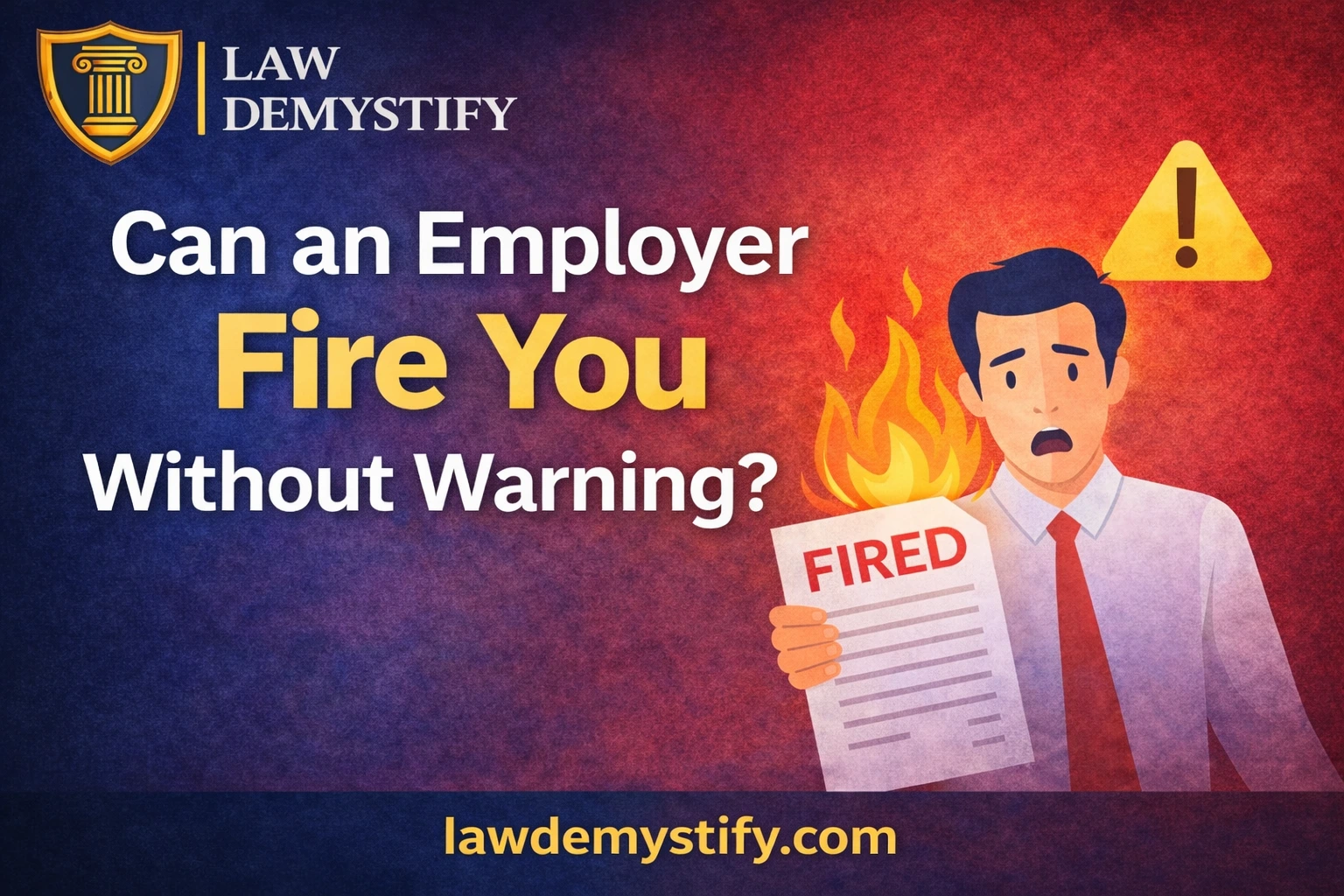
If you’ve ever seen a coworker suddenly lose their job—or worried it could happen to you—you’re not alone. One of the most common and unsettling questions American workers ask is can an employer fire you without warning? The short answer is often yes—but for many workers, the real shock comes later, when it happens to someone they know or suddenly to them personally, without any warning or explanation.
In the United States, most employment relationships are governed by at will employment usa, a legal principle that gives employers broad power to end employment at almost any time. That reality can feel harsh, especially when someone is fired without warning and left shocked, confused, and scrambling for answers.
This guide is written to give you clarity—not legal advice, but real understanding. We’ll walk through at will employment explained in plain English, discuss where the limits actually are, and help you understand when a sudden termination crosses the line into illegality. Whether you’re an employee protecting yourself or a professional trying to stay informed, this article is designed to meet you where you are.
Issues like sudden termination rarely exist on their own. In real workplaces, questions about at-will employment often connect with broader legal basics in the United States, including employee rights, wrongful termination, wage laws, and workplace protections. For most people, this connection only becomes clear after something unexpected has already gone wrong at work.
What Does At-Will Employment Really Mean?
To understand whether sudden termination is legal, you first need to understand what is at will employment. In simple terms, at will employment meaning is this: either the employer or the employee can end the working relationship at any time, for almost any reason—or for no reason at all.
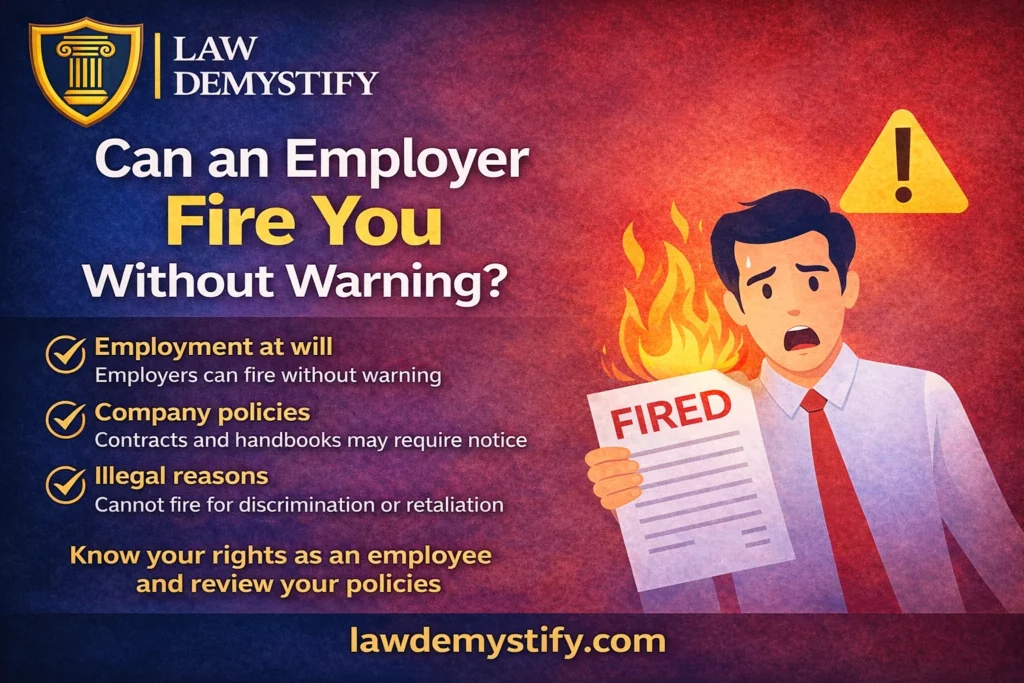
Under at will employment law, an employer does not generally need to provide advance notice, a formal warning, or a detailed explanation. Likewise, an employee is free to quit without giving a reason or waiting for approval. This flexibility is why the system exists—but it also creates uncertainty.
Most U.S. workers fall under this system by default unless they have a specific contract stating otherwise. That means policies in an employee handbook, long service, or good performance alone do not necessarily protect someone from termination. This is why many people are surprised to learn they can be dismissed abruptly, even after years on the job.
In real workplaces, this often plays out quietly. An employee may receive positive feedback for years, assume their job is secure, and still be let go suddenly due to a business decision that has nothing to do with performance. This gap between expectation and reality is why at-will employment often feels confusing and unfair. And for many employees, it happens fast.
Still, “at-will” does not mean “anything goes.” Understanding the boundaries of this rule is where employee protection begins.
Can an Employer Fire You Without Warning Under At-Will Rules?
So, can an employer fire you without warning under U.S. law? In many cases, yes. Employers are generally allowed to terminate employment immediately, even “on the spot,” without issuing prior discipline or notice.
This is why situations where someone is fired without notice legal questions often arise. For example, an employee may be called into a meeting, told their role is being eliminated, and escorted out the same day. While this feels abrupt, it is often lawful under at will employment rules.
Employers use this authority for many reasons, including restructuring, budget cuts, changes in business direction, or dissatisfaction with performance—even when those reasons are never clearly explained to the employee. Importantly, the law does not require those reasons to be fair or reasonable, only legal.
That said, not every termination is protected by at-will status. If the reason for firing violates a protected right or public policy, the termination may be unlawful. Knowing how to spot that difference is critical.
When At-Will Employment Does Not Apply
Although at will employment explained gives employers wide discretion, there are important situations where at-will rules do not apply. These exceptions are where many wrongful termination claims begin.
First, employment contracts override at-will status. If you have a written agreement stating you can only be terminated “for cause” or after certain steps, those terms control. Unionized workers are another major exception, as collective bargaining agreements typically require warnings and progressive discipline.
Second, company policies can sometimes limit termination rights. If an employer promises job security or specific termination procedures in writing, courts may enforce those promises under certain conditions.
Finally, some states recognize additional protections. For example, Montana is unique in requiring “good cause” for termination after a probationary period. Most states do not go this far, but it shows that at-will employment is not completely uniform nationwide.
At-Will Employment Exceptions You Must Know
Understanding at will employment exceptions is essential if you want to protect yourself. These exceptions limit when an employer can legally terminate you, even without warning.
Common exceptions to at will employment include:
- Termination based on discrimination (race, sex, religion, age, disability)
- Retaliation for reporting harassment or illegal conduct
- Firing for taking legally protected leave
- Dismissal for refusing to engage in illegal activity
When one of these applies, the situation may qualify as illegal termination at will employment. In those cases, sudden termination is not just unfair—it may violate federal or state law.
This is where employee rights at will employment become especially important. Even at-will employees have protections, and courts take these exceptions seriously when supported by evidence.
Can You Be Fired Without Cause?
A closely related question is can you be fired without cause? Under at-will rules, the answer is usually yes. Employers do not need to prove misconduct or poor performance to justify termination.
However, “without cause” does not mean “for an illegal reason.” For example, firing someone because a manager “just doesn’t like them” may be legal. Firing someone because they reported wage theft is not.
This distinction matters because many employees only realize the difference after they’ve already lost their job and are trying to make sense of what just happened. In reality, the law focuses on legality, not fairness—and that distinction usually becomes clear only after the job is already gone.
If you believe your termination falls under wrongful termination at will, it’s worth taking the situation seriously—even if no warning was given.
Is It Legal to Fire Someone Without Warning?
Many workers ask, is it legal to fire someone without warning? The honest answer is: often yes, sometimes no. The legality depends on the reason behind the decision, which is not always obvious at the moment someone is fired.
For example, an employer may legally terminate an employee immediately due to restructuring or business needs. But if that termination happens right after the employee reports discrimination or requests medical leave, it may raise serious red flags.
Understanding when firing is illegal requires looking at timing, documentation, and motive. Sudden terminations that follow protected actions are often scrutinized more closely by courts and regulators.
Real-World Example: Sudden Termination at Work
Imagine an employee who has consistently met performance goals. One morning, they report safety violations to HR. Two days later, they are called into a brief meeting and let go without explanation, often being told the decision is “final,” with little opportunity to ask questions or understand what triggered the decision.
On paper, this looks like a standard at-will termination. In reality, it may be retaliation—one of the clearest at will employment exceptions. Even though the employer gave no warning, the timing alone could support a legal claim.
This is why understanding employee termination rights usa matters. Context is everything, and sudden does not always mean lawful.
Transitioning Forward
At this point, you should have a clear foundation. You know that can an employer fire you without warning is not a simple yes-or-no question. At-will employment gives employers power—but not unlimited power.
In the next part of this guide, we’ll dig deeper into employee rights, what steps to take if you’re terminated suddenly, and how to protect yourself before and after termination. We’ll also answer the most common real-world questions employees ask when facing an unexpected job loss.
Understanding Your Rights After Being Fired Without Warning
Being fired without warning can feel overwhelming. One moment you’re planning your week, and the next you’re packing up your desk. While at will employment usa allows many employers to act quickly, employees still have important protections that do not disappear just because a termination was sudden.
Under employee rights at will employment, workers are protected from firings that violate federal or state laws. This includes discrimination, retaliation, or punishment for exercising legally protected rights. Even when employers say “we don’t need a reason,” the law still looks closely at why the decision was made.
If you were dismissed abruptly, the key question is not whether notice was given—it’s whether the reason behind the decision was lawful. That distinction often determines whether a termination stands or becomes legally questionable.
What to Do Immediately If You’re Fired Without Warning
When someone is fired without notice legal questions usually follow fast. The first few steps you take matter more than most people realize.
Start by requesting written documentation. Even under at will employment law, you can ask for confirmation of your termination date and final pay details. Employers are required to follow wage and hour laws regardless of termination reasons.
Next, review any employment agreements or handbooks. While at-will rules apply broadly, written policies may limit how termination is handled. Some employers promise progressive discipline or internal review—even if they later ignore it.
Finally, document everything you remember. Dates, emails, conversations, and witnesses can all become important if questions about illegal termination at will employment arise later.
Can an Employer Fire You Anytime? The Legal Reality
Many people ask can an employer fire you anytime? In most situations, yes—but not for prohibited reasons. At-will status allows timing flexibility, not legal immunity.
For example, an employer can terminate someone during a slow business period or after a management change. However, firing an employee right after they file a workers’ compensation claim or request family leave may violate the law.
This is where at will employment rights play a crucial role. Employees are protected from termination that punishes them for asserting lawful rights, even if no warning was required.
When Sudden Termination Becomes Illegal
Understanding when firing is illegal often comes down to motive. Courts and agencies look at whether the termination was connected to a protected activity or status.
Common situations that may support wrongful termination at will claims include being fired shortly after reporting harassment, refusing to participate in illegal conduct, or requesting reasonable accommodations.
In these cases, employers may argue the termination was unrelated. That’s why evidence—timing, emails, performance reviews—can be critical. Sudden firings are not automatically unlawful, but they are often scrutinized more closely.
Employment Contracts and Policy-Based Protections
While many workers assume they are fully at-will, contracts can change everything. Written agreements that limit termination to “for cause” situations override default at-will rules.
Even without a formal contract, employer policies sometimes create enforceable expectations. If a handbook promises warnings or improvement plans before termination, courts may treat those promises seriously.
These situations fall under exceptions to at will employment, and they often surprise both employers and employees. The key is whether the employer created a reasonable expectation of continued employment.
Can You Be Fired on the Spot?
Yes, can you be fired on the spot is a real possibility under at-will rules. Employers are generally allowed to terminate employment immediately, even without prior discipline.
However, instant termination does not eliminate obligations like final pay, accrued benefits (where required by state law), or compliance with anti-discrimination statutes. Employers must still follow the law after the termination decision is made.
Sudden dismissal often feels deeply personal, but legality depends on facts—not feelings. That’s why understanding employee termination rights usa helps separate emotion from legal reality.
Filing for Unemployment After Being Fired Without Warning
Many people wrongly assume that being terminated suddenly disqualifies them from unemployment benefits. In reality, most employees who are fired without warning are still eligible.
Unemployment eligibility usually depends on whether the employee was terminated for serious misconduct. Being let go “without cause” or due to business decisions often qualifies for benefits.
Even when employers contest claims, state agencies review evidence independently. Filing promptly protects your rights and creates an official record of the termination circumstances.
How Employers Defend At-Will Terminations
Employers often rely heavily on at will employment explained arguments when defending sudden terminations. They may state that no reason was required and that the decision was lawful.
However, employers still must show the termination was not discriminatory or retaliatory. Documentation, consistent enforcement of policies, and clear timelines are commonly used in these defenses.
Employees should understand that silence from an employer does not automatically mean the firing was legal. Lack of explanation does not eliminate legal responsibility.
Practical Signs a Termination May Be Wrongful
Not every unfair firing is illegal—but some patterns raise concerns. Warning signs may include:
- Termination shortly after protected activity
- Sudden dismissal following positive performance reviews
- Inconsistent reasons given for termination
These situations may point toward illegal termination at will employment, especially when combined with documentation or witness testimony.
Frequently Asked Questions (FAQ)
Is it legal to fire someone without warning?
Yes, under at will employment usa, employers can often terminate without notice. However, it becomes illegal if the reason violates discrimination or retaliation laws.
Can you be fired on the spot?
Yes. Many at-will employees can be dismissed immediately, but legal protections still apply.
Do employers have to give warning?
Generally no, unless a contract, union agreement, or company policy requires it.
Can an employer fire you without cause?
Yes, but not for unlawful reasons such as discrimination or retaliation.
What to do if fired without warning?
Request documentation, review your employment terms, and file for unemployment benefits promptly.
Is being fired without notice legal in all states?
Most states follow at-will rules, but some—like Montana—offer greater protections.
When should termination be questioned?
If it follows protected activity or targets a protected group, it may fall under wrongful termination at will exceptions.
At-Will Employment Without Fear
So, can an employer fire you without warning? Often yes—but not without limits. At will employment law gives employers flexibility, not absolute power. Employees still have rights, protections, and options when termination crosses legal boundaries.
Understanding at will employment meaning empowers you to respond calmly instead of reactively. Sudden job loss is stressful, and it doesn’t always feel fair—but understanding the law helps people pause, regroup, and make better decisions instead of reacting in panic. When employees know where the law draws the line, they are better equipped to protect their careers and their futures.
While this guide is informational, not legal advice, it reflects the real-world framework U.S. employment law operates under every day. If nothing else, remember this: at-will does not mean unprotected—and sudden does not always mean lawful.
For many workers, understanding these rules only becomes urgent after a sudden termination—but knowing them earlier can make all the difference.