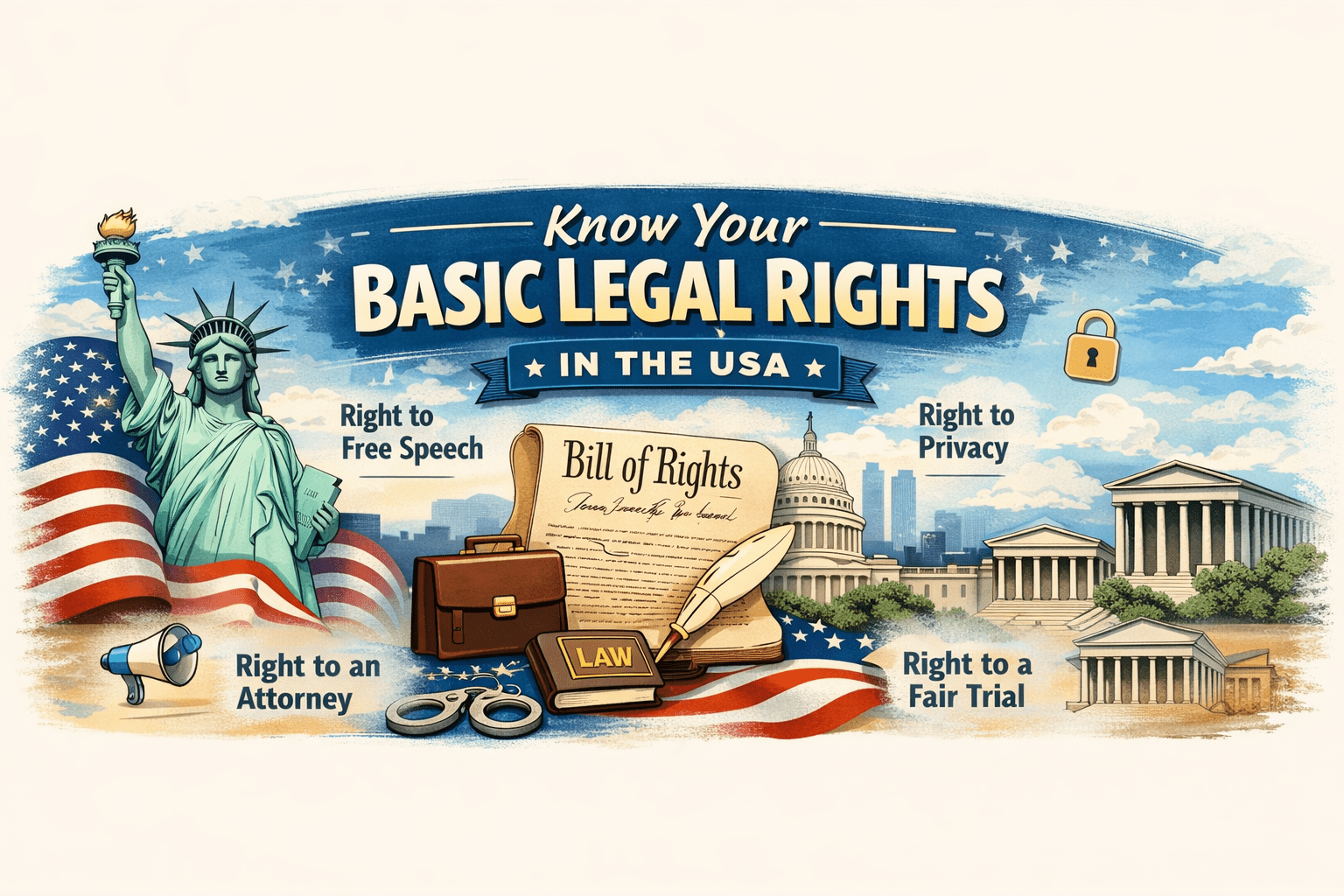
Understanding your legal protections is not just for lawyers or people facing lawsuits. Knowing your rights helps you make informed decisions in everyday life—at work, at home, as a consumer, and during interactions with authorities. Many people only begin learning about their basic legal rights USA after a problem arises, when confusion and stress are already high.
For most people, legal rights only become visible when something goes wrong in everyday life. At that moment, knowing what protections apply can make a stressful situation far more manageable. Everyday situations often involve legal rights without us realizing it. Signing an employment contract, renting an apartment, returning a defective product, or speaking out on a public issue all trigger legal protections. When these rights are unknown, they can be ignored or violated without resistance.
This guide explains the legal rights of US residents in clear, practical terms. Whether you are a citizen, permanent resident, or lawful non-citizen, many fundamental protections apply to you. A basic understanding of individual rights under US law empowers you to protect yourself, avoid costly mistakes, and recognize when professional legal guidance may be necessary.
Constitutional Rights
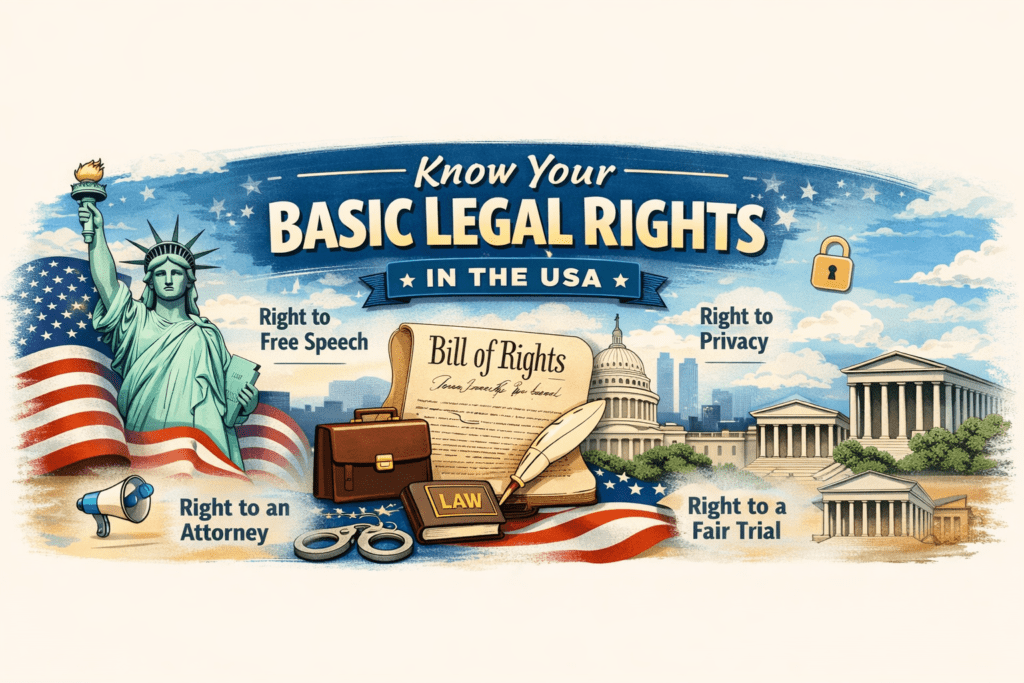
Constitutional rights form the foundation of legal protections in the United States. These rights limit government power and protect individuals from unfair treatment. Many of the most important individual rights under US law come directly from the Constitution and its amendments. In everyday life, these rights quietly shape how the government interacts with individuals, often without people noticing.
Freedom of speech allows individuals to express opinions, beliefs, and ideas without unreasonable government interference. Due process ensures that the government must follow fair procedures before taking away life, liberty, or property. Equal protection requires that laws be applied fairly, without discrimination based on race, gender, religion, or similar characteristics.
These rights apply in everyday settings—interactions with law enforcement, public employment, schools, and courts. While states can add additional protections, constitutional rights establish a nationwide minimum standard. Understanding these principles helps residents recognize when government action crosses legal boundaries.
Employment Rights
Workplace protections are a major part of basic legal rights USA, affecting millions of residents daily. Federal and state laws work together to ensure fair treatment, safe working conditions, and equal opportunity.
Employment rights include minimum wage standards, overtime pay rules, and workplace safety requirements. Anti-discrimination laws protect workers from unfair treatment based on race, color, religion, sex, national origin, disability, or age. These protections apply during hiring, promotions, pay decisions, and termination.
Employees are also protected from retaliation for reporting violations or participating in investigations. While employment laws vary by state, core protections reflect the broader legal rights of US residents. Knowing these rights helps workers recognize unlawful practices and respond appropriately when issues arise.
Housing & Tenant Rights
Housing is one of the most common areas where legal rights affect daily life. Tenant protections exist to ensure fair treatment, safe living conditions, and clear expectations between landlords and renters. These protections are a key part of individual rights under US law and directly affect daily living conditions.
Tenants generally have the right to habitable housing, meaning landlords must maintain basic safety and health standards. Lease agreements define rent terms, responsibilities, and notice requirements. Evictions must follow legal procedures—landlords cannot simply lock tenants out or shut off utilities.
While housing laws differ by state and city, federal rules prohibit discrimination in renting and housing practices. Understanding these rights allows residents to respond calmly to disputes and avoid unnecessary escalation when conflicts arise.
Consumer Rights
Consumer protections exist to ensure fairness in the marketplace. These laws protect individuals from deceptive practices, unsafe products, and misleading advertising. Consumer protections are an essential part of basic legal rights USA because nearly everyone engages in commercial transactions. From online shopping to major financial decisions, consumer rights influence everyday purchases more than most people realize.
Consumers have rights related to refunds, warranties, and truthful product information. Businesses must honor express warranties and avoid unfair or deceptive practices. Certain industries, such as finance and healthcare, face additional regulations to protect consumers from abuse.
When disputes arise, consumers often have options beyond court, including complaints to regulatory agencies or mediation. Understanding consumer rights helps residents avoid scams, resolve disputes efficiently, and recognize when legal remedies are available.
How to Protect Your Rights
Knowing your rights is only the first step. Protecting them requires action, documentation, and awareness of available resources. Many violations continue simply because people do not know how to respond.
Common ways to protect legal rights include:
- Filing formal complaints with appropriate government agencies
- Keeping written records, contracts, and communications
- Seeking early legal advice when issues involve significant risk
Taking early, informed steps often prevents small issues from turning into serious legal problems. Some situations can be resolved informally, while others require professional assistance. Consulting a lawyer is especially important when rights violations involve employment termination, housing loss, or significant financial harm. Understanding legal rights of US residents helps individuals act decisively instead of reacting out of fear or uncertainty.
FAQs
Do these rights apply in every state?
Many rights apply nationwide, but states can expand protections beyond federal minimums.
Can legal rights be waived?
Some rights can be waived voluntarily, but others cannot be legally surrendered.
Do non-citizens have legal rights in the U.S.?
Yes. Many individual rights under US law apply to lawful non-citizens and residents.
What should I do if my rights are violated?
Document the issue, seek advice, and consider filing a formal complaint or legal claim.
Are employers required to explain my rights?
Not always. Employees are generally responsible for understanding workplace protections.
Can landlords change lease terms anytime?
No. Lease terms generally remain fixed during the lease period unless legally modified.
Do consumer rights apply to online purchases?
Yes. Online transactions are covered by consumer protection laws.
Conclusion
Legal rights shape everyday life more than most people realize. From free expression and fair treatment to safe housing and honest commerce, basic legal rights USA provide a framework for dignity, security, and accountability. These protections exist to balance power and prevent abuse.
Understanding the legal rights of US residents allows individuals to make confident decisions, respond effectively to disputes, and recognize when professional legal support is needed. A working knowledge of individual rights under US law is not about memorizing statutes—it is about awareness and preparedness.
For a deeper foundation, explore our pillar resource: Legal Basics in the United States (Beginner’s Guide). Informed residents are better protected residents, and legal knowledge is one of the most practical tools you can have. When people understand their legal rights, they are better equipped to speak up, ask questions, and protect themselves with confidence.










very useful content