Renting a home is supposed to feel safe, predictable, and fair. You pay rent on time, follow the rules, and in return, you expect a place that’s livable and maintained. But in the real world, things don’t always work that smoothly. A leaking ceiling gets ignored. The heater stops working in winter. Mold shows up in the bathroom, and suddenly you’re wondering who’s actually responsible—and what rights you really have.
This guide breaks down landlord responsibilities and tenant protections in plain English, without legal jargon or scare tactics. It’s written for real people dealing with real rental problems. At the center of this discussion is one core legal concept that applies in every U.S. state in some form. landlord obligations to maintain rental property. Understanding that idea can save you money, stress, and months of living in unsafe conditions.
For many renters, these issues don’t start as legal disputes. They start with unanswered emails, ignored text messages, and the hope that “maybe it will be fixed next week.”
The Legal Foundation of Rental Housing Responsibilities
Every residential lease in the United States—whether written or verbal—comes with an implied promise that the rental will be fit to live in. Courts often call this the “implied warranty of habitability.” You don’t need to see those words in your lease for them to apply.
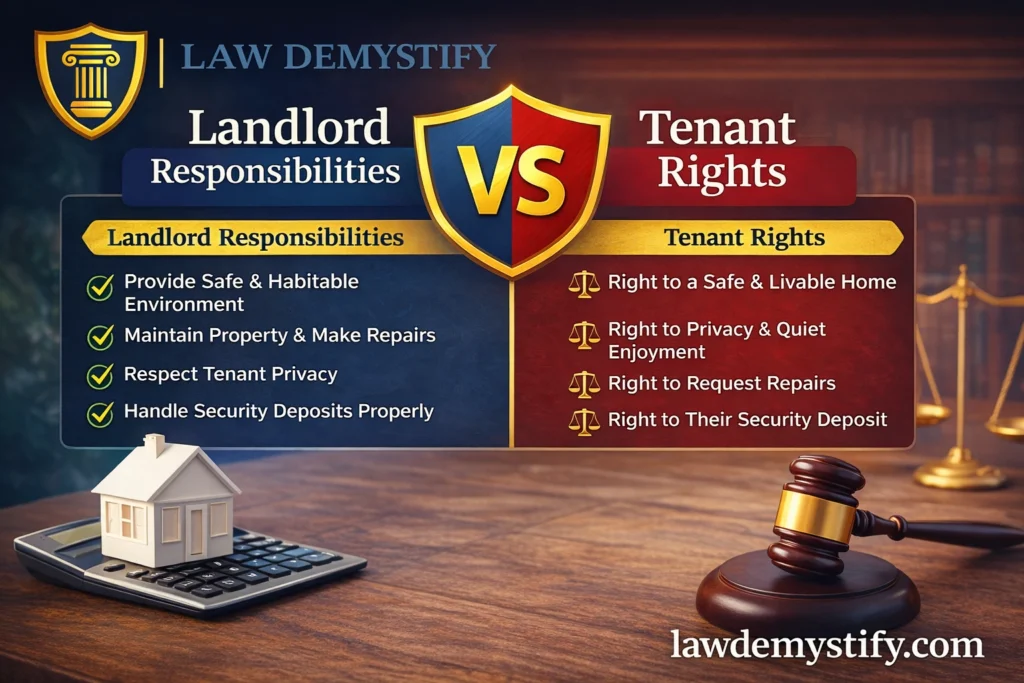
At its core, landlord obligations to maintain rental property mean that a landlord cannot simply hand over the keys and walk away. Once rent is accepted, legal duties attach. These duties exist to protect health, safety, and basic human dignity.
Landlords are generally required to:
- Provide a structurally safe home
- Keep essential systems working
- Address dangerous conditions within a reasonable time
Tenants, on the other hand, are expected to use the property responsibly and report problems promptly. When both sides understand these roles, disputes are less likely. When they don’t, conflict usually follows. In practice, most tenant–landlord disputes arise not because tenants want conflict, but because basic maintenance responsibilities are misunderstood or ignored.
What Repairs Are Landlords Responsible For?
One of the most common questions renters ask is what repairs are landlords responsible for. The answer is broader than many landlords admit.
In most states, landlords must repair issues that affect habitability, including:
- Plumbing failures like broken pipes or sewage backups
- Electrical hazards such as exposed wiring or repeated outages
- Heating systems that fail during cold weather
- Hot water systems that stop working
- Roof leaks and structural damage
- Pest infestations not caused by tenant behavior
These aren’t “nice-to-have” features. They fall squarely under landlord obligations to maintain rental property and cannot be shifted to tenants through lease language.
Cosmetic issues—like chipped paint or worn carpet—are usually treated differently unless they create safety risks. The line between cosmetic and hazardous, however, isn’t always obvious, and that’s where many disputes arise. In real rental situations, tenants are often told these problems are “minor” or “normal wear,” even when they affect daily living.
Habitability: When a Rental Becomes Legally Unlivable
Courts don’t expect perfection, but they do require basic livability. So what makes a rental property uninhabitable?
A rental may cross that line when conditions substantially threaten health or safety. Common examples include:
- No heat during winter
- No running or hot water
- Severe mold growth
- Electrical fire risks
- Structural instability
- Persistent flooding or sewage problems
When conditions reach this level, landlord obligations to maintain rental property become urgent, not optional. Ignoring these problems can expose landlords to legal penalties, rent loss, or lawsuits.
From a tenant’s perspective, habitability laws exist to prevent a simple but dangerous reality: people being forced to live in unsafe homes because moving isn’t financially easy. Many tenants continue living in these conditions simply because moving is expensive and alternatives are limited.
Mold, Moisture, and Health Risks in Rental Housing
Few issues cause as much fear and confusion as mold. Tenants often ask, is landlord responsible for mold in apartment situations? In many cases, yes—but context matters.
If mold results from:
- Roof leaks
- Plumbing failures
- Poor ventilation
- Structural water intrusion
then it usually falls under landlord obligations to maintain rental property. Mold tied to building defects or maintenance failures is not something tenants are expected to fix themselves.
However, if mold develops because of tenant actions—such as failing to ventilate bathrooms or causing repeated water spills—the analysis may change. Even then, landlords often still have a duty to address the underlying moisture problem.
From a legal standpoint, mold becomes especially serious when it affects air quality or triggers health symptoms. At that point, it’s no longer a cosmetic issue—it’s a habitability concern.
Health complaints linked to mold—such as breathing issues or chronic headaches—are often what finally force tenants to seek legal help.
Plumbing, Water, and Sanitation: Core Tenant Protections
Water issues are among the most disruptive rental problems. Courts consistently treat plumbing as essential, which is why tenant rights for plumbing problems are strongly protected.
Landlords are typically responsible for:
- Leaking or burst pipes
- Blocked sewage lines
- Non-functioning toilets
- Inconsistent or contaminated water supply
If a tenant reports these issues and the landlord delays without justification, that delay may violate landlord obligations to maintain rental property. The longer the delay, the stronger the tenant’s legal position usually becomes.
Importantly, tenants are not required to diagnose plumbing problems. Reporting symptoms—like backups, leaks, or water pressure loss—is enough to trigger landlord responsibility.
Heat and Hot Water: Non-Negotiable Requirements
Few things trigger faster legal consequences than lack of heat. Most states have specific temperature or heating-season requirements, which makes landlord responsibility for heating and hot water one of the clearest duties in rental law.
If a heating system fails during cold weather, landlords are expected to act quickly. Temporary solutions may be acceptable in emergencies, but long-term inaction can expose landlords to serious liability.
Hot water is treated the same way. A tenant should not have to choose between cold showers and legal action. These systems are essential to daily living, and failure to maintain them directly violates landlord obligations to maintain rental property.
When a Landlord Ignores Repair Requests
One of the most stressful situations renters face is silence. You report a problem, follow up politely, and nothing happens. This is where tenant rights if landlord ignores repairs become critical.
Legally, landlords must be given notice and a reasonable opportunity to fix the issue. What’s “reasonable” depends on the severity:
- Emergency issues may require action within 24–72 hours
- Serious but non-emergency issues may allow a few weeks
When landlords fail to act, tenants may gain additional rights—especially if health or safety is at risk. Continued inaction can turn a simple repair issue into a landlord failure to repair legal rights situation.
Documentation matters here. Written requests, photos, and timelines often determine whether a tenant’s claim succeeds.
Can Rent Be Withheld When Repairs Aren’t Made?
Many renters quietly ask a risky question: can a tenant withhold rent for repairs? The answer is sometimes yes—but only if strict legal steps are followed.
In some states, tenants may withhold rent or use “repair and deduct” remedies if:
- The issue affects habitability
- The landlord received proper notice
- A reasonable repair period passed
- The tenant followed state-specific procedures
This is not a casual option. Done incorrectly, rent withholding can lead to eviction—even if the underlying repair issue is legitimate. That’s why understanding landlord obligations to maintain rental property before taking action is so important.
Tenants should always treat rent withholding as a last resort, not a first response.
Unsafe Living Conditions and Landlord Negligence
When conditions become dangerous, the legal conversation shifts from inconvenience to liability. Landlord responsibility for unsafe living conditions includes preventing hazards that a reasonable property owner would address.
Examples of unsafe conditions include:
- Broken staircases or railings
- Exposed electrical wiring
- Collapsing ceilings
- Fire safety violations
Failure to address these issues can rise to landlord negligence tenant rights claims, especially if someone gets injured. At that point, the issue is no longer just about repairs—it’s about duty of care.
Landlords have a legal obligation to anticipate and fix foreseeable dangers. Waiting until someone gets hurt is not a defense.
The Landlord’s Duty of Care Explained
Every landlord owes tenants a baseline landlord duty of care to tenants. This duty requires reasonable steps to maintain the property and prevent harm.
Duty of care doesn’t mean landlords must guarantee safety in every scenario. It does mean they must respond appropriately to known risks. Ignoring complaints, delaying repairs, or dismissing safety concerns can all breach this duty.
When a duty of care violation causes harm, tenants may have grounds for compensation beyond simple repair requests. This is where disputes often move from housing courts into broader civil claims. This duty exists because landlords are in the best position to prevent harm before someone gets injured.
When Violations Turn Into Legal Claims
If a landlord repeatedly ignores obligations, tenants may explore tenant rights lawsuit against landlord options. Lawsuits aren’t always about money. Often, they’re about forcing compliance or stopping ongoing harm.
Common legal claims involve:
- Habitability violations
- Retaliation after repair complaints
- Constructive eviction
- Personal injury from unsafe conditions
At the heart of most of these cases is the same principle: landlord obligations to maintain rental property were not met, despite notice and opportunity.
Legal action is serious, time-consuming, and emotionally draining. But for tenants living in dangerous conditions, it can become the only path forward.
Documentation: The Tenant’s Strongest Tool
Tenants don’t need legal training to protect themselves—but they do need records. Whenever a repair issue arises, documentation strengthens tenant rights and clarifies landlord duties.
Smart documentation includes:
- Written repair requests
- Photos and videos
- Dates of communication
- Copies of inspection reports
This evidence helps establish timelines and shows whether landlord obligations to maintain rental property were fulfilled or ignored. In disputes, details matter more than emotions.
FAQs: Common Tenant and Landlord Questions
Can landlord refuse to fix repairs?
A landlord generally cannot refuse to fix repairs that affect habitability. Refusal may violate landlord obligations to maintain rental property, especially when health or safety is involved.
How long does landlord have to make repairs?
The timeline depends on the severity of the issue. Emergency repairs require faster action, while minor issues allow more time. Delays that risk safety may violate habitability laws.
Can tenant sue landlord for unsafe conditions?
Yes. When unsafe conditions persist after notice, tenants may pursue legal claims based on negligence or habitability violations.
What happens if landlord breaks the law?
Landlords who violate housing laws may face fines, court orders, rent loss, or damages. Repeated violations increase legal exposure.
Is mold always the landlord’s responsibility?
Not always. Mold tied to building defects usually falls under landlord obligations to maintain rental property, while tenant-caused issues may be treated differently.
Can repairs justify breaking a lease?
In extreme cases where conditions are uninhabitable, tenants may have grounds to terminate a lease without penalty.
Do tenants have to pay for repairs themselves?
Tenants are usually not responsible for habitability repairs unless damage was caused by their actions.
Understanding rental rights isn’t about conflict—it’s about clarity. When both landlords and tenants know where responsibility begins and ends, housing becomes more stable, safer, and far less stressful. At the center of that balance is a simple but powerful principle: landlord obligations to maintain rental property exist to protect everyone involved.
When both landlords and tenants understand these responsibilities, housing disputes decrease, safety improves, and legal conflicts become the exception rather than the rule.









1 thought on “Landlord Responsibilities vs Tenant Rights Explained”