Renting a home or apartment is a fact of life for millions of Americans, yet many renters are unsure where their protections begin and end. Tenant rights exist to create balance in the landlord–tenant relationship, protect renters from abuse, and ensure safe, livable housing. Still, confusion is common because rental laws come from a mix of federal, state, and local rules.
This guide explains tenant rights in plain English, with practical examples that reflect real-life rental situations across the country. Whether you are signing your first lease, dealing with a difficult landlord, or facing housing instability, understanding tenant rights USA can help you protect your home, finances, and peace of mind.
For example, many renters only start searching for tenant rights when their heat stops working in winter, a landlord suddenly raises rent, or an eviction notice appears on the door. By then, stress is high and time is limited.
The Legal Foundation of Tenant Protections
At the most basic level, tenant rights are shaped by three layers of law: federal statutes, state landlord–tenant acts, and local housing codes or ordinances. Federal law sets the floor for renter protections nationwide, while states and cities can add stronger safeguards. This means the exact rules may differ depending on where you live, but the core principles of basic tenant rights USA are widely shared.
One of the most important concepts is that renting a home is not just a casual arrangement. It is a legal relationship that creates enforceable duties on both sides. Landlords have obligations related to safety, habitability, and fair treatment. Tenants, in turn, must pay rent on time and comply with reasonable lease terms. When either side fails to meet those duties, the law provides remedies.
Many renters ask themselves, often only when a problem arises, what are my rights as a tenant? The answer depends on the issue involved, but nearly all renters are entitled to a safe home, privacy, proper notice before major actions, and protection from discrimination and retaliation.
The Right to a Habitable and Safe Home
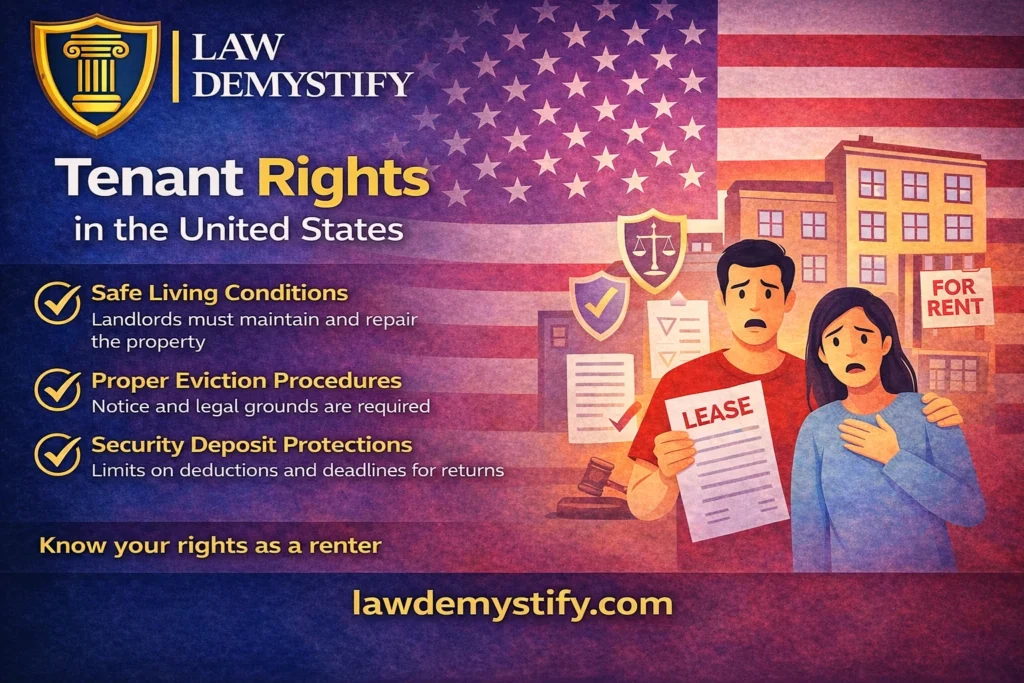
One of the most fundamental tenant rights is the right to live in a habitable dwelling. This obligation, commonly known as the “implied warranty of habitability,” exists in every state in some form. Even if a lease does not explicitly mention it, the law assumes that a landlord promises to provide housing that meets basic health and safety standards.
Habitability generally means that the rental has:
- Working plumbing, electricity, and heat
- Hot and cold running water
- Structurally sound walls, ceilings, and floors
- Reasonable protection from pests and mold
- Compliance with local building and health codes
Problems such as severe leaks, lack of heat in winter, exposed wiring, or broken locks can fall into the category of conditions that violate tenant rights unsafe apartment standards. Renters often struggle to define what makes a rental uninhabitable, but courts usually focus on whether the condition threatens health or safety rather than mere inconvenience.
When a landlord refuses to make repairs, tenants may have options such as requesting code enforcement inspections, withholding rent under strict legal rules, or arranging repairs and deducting the cost. These remedies are powerful but must be used carefully to avoid unintended consequences.
In real life, this often shows up as a landlord ignoring repeated requests for heat repairs during winter or telling a tenant to “just use a space heater” instead of fixing the problem.
Repairs, Maintenance, and the Limits of Landlord Delay
Closely tied to habitability is the landlord’s duty to repair. Tenant rights do not require landlords to respond instantly to every complaint, but they do require action within a reasonable time once the landlord is notified. What counts as “reasonable” depends on the seriousness of the problem. A broken heater in winter demands faster action than a minor cosmetic issue.
If repairs are ignored long enough to create housing code violations renter rights issues, tenants may be entitled to additional protections. In many states, landlords are prohibited from raising rent, threatening eviction, or otherwise retaliating against tenants who report unsafe conditions in good faith.
In practice, many housing departments consider lack of heat, water, or electricity an emergency repair that should be addressed within 24 to 72 hours, depending on local law.
Tenant rights, when explained simply, can prevent renters from feeling trapped in unhealthy housing. The law recognizes that tenants should not be forced to choose between unsafe living conditions and homelessness.
Privacy and Limits on Landlord Entry
Another core area of tenant rights involves privacy. While landlords own the property, tenants have the right to quiet enjoyment of their rented home. This means landlords cannot treat the property as if it were still vacant or subject to constant inspection.
Many renters wonder whether a landlord can enter without permission. In most states, the answer is no, except in true emergencies like fires or severe water leaks. Outside emergencies, landlord entry laws USA typically require advance notice, often 24 to 48 hours, and a legitimate reason such as repairs or inspections.
Common complaints include landlords letting themselves in while a tenant is at work or showing the apartment to new renters without proper notice.
Violations of tenant privacy rights apartment rules can include repeated unannounced visits, entering at unreasonable hours, or using a master key without notice. The landlord right of entry notice requirement is meant to protect renters from harassment and intrusion, reinforcing the idea that a rented home is still a private residence.
Rent, Increases, and Lease Stability
Rent is often the most stressful aspect of renting, and tenant rights play a major role in regulating how and when landlords can demand payment changes. A common concern is can a landlord raise rent anytime. In most cases, the answer depends on whether the tenant has a fixed-term lease or is renting month-to-month.
For tenants with a lease, rent usually cannot be increased until the lease expires, unless the lease specifically allows it. For month-to-month tenants, landlords may raise rent, but rent increase notice laws often require written notice well in advance. Some states and cities also impose rent control or rent stabilization rules that limit the size and frequency of increases.
For many renters, an unexpected rent increase can mean choosing between paying rent and covering basic expenses like groceries, childcare, or medical costs.
Understanding tenant rights for renters in this area helps prevent sudden financial shocks. Rent increases that violate notice rules or local caps may be unenforceable.
Written Leases, Verbal Agreements, and Legal Protection
Many renters assume that without a signed lease, they have no protection. In reality, tenant rights without written lease still exist. Verbal rental agreements are legally binding in most states, though they can be harder to prove. Even without a lease, tenants are typically entitled to notice before eviction, basic habitability standards, and protection from illegal conduct.
Lease terms, whether written or verbal, cannot override fundamental tenant rights USA. Clauses that waive habitability, allow unrestricted entry, or permit self-help eviction are often invalid, even if the tenant signed them.
Breaking a Lease and Early Termination Rights
Life changes sometimes make it impossible to stay in a rental until the lease ends. While leases are contracts, tenant rights may allow early termination in specific circumstances. Situations involving domestic violence, military deployment, or uninhabitable conditions can justify breaking a lease legally tenant under state law.
Other scenarios may involve early lease termination tenant rights based on landlord misconduct, such as persistent failure to repair or illegal entry. Tenants who leave without legal justification may still owe rent, but landlords often have a duty to mitigate damages by re-renting the unit.
Eviction Protections and Due Process
Eviction is one of the most feared experiences for renters, which is why tenant rights in this area are particularly strong. In nearly every state, landlords must follow a formal legal process to remove a tenant. Self-help measures, such as shutting off utilities or changing locks, are widely prohibited.
Many renters worry can a landlord evict you without notice. In lawful evictions, notice is almost always required, and eviction notice requirements vary depending on the reason for eviction. Nonpayment of rent, lease violations, and lease expiration each have different notice rules.
Receiving an eviction notice is often frightening, especially for families with children or seniors living on fixed incomes. Tenant rights exist to ensure that no one loses their home without due process.
The tenant eviction process generally involves written notice, a court filing, and a hearing where the tenant can present defenses. Tenant rights during eviction include the right to receive proper notice, the opportunity to contest the eviction in court, and protection from retaliation or discrimination.
Illegal actions, often referred to under illegal eviction laws USA, can expose landlords to serious penalties. Courts take these violations seriously because housing stability is essential to public welfare.
Security Deposits and Financial Fairness
Security deposits are another frequent source of conflict. Tenant rights regulate how much can be charged, how deposits must be stored, and when they must be returned. A common question is when must landlord return deposit, and the answer depends on state law, but deadlines typically range from 14 to 45 days after move-out.
If a security deposit not returned issue arises, landlords usually must provide an itemized list of deductions. Only legitimate expenses, such as unpaid rent or repair of damage beyond normal wear and tear, qualify as deductions from security deposit legal. Ordinary aging of carpets or paint is usually not deductible.
Disputes over deposits fall squarely within tenant rights security deposit dispute protections, and many states allow tenants to recover penalties if landlords act in bad faith.
Fair Housing and Protection from Discrimination
Federal fair housing laws are a critical component of tenant rights, even though discrimination issues may arise before or during a tenancy rather than after. Landlords may not discriminate based on race, color, religion, sex, national origin, disability, or familial status.
Examples of housing discrimination examples include refusing to rent to families with children, denying reasonable accommodations to tenants with disabilities, or applying different rules to tenants of different backgrounds. Tenant discrimination rights exist to ensure equal access to housing opportunities.
In addition to federal law, many states and cities extend protections to additional categories, making landlord discrimination illegal acts broader in scope depending on location.
Retaliation and Enforcement of Tenant Protections
A less obvious but equally important aspect of tenant rights is protection from retaliation. Landlords are generally prohibited from punishing tenants for asserting their legal rights, such as requesting repairs, reporting code violations, or joining tenant organizations.
Retaliatory actions can include rent hikes, eviction threats, or reduced services shortly after a tenant exercises a protected right. Courts often view such behavior with skepticism, shifting the burden to landlords to prove legitimate reasons for their actions.
Common Illegal Landlord Practices to Watch For
Understanding what crosses the legal line helps renters recognize violations early. Certain actions are commonly prohibited under tenant rights USA, including shutting off essential utilities to force a tenant out, entering repeatedly without notice, or attempting eviction without court involvement. These practices undermine housing stability and are often subject to fines or damages.
Frequently Asked Questions About Tenant Protections
What is illegal for a landlord to do?
Landlords are generally prohibited from retaliating against tenants, ignoring serious repair issues, entering without proper notice, discriminating against protected classes, or removing tenants without following the legal eviction process. These actions violate core tenant rights designed to protect renters from abuse.
Can a landlord shut off utilities?
In most states, intentionally shutting off utilities as a pressure tactic is unlawful. Utilities are considered essential services, and interfering with them can constitute an illegal eviction under tenant rights USA protections.
Can a landlord change locks?
Changing locks to force a tenant out without a court order is typically illegal. Tenants have the right to due process, and lockouts often violate eviction laws.
Can a landlord evict without court?
Formal eviction almost always requires court involvement. Skipping the judicial process usually violates tenant rights, even when rent is overdue.
How much notice must a landlord give before eviction?
Notice periods vary by state and by reason for eviction, but written notice is almost always required before any court action can begin.
What can a tenant do if repairs are ignored?
Tenants may have options such as reporting code violations, withholding rent under strict rules, or seeking legal remedies. These protections exist to enforce tenant rights unsafe apartment standards.
What should a tenant do if a deposit is wrongfully withheld?
Requesting an itemized statement, sending a formal demand letter, or pursuing a legal claim are common steps. Many laws allow penalties when security deposit not returned rules are violated.
Understanding tenant rights is not just about knowing the law—it is about protecting your stability, your finances, and your sense of security. When renters understand their rights, they are better equipped to stand up to unfair treatment and make informed housing decisions.











2 thoughts on “Tenant Rights in the United States | A Complete Information”