Understanding workplace discrimination laws is essential for anyone working or managing people in the United States. Discrimination issues arise more often than many people expect and often develop quietly, especially in workplaces where problems go unaddressed for long periods. From hiring and promotions to discipline and termination, federal and state rules set clear boundaries on what employers can—and cannot—do.
This guide to workplace discrimination laws is designed to be clear, practical, and grounded in real-world situations. Whether you are an employee wondering about your rights or a professional responsible for compliance, knowing how discrimination is defined, what behaviors cross legal lines, and how complaints are handled can help prevent costly mistakes and protect fairness at work.
This article explains workplace discrimination laws in plain English. It is educational, not legal advice, and focuses on how U.S. law generally works so readers can make informed decisions and know when professional help may be appropriate.
Workplace discrimination concerns often do not appear in isolation. In many real-life situations, employees who experience unfair treatment at work also deal with related problems such as wrongful termination, unpaid wages, or retaliation after speaking up. Understanding workplace discrimination laws as part of the broader legal basics in the United States helps workers see how employee rights connect across different areas of employment law. When discrimination affects hiring, pay, promotions, or termination decisions, recognizing how these legal protections work together can help people identify problems earlier and take informed steps before the situation escalates.
What Workplace Discrimination Means Under U.S. Law
At its core, workplace discrimination laws prohibit unfair treatment of employees or job applicants based on specific personal characteristics protected by law. In real workplaces, discrimination does not always appear obvious at first and often develops through patterns of unequal treatment over time.
Under federal law, discrimination is not limited to obvious acts like refusing to hire someone. It can also include policies or practices that appear neutral but disproportionately harm certain groups without a legitimate business reason. This is often referred to as “disparate impact.”
For example, if an employer enforces a promotion policy that consistently excludes qualified older workers without a job-related justification, that may violate employment discrimination laws usa standards. Understanding these distinctions is crucial for recognizing when workplace conduct crosses legal lines.
Is Workplace Discrimination Illegal in the United States?
A common question is: is workplace discrimination illegal? The short answer is yes—when it involves protected characteristics and violates federal or state law, even if the conduct is not openly hostile. Several major federal statutes form the backbone of workplace discrimination laws, including:
- Title VII of the Civil Rights Act
- The Age Discrimination in Employment Act (ADEA)
- The Americans with Disabilities Act (ADA)
- The Equal Pay Act
These laws are enforced primarily by the Equal Employment Opportunity Commission (EEOC), which oversees eeoc discrimination laws nationwide. Many states also have their own anti-discrimination laws that may offer broader protections than federal rules.
Illegal conduct can include direct actions, such as firing someone because of their religion, or indirect actions, such as allowing a hostile work environment to persist.
Protected Classes and Illegal Workplace Discrimination
What Are Protected Classes?
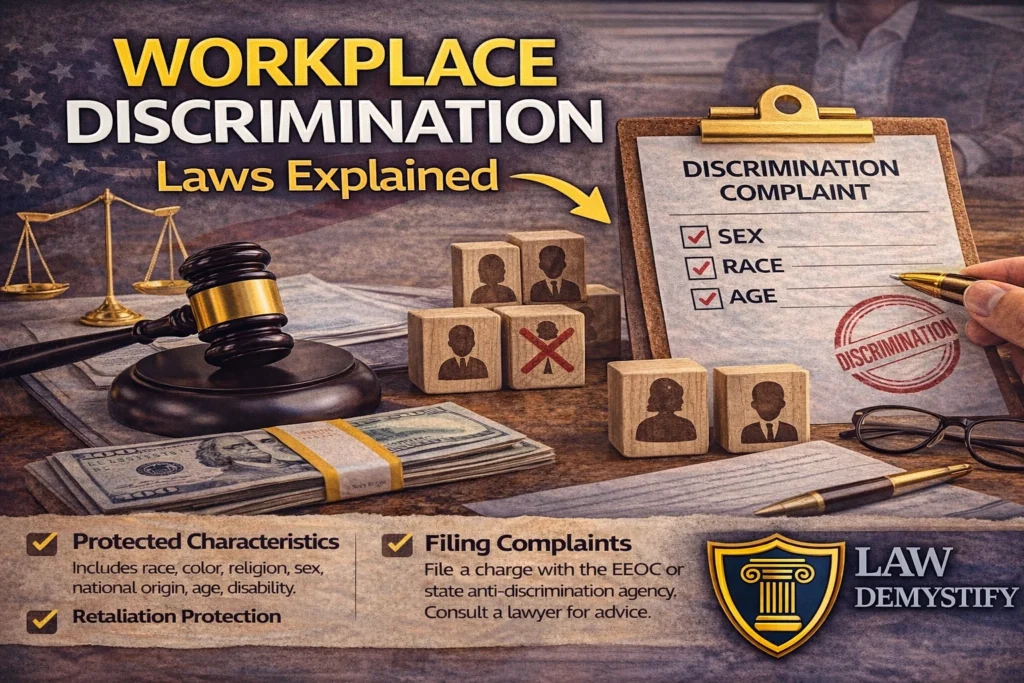
Protected classes discrimination refers to unfair treatment based on characteristics that the law specifically safeguards. Federal workplace discrimination laws recognize several protected categories, including race, color, religion, sex, national origin, age, and disability.
This protection applies regardless of whether discrimination is intentional or the result of careless policies. In many real workplaces, employers do not set out to discriminate, but poorly designed policies or unchecked habits can still lead to unlawful outcomes. Employers are expected to actively prevent illegal workplace discrimination, not simply avoid overt bias.
Common Examples of Illegal Discrimination
Some real-world examples include:
- Discrimination based on race, gender, or religion in hiring or promotions
- Age discrimination employment cases involving layoffs targeting older workers
- Disability discrimination workplace issues where reasonable accommodations are denied
Even subtle patterns—such as consistently assigning less desirable shifts to one protected group—can raise serious legal concerns under workplace discrimination laws.
Types of Workplace Discrimination You Should Know
Racial discrimination at work includes unequal treatment because of race, skin color, or ethnic background. It may involve offensive comments, exclusion from opportunities, or harsher discipline for similar conduct. National origin discrimination is closely related and covers accents, cultural practices, or country of origin.
Gender Discrimination and Sexual Harassment
Gender discrimination workplace issues often involve unequal pay, promotion barriers, or biased job assignments. Sexual harassment is a form of sex discrimination and includes unwelcome advances, inappropriate remarks, or creating a hostile environment.
Under sexual harassment workplace law, employers must take reasonable steps to prevent harassment and address complaints promptly and effectively.
Religious Discrimination
Religious discrimination workplace claims arise when employers fail to accommodate sincerely held religious beliefs, unless doing so would cause undue hardship. This may include scheduling flexibility, dress requirements, or prayer accommodations.
Retaliation
Retaliation discrimination employment is one of the most common violations under workplace discrimination laws. It occurs when an employer punishes an employee for reporting discrimination, participating in an investigation, or asserting their rights. Retaliation is illegal even if the original discrimination claim is ultimately unproven, which often surprises employees who believe they must “win” the complaint to be protected. What matters under the law is that the employee raised concerns in good faith, not whether the employer later agrees with the complaint.
Employee Rights Under Workplace Discrimination Laws
Employee rights discrimination protections give workers the ability to challenge unfair treatment without fear of punishment. These rights exist regardless of whether employment is at-will, a point many workers are not told when issues first arise.
Key workplace discrimination rights include the right to:
- Work in an environment free from unlawful discrimination
- Request reasonable accommodations for disability or religion
- Report discrimination internally or externally
- Be protected from retaliation
Understanding these rights empowers employees to recognize when conduct may violate workplace discrimination laws and to take appropriate action.
What Qualifies as Workplace Discrimination?
Many readers ask what qualifies as workplace discrimination because not every unfair situation is illegal. The law focuses on whether adverse treatment is linked to a protected characteristic.
For example, being disciplined for poor performance is generally lawful. However, if discipline is applied inconsistently and targets only one protected group, that may qualify as illegal workplace discrimination.
Courts and agencies often look at patterns, documentation, and comparators—how similarly situated employees are treated—to determine whether discrimination exists under workplace discrimination laws.
How to Report Workplace Discrimination
Knowing how to report workplace discrimination is critical. Most employers have internal complaint procedures through human resources or management. Following these procedures helps create a record and may resolve issues early.
If internal reporting fails or feels unsafe, employees may file a discrimination complaint at work with the EEOC or a state agency. Strict deadlines apply, often as short as 180 or 300 days, depending on the jurisdiction.
Filing a complaint triggers an investigation under eeoc discrimination laws, which may include mediation, requests for documents, and interviews.
How to Prove Workplace Discrimination
Proving discrimination can be challenging, which is why many ask how to prove workplace discrimination. Direct evidence, such as openly discriminatory statements, is rare in real workplaces. More often, cases rely on circumstantial evidence.
This may include showing that:
- The employee belongs to a protected class
- They suffered an adverse employment action
- Similarly situated employees outside the protected class were treated more favorably
Documentation, witness statements, and consistent timelines often play a key role in claims evaluated under workplace discrimination laws.
Can You Sue for Workplace Discrimination?
Another frequent question is can you sue for workplace discrimination. In many cases, yes—but typically only after exhausting administrative remedies. This usually means filing a charge with the EEOC and receiving a “right to sue” notice.
Lawsuits can seek remedies such as back pay, reinstatement, or damages, depending on the facts and applicable law. Understanding the process helps individuals assess their options realistically under workplace discrimination laws.
Why Workplace Discrimination Laws Matter for Employers
While these laws protect employees, they also provide clear standards for employers. Compliance with workplace discrimination laws reduces legal risk, improves workplace culture, and builds trust.
Employers who invest in training, consistent policies, and prompt responses to complaints are better positioned to avoid disputes and demonstrate good faith if issues arise.
Looking Ahead: Continuing the Discussion
This first section has explained the foundation of workplace discrimination laws, including protected classes, common types of discrimination, and employee rights. In the next part, we will explore complaint procedures in more depth, employer responsibilities, practical prevention strategies, and frequently asked questions that arise in real workplaces across the United States.
Understanding these principles is not just about legal compliance—it is about fostering fair, respectful, and productive workplaces.
How the EEOC Enforces Workplace Discrimination Laws
The Equal Employment Opportunity Commission plays a central role in enforcing workplace discrimination laws across the United States. When employees believe their rights have been violated, the EEOC serves as the primary federal agency responsible for reviewing and investigating complaints.
Once a charge is filed, the EEOC evaluates whether the alleged conduct may violate employment discrimination laws usa. This process often includes requests for employer records, written statements, and interviews with witnesses, and it can take months rather than weeks to complete. In some cases, the agency may offer mediation as an early resolution option. Mediation is voluntary and confidential, and it can save time and expense for both parties.
If the EEOC finds reasonable cause, it may attempt conciliation or, in limited cases, file a lawsuit. More commonly, it issues a right-to-sue notice, allowing individuals to pursue claims in court under workplace discrimination laws.
Employer Responsibilities Under Workplace Discrimination Laws
Employers are not passive observers under workplace discrimination laws. They have an affirmative duty to prevent discrimination and respond appropriately when concerns arise. This includes establishing clear policies, training managers, and addressing complaints promptly.
Failure to act can expose organizations to liability, even if senior leadership was not directly involved. Courts and agencies often evaluate whether employers took reasonable steps to prevent illegal workplace discrimination.
Strong compliance practices typically include:
- Clear written anti-discrimination and anti-harassment policies
- Regular training for supervisors and staff
- Documented complaint procedures
- Consistent enforcement of workplace rules
These measures not only reduce legal risk but also reinforce trust and professionalism in the workplace.
Workplace Policies That Can Lead to Discrimination Claims
Even well-intentioned policies can raise red flags under workplace discrimination laws if they are poorly designed or unevenly applied. For example, strict attendance rules may disproportionately affect employees with disabilities or religious obligations if no accommodation process exists.
Similarly, informal promotion practices based on “fit” or personal relationships can result in discrimination at work claims when they consistently disadvantage certain protected groups. Employers are expected to review policies regularly to ensure they align with current legal standards and business needs.
Understanding how policies operate in practice—not just on paper—is critical for compliance with workplace discrimination laws.
Reasonable Accommodations and the Law
Under federal law, employers must provide reasonable accommodations for qualified individuals with disabilities and for sincerely held religious beliefs, unless doing so would cause undue hardship. This requirement is a key component of workplace discrimination laws.
In the context of disability discrimination workplace claims, accommodations may include modified schedules, assistive technology, or adjustments to job duties. For religious accommodation, this may involve flexible scheduling, dress code exceptions, or allowing prayer breaks.
Employers are encouraged to engage in an interactive process with employees to identify workable solutions. Ignoring accommodation requests or dismissing them without evaluation can lead to illegal workplace discrimination findings.
Why Retaliation Claims Are So Common
Retaliation discrimination employment claims have become one of the most frequently filed allegations under workplace discrimination laws. Retaliation occurs when an employer takes adverse action against an employee for engaging in protected activity, such as reporting discrimination or participating in an investigation.
Protected activity does not require a formal complaint. Even raising concerns informally or asking questions about employee rights discrimination can trigger legal protections.
Examples of retaliation include termination, demotion, reduced hours, or hostile treatment following a complaint. Importantly, retaliation is unlawful even if the underlying discrimination claim is not substantiated.
Workplace Discrimination USA: Federal vs. State Law
While federal workplace discrimination laws set baseline protections, many states and local governments provide additional rights. This is especially relevant in discussions of workplace discrimination usa, where state laws may cover smaller employers, additional protected classes, or longer filing deadlines.
For example, some states protect employees based on sexual orientation, gender identity, marital status, or caregiver responsibilities beyond federal requirements. Others impose stricter standards for employer conduct or broader remedies for violations.
Understanding both federal and state frameworks is essential for accurate compliance and informed decision-making in discrimination matters.
How Employers Should Handle Discrimination Complaints
When an employee raises a discrimination complaint at work, the employer’s response can significantly affect legal outcomes. Prompt, impartial investigations demonstrate good faith and may limit liability under workplace discrimination laws.
Effective investigations typically involve:
- A neutral investigator with appropriate authority
- Clear documentation of findings
- Confidentiality to the extent possible
- Timely corrective action when warranted
Delays, dismissive responses, or inconsistent treatment can undermine an employer’s defense and escalate disputes.
Practical Steps Employees Can Take When Facing Discrimination
Employees who suspect illegal workplace discrimination often feel uncertain about what to do next. While each situation is unique, taking thoughtful, documented steps can help protect workplace discrimination rights.
Common actions include:
- Keeping detailed records of incidents and communications
- Reviewing company policies and complaint procedures
- Reporting concerns through appropriate internal channels
- Seeking guidance before external filing deadlines expire
These steps help clarify whether conduct may violate workplace discrimination laws and preserve options if formal action becomes necessary.
How Courts Evaluate Workplace Discrimination Claims
Courts assessing discrimination claims under workplace discrimination laws look at the totality of circumstances. This includes direct evidence, patterns of conduct, and whether the employer’s stated reasons for decisions are credible.
In cases involving racial discrimination at work or gender discrimination workplace claims, courts often examine how similarly situated employees were treated. Inconsistent explanations or shifting justifications may raise concerns about pretext.
Understanding these standards helps both employees and employers realistically assess risks and outcomes.
Sexual Harassment and Hostile Work Environments
Not every inappropriate comment rises to the level of unlawful harassment. Under sexual harassment workplace law, conduct must be severe or pervasive enough to create a hostile or abusive environment.
Employers have a duty to prevent and correct harassment when they know or should know it is occurring. Failure to act can result in liability under workplace discrimination laws, even if management did not personally engage in the behavior.
Training, clear reporting channels, and swift responses remain essential prevention tools.
FAQs About Workplace Discrimination Laws
What qualifies as workplace discrimination?
Conduct qualifies when an employee suffers adverse treatment because of a protected characteristic under workplace discrimination laws, such as race, gender, age, disability, or religion.
Is workplace discrimination illegal everywhere in the U.S.?
Yes. Federal law prohibits certain forms of discrimination nationwide, and many states provide additional protections under workplace discrimination usa standards.
How do I report workplace discrimination?
Employees may report internally through company procedures or externally by filing a charge with the EEOC or a state agency, following rules under eeoc discrimination laws.
How to prove workplace discrimination?
Proof often relies on circumstantial evidence, including patterns of unequal treatment, inconsistent explanations, and comparative evidence involving similarly situated employees.
Can you sue for workplace discrimination?
In many cases, yes—after completing required administrative steps, such as filing with the EEOC and receiving a right-to-sue notice under workplace discrimination laws.
What are protected classes under U.S. law?
Protected classes include race, color, religion, sex, national origin, age, and disability, among others recognized by federal or state law.
What protections exist against retaliation?
Employees are protected from retaliation discrimination employment when they report discrimination or participate in investigations, even if no violation is ultimately found.
Why Understanding Workplace Discrimination Laws Matters
Workplace discrimination laws are more than legal technicalities—they reflect fundamental principles of fairness and equal opportunity. For employees, understanding these laws helps protect dignity, career stability, and financial security. For employers, compliance fosters trust, reduces disputes, and supports sustainable business growth.
While this guide offers a comprehensive overview of workplace discrimination explained, real situations can be complex. Staying informed, documenting concerns, and responding thoughtfully are essential steps for navigating discrimination issues responsibly.
A fair workplace is not just a legal requirement—it is the foundation of a healthy, productive professional environment across the United States, and it benefits both employees and employers in the long run.
For many people, understanding workplace discrimination laws becomes important only after something starts to feel wrong at work. Knowing these rules earlier can help employees and employers address problems before they grow into serious disputes.
This guide is based on widely accepted federal and state employment law principles and is written for general educational purposes to help readers better understand workplace discrimination issues.
Written by a U.S. legal content researcher focused on employment and workplace law. Content is reviewed for accuracy, clarity, and relevance to U.S. workers and employers.