The main difference between federal law and state law is that federal law applies nationwide, while state law only applies within a specific state. When the two conflict, federal law usually prevails under the Supremacy Clause of the U.S. Constitution.
Understanding the Federal law vs state law USA distinction is one of the most important steps in building basic legal awareness. Many people assume that laws work the same way everywhere in the country, but that is not how the American legal system functions. In reality, the United States operates under a dual system where both federal and state governments have the power to create and enforce laws.
Knowing the difference between federal and state law matters in everyday life more than most people realize. Employment rules, traffic regulations, contract requirements, and even criminal penalties can change depending on whether federal or state law applies. A decision that is legal in one state may be restricted in another, while some rules apply nationwide regardless of location.
In this guide, we break down federal and state law in plain English, using practical examples you may recognize from everyday life. The goal is to help you understand how these laws work, how conflicts are resolved, and why this knowledge is essential for legal compliance and informed decision-making. Every day, you’re affected by both federal and state laws, whether you’re signing a lease, starting a new job, or even driving across state lines. Understanding which rules apply can save you time, money, and stress.
Federal Law vs State Law: Quick Comparison
| Feature | Federal Law | State Law |
|---|---|---|
| Scope | Applies nationwide across all 50 states | Applies only within a specific state |
| Lawmaking Authority | Created by the U.S. Congress | Created by individual state legislatures |
| Enforcement | Enforced by federal courts and federal agencies | Enforced by state courts and local authorities |
| Conflict Rule | Overrides state law in direct conflicts (Supremacy Clause) | Cannot override valid federal law |
| Examples | Immigration laws, civil rights protections, federal taxes | Marriage laws, landlord-tenant rules, state criminal laws |
What Is Federal Law?
Federal law refers to laws that apply across the entire United States. These laws are created by the U.S. Congress and enforced by federal agencies and courts. When people talk about nationwide legal rules, they are usually referring to federal law.
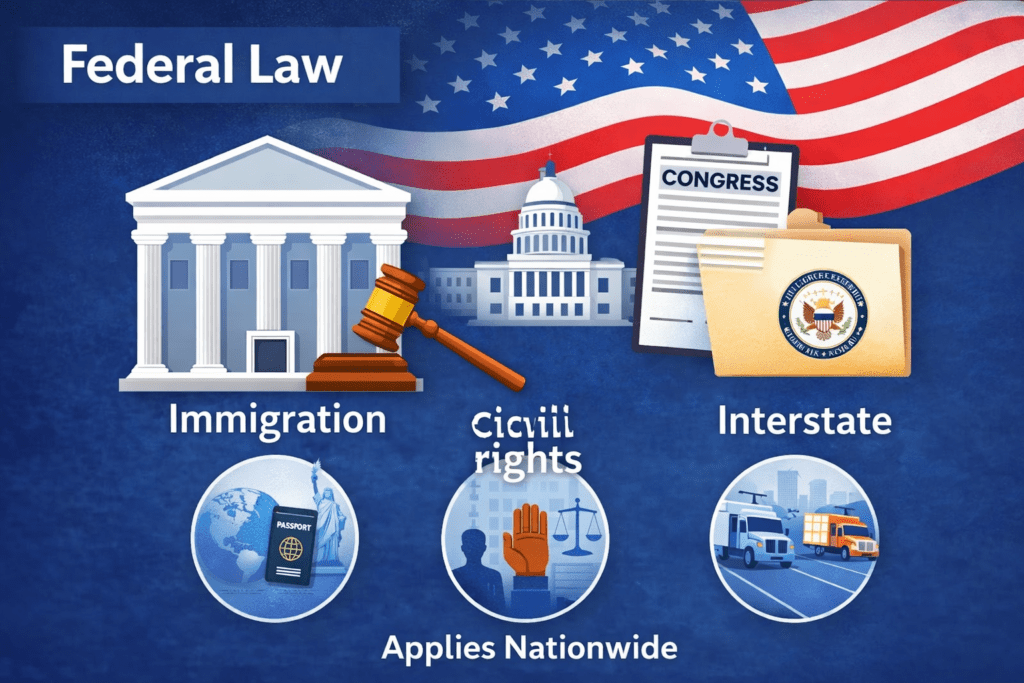
Federal laws are designed to address issues that affect the country as a whole rather than a single state. Common areas governed by federal law include immigration, interstate commerce, constitutional rights, and federal taxation. These laws ensure consistency and uniform standards across all states. For most people, federal law usually comes into play when dealing with nationwide rules like immigration, civil rights, or interstate business.
Examples of federal law include:
- Immigration and citizenship rules
- Civil rights protections under the Constitution
- Regulations involving interstate business and trade
In the Federal law vs state law USA framework, federal law sets the national baseline. States cannot create laws that directly violate federal statutes or constitutional protections.
What Is State Law?
State law consists of rules created and enforced by individual states. Each state has its own constitution, legislature, court system, and administrative agencies. These laws apply only within that specific state’s borders.
State laws govern many aspects of daily life, including property ownership, family law, education policies, and most criminal offenses. Because states have different needs and priorities, their laws can vary significantly. This variation is a key reason people often encounter confusion when moving or doing business across state lines. This is why everyday rules can feel different when you move, work, or do business in another state.
Examples of state law commonly include:
- Marriage, divorce, and child custody rules
- Property and landlord-tenant laws
- State-level criminal offenses and penalties
When comparing state laws vs federal laws, state law focuses on local concerns while federal law addresses national interests.
Key Differences Between Federal and State Law
Think of it like this: federal law is the nationwide rulebook, while state law is your local playbook. Sometimes they align perfectly, sometimes they don’t—and that’s when understanding the differences really matters. The difference becomes clearer when you see how federal and state laws actually affect real-life situations. While both create binding legal rules, their authority, reach, and enforcement mechanisms are different.
Federal law applies nationwide and is enforced through federal courts and agencies. State law applies only within the state and is enforced by state courts and local authorities. This separation allows flexibility while maintaining national standards.
Key distinctions include:
- Scope: Federal law covers national matters; state law handles local issues
- Enforcement: Federal agencies vs state and local authorities
- Jurisdiction: Federal courts vs state court systems
Understanding these distinctions helps individuals and businesses comply with the correct legal framework in any situation involving Federal law vs state law USA.
How Conflicts Between Federal and State Law Are Resolved
Conflicts sometimes arise when state laws differ from federal laws. In these situations, the U.S. Constitution provides guidance through the Supremacy Clause. This principle establishes that federal law takes priority when there is a direct conflict. This is often seen in areas like environmental rules or labor protections, where some states choose stricter standards than the federal minimum.
A well-known real-world example involves California and federal regulations. California often enacts stricter environmental and labor laws than federal standards. In many cases, states are allowed to provide greater protections, but they cannot undermine federal authority.
When conflicts occur:
- Courts examine whether federal law preempts state law
- Judges interpret legislative intent and constitutional limits
- Federal law generally prevails in direct conflicts
This process ensures consistency while still allowing states to innovate within legal boundaries.
Why You Should Know the Difference Between Federal and State Law
Understanding the difference between federal and state law affects real-life decisions every day. For example, federal labor laws set a nationwide minimum wage, but some states require employers to pay a higher state minimum wage. A business that follows only federal standards could still face penalties for violating stricter state requirements.
Because laws can vary by jurisdiction, knowing which system applies helps individuals and businesses avoid compliance mistakes and protect their legal rights.
Situations where legal guidance may be necessary include:
- Starting or expanding a business across state lines
- Resolving employment or contract disputes
- Facing legal action involving multiple jurisdictions
In these cases, understanding the difference between federal and state law can help determine when to consult a qualified attorney.
FAQ’s About Federal and State Law
Can state law override federal law?
No. Under the U.S. Constitution, federal law generally takes priority when there is a direct conflict.
Do all states have the same laws?
No. State laws vary widely, especially in areas such as family law and criminal penalties.
Why do states have different laws?
States are allowed to create laws that reflect local needs and priorities.
When does federal law apply instead of state law?
Federal law applies to nationwide issues such as immigration, civil rights, and interstate commerce.
Can states provide more protection than federal law?
Yes, as long as those protections do not conflict with federal requirements.
Who enforces federal laws?
Federal agencies and federal courts handle enforcement.
Should I know both federal and state laws?
Yes. Many legal situations involve both systems working together.
Conclusion
The distinction between Federal law vs state law USA is a foundational concept in understanding how American law works. Federal laws establish nationwide standards, while state laws address local needs and daily life issues. Together, they create a balanced legal system that combines consistency with flexibility.
Recognizing the difference between federal and state law helps individuals stay compliant, protect their rights, and make informed decisions. In short, knowing how federal and state laws work isn’t just for lawyers; it’s for anyone navigating daily life in the U.S. Whether dealing with employment rules, contracts, or regulatory requirements, this knowledge provides clarity and confidence.
For a broader understanding of how the legal system works overall, explore our pillar guide on Legal Basics in the United States, where these concepts fit into the larger legal framework. Because laws can change over time and vary by state, understanding which rules apply to your situation is essential. When in doubt, speaking with a qualified attorney can provide clarity and peace of mind. This topic connects directly with how courts, jurisdiction, and constitutional authority function across the country.











2 thoughts on “Federal Law vs State Law in the USA: Key Differences & Who Has More Power”