Understanding your constitutional rights is essential for anyone living in the United States because these rights affect everyday situations—not just courtroom cases. These rights are not abstract legal concepts reserved for courtrooms; they directly shape everyday life, personal freedom, and the limits of government power. From speaking freely to receiving fair treatment under the law, constitutional rights in the United States form the foundation of a democratic society.
For most people, constitutional rights become relevant only when something goes wrong—such as during a traffic stop, a workplace conflict, a public protest, or a court case. In these moments, knowing what the Constitution actually protects can help individuals stay calm, informed, and confident.
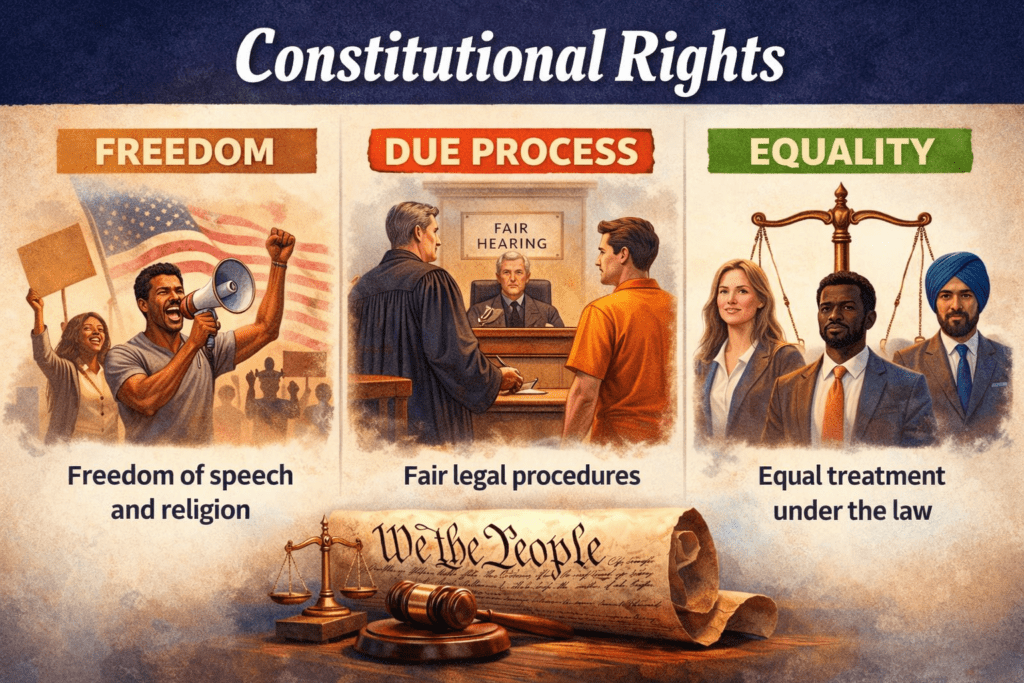
This guide provides a practical, easy-to-understand explanation of basic constitutional rights USA residents rely on every day. It focuses on freedom, due process, and equality—three pillars that define understanding constitutional rights in modern American law. This guide is provided for general legal information purposes only and is not legal advice. Laws can vary by state, and readers should consult a qualified attorney for advice specific to their situation.
What Are Constitutional Rights?
To fully grasp what constitutional rights are and why they matter, it helps to understand their purpose. Constitutional rights are legal protections guaranteed by the U.S. Constitution that limit government power and protect individual freedoms in everyday life—not just in criminal cases or court proceedings. These rights exist to ensure fairness, freedom, and equal treatment under the law.
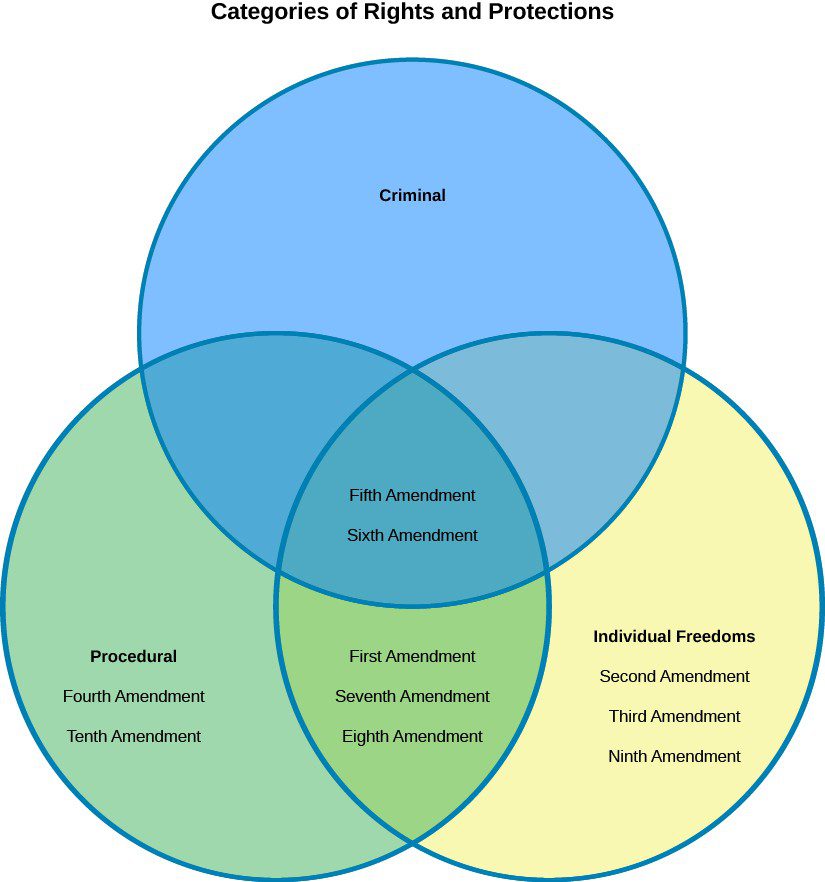
The Constitution establishes the rules that government must follow when interacting with individuals. This includes protection against unlawful searches, unfair trials, and discriminatory treatment. What rights are protected by the US Constitution depends on specific amendments, judicial interpretation, and evolving legal standards.
Unlike ordinary laws, constitutional rights carry the highest legal authority. When government actions conflict with these rights, courts have the authority to intervene, ensuring accountability and protecting individual rights. This is how constitutional rights protect citizens from abuse of power and promote government accountability.
Constitutional Rights in the United States: The Big Picture
The scope of constitutional rights in the United States extends beyond simple freedoms. These rights shape how laws are written, enforced, and challenged. Courts play a crucial role in interpreting constitutional protections and applying them to real-life situations.
At the heart of American constitutional law is the idea that no one—including government officials—is above the law. This principle supports constitutional rights and government limits, ensuring power is exercised within legal boundaries.
For individuals, understanding constitutional rights means recognizing both protections and responsibilities. Rights are powerful, but they exist within a legal framework that balances individual liberty with public safety and order.
Freedom Rights Explained Under the U.S. Constitution
These freedoms primarily come from the First Amendment and protect personal expression in public and private life. Freedom is one of the most recognized aspects of US constitutional rights, but it is also one of the most misunderstood. Constitutional freedom is not absolute; it is protected within defined legal limits.
Freedom of Speech USA
Freedom of speech is one of the most well-known constitutional rights, allowing individuals to express opinions, beliefs, and ideas without unreasonable government interference. This right applies to spoken words, written communication, and symbolic expression. In real life, free speech issues often arise during protests, social media use, workplace expression, or public criticism of government actions.
However, speech that incites violence or poses a direct threat may be restricted. Courts balance free expression with public safety, showing how freedom rights under US constitution function in practice.
Freedom of Religion USA
Freedom of religion USA protects both the right to practice religion and the right not to practice one. Government cannot favor or suppress religious beliefs, ensuring neutrality and personal autonomy.
Freedom of Expression Constitution
The freedom of expression constitution principle extends beyond speech. It includes artistic expression, protest, and symbolic acts. Courts evaluate whether restrictions serve a legitimate purpose without violating fundamental freedoms.
First Amendment Rights Explained
When discussing first amendment rights explained, it is important to understand that these freedoms collectively protect open dialogue and democratic participation. They form the backbone of personal liberty in American society.
Due Process Explained: Fairness Under the Law
Few legal principles are as important as due process explained. Due process ensures that government actions affecting life, liberty, or property follow fair procedures and legal standards. In simple terms, due process exists to prevent unfair or rushed decisions by the government.
Due Process Rights USA
Due process rights USA protect individuals from arbitrary government action. This includes the right to notice, a fair hearing, and an impartial decision-maker when legal consequences are involved.
What Is Due Process Law?
Many ask what is due process law in simple terms. It means the government must follow established legal rules before punishing or depriving someone of rights. This applies in criminal cases, civil disputes, and administrative actions. Due process protections matter most during stressful moments—such as arrests, court hearings, fines, or license suspensions—when government decisions can directly affect a person’s freedom, finances, or future.
Procedural Due Process vs Substantive Due Process
Procedural due process vs substantive due process highlights two dimensions of fairness. Procedural due process focuses on how laws are applied, while substantive due process examines whether laws themselves are fair and reasonable.
Due Process Under US Constitution
Due process under US constitution protects against abuse of power and ensures consistent legal standards. Courts rely on this principle to safeguard individual dignity and justice.
Equal Protection & Equality Under the Law
Equality is a cornerstone of constitutional right to equality and a defining feature of American constitutional law.
Equal Protection Clause Explained
The equal protection clause explained ensures that laws are applied fairly and without discrimination. Government actions must treat similarly situated individuals equally unless there is a valid legal reason to differentiate.
Equality Under the Law USA
Equality under the law means that no one is above the law—and no one should be unfairly targeted by it. This principle is essential for public trust in the legal system and reassures people that fairness is not optional—it is a constitutional requirement, even when cases involve powerful institutions or authorities.
Equal Rights Under US Constitution
Equal rights under US constitution protect against discrimination based on race, gender, religion, and other protected characteristics. Courts scrutinize laws that affect fundamental rights or vulnerable groups.
Discrimination Laws Under Constitution
Discrimination laws under constitution empower courts to strike down policies that violate fairness and dignity. These protections evolve as society’s understanding of equality expands.
Bill of Rights Explained: The Foundation of Freedom
The bill of rights explained provides the first ten amendments to the Constitution, outlining essential freedoms and protections.
These amendments include speech, religion, fair trials, and protection from unreasonable searches. Together, they form the backbone of constitutional amendments explained in American law.
Understanding the Bill of Rights is essential to seeing how constitutional protections operate in everyday life.
Key Amendments That Protect Rights
Certain amendments play a central role in protecting constitutional liberties.
First Amendment Explained
The first amendment explained covers freedoms of speech, religion, press, assembly, and petition. These rights allow citizens to engage openly with government and society.
Fifth Amendment Due Process
Fifth amendment due process protects against self-incrimination and ensures fair legal procedures at the federal level.
Fourteenth Amendment Equal Protection
The fourteenth amendment equal protection clause extends fairness and due process protections to the states, reinforcing national standards of justice.
Constitutional Rights in Everyday Life
In real-world situations, constitutional rights often arise unexpectedly. For example, during a police stop, individuals have due process protections. In public demonstrations, free speech and assembly rights apply. In schools and government workplaces, equal protection principles help prevent unfair treatment.

Constitutional rights in everyday life are more present than most people realize. Interactions with law enforcement, public schools, workplaces, and courts all involve constitutional considerations.
Common real-world examples include:
- Free speech protections during peaceful protests
- Due process rights during legal proceedings
- Equal protection in public services
These examples show how constitutional rights and courts actively shape daily experiences.
Can Constitutional Rights Be Limited?
A common question is can constitutional rights be limited. The answer is yes, but only under specific legal conditions. Courts allow reasonable restrictions when necessary to protect public safety or order.
Restrictions must serve a legitimate purpose and be narrowly applied. This balance preserves liberty while addressing societal needs.
Do Constitutional Rights Apply to Everyone?
Another frequent concern is do constitutional rights apply to everyone. In most cases, constitutional protections apply to all persons within U.S. jurisdiction, not just citizens.
Courts recognize that fundamental rights are tied to human dignity, reinforcing constitutional rights and law enforcement accountability.
FAQ About Constitutional Rights
What are constitutional rights?
They are protections guaranteed by the Constitution that limit government power.
What rights are protected by the US Constitution?
Rights include freedom of speech, due process, and equal protection.
How constitutional rights protect citizens?
They prevent abuse of power and ensure fair treatment.
Can constitutional rights be restricted?
Yes, under limited and legally justified circumstances.
Do constitutional rights apply to non-citizens?
Many protections apply to all persons within U.S. jurisdiction.
What is the role of courts?
Courts interpret and enforce constitutional protections.
Is this legal advice?
No. This is general constitutional law information only.
Why should everyday people understand constitutional rights?
Because these rights affect daily situations such as police interactions, workplace disputes, public expression, and access to fair legal treatment.
To build a broader understanding of U.S. law, explore our complete guide on Legal Basics in the United States.
Conclusion
Understanding constitutional rights explained clearly empowers individuals to recognize freedom, fairness, and equality in action. These rights define the relationship between citizens and government, shaping justice and accountability.
From freedom of speech USA to due process rights USA and equality under the law USA, constitutional protections are not theoretical—they are practical safeguards woven into daily life. When people truly understand their rights, they are better prepared to protect them. Courts rely on these constitutional principles every day to resolve disputes and limit government power.
This guide is designed to help individuals better understand their constitutional rights so they can recognize potential legal issues, ask informed questions, and protect themselves calmly and responsibly when legal situations arise.











1 thought on “Constitutional Rights Explained: Freedom, Due Process & Equality”