Tenant Rights USA is essential for anyone who rents a home, apartment, or room in the United States. Whether you are signing your first lease, facing a rent increase, dealing with unsafe living conditions, or worried about eviction, housing law can feel confusing and intimidating. Many renters believe that once a lease is signed, the landlord controls everything—from repairs to eviction decisions. In real life, that assumption often causes tenants to tolerate problems they do not legally have to accept.
This page serves as a comprehensive overview of tenant housing rights in the United States. It explains core renter protections and links to in-depth guides on eviction laws, landlord responsibilities, rent rules, and state-specific tenant rights.
This guide explains tenant and housing rights in clear, practical language, using real-world situations renters commonly face—such as delayed repairs, sudden rent increases, or unexpected eviction notices. It is written to help renters understand what the law allows, where landlords cross legal lines, and how tenant protections actually work in real life. The goal is not theory, but clarity—so you can recognize problems early, protect yourself, and make informed decisions when housing issues arise.
Tenant and Housing Rights in the United States
At its core, tenant rights in the united states come from a combination of federal housing laws, state statutes, and local ordinances. These laws regulate how rental housing operates, what landlords must provide, and what renters are entitled to expect in exchange for paying rent.
Housing rights apply whether you live in a large apartment complex, rent a single-family home, or occupy a room in someone else’s house. In many situations, tenant protections exist even if you never signed a formal written lease. Courts often recognize oral agreements or implied rental arrangements when rent is paid and accepted.
Importantly, housing laws usa do not require tenants to be “perfect.” In real rental situations, tenants may fall behind on rent, request repeated repairs, or challenge unfair treatment—and those actions alone do not strip away legal protections.
Federal Housing Laws vs. State Tenant Rights Laws
One reason renters feel confused is that tenant legal rights do not come from a single rulebook. Federal law sets nationwide minimum standards, while states—and often cities—add additional protections.
Federal housing laws primarily address discrimination, accessibility, and broad consumer protections. State tenant rights laws go further, covering issues such as eviction procedures, security deposits, habitability standards, and notice requirements. In most cases, when state and federal rules overlap, the law that provides greater protection to the tenant controls.
This layered system means renters in different states may have very different rights, even when facing the same issue. For example, a tenant dealing with a rent increase or eviction notice in California may have protections that do not exist for a tenant in Texas or Florida.
👉 Read our detailed guide on federal vs state tenant laws in the USA
The Right to Habitable and Safe Housing
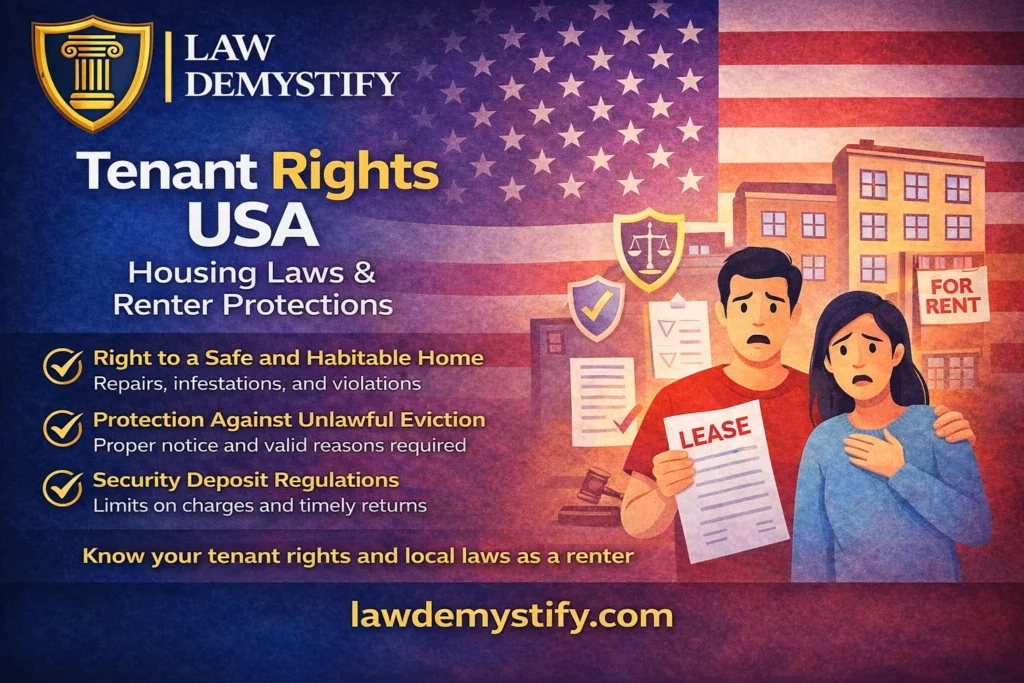
One of the most important rights of tenants usa is the right to live in housing that meets basic health and safety standards. This concept is often referred to as the “implied warranty of habitability.” It exists in nearly every state, regardless of whether it is written into the lease.
Habitability laws require landlords to maintain essential conditions, such as:
- Working plumbing, heat, and electricity
- Structurally safe walls, ceilings, and floors
- Protection from severe mold, pests, or water intrusion
- Compliance with local housing codes
When serious housing code violations occur, tenants often try informal solutions first—texting the landlord, calling repeatedly, or waiting weeks for repairs. When those efforts fail, the law may provide legal options beyond simply complaining.
👉 Learn what makes a rental legally uninhabitable
Landlord Responsibilities Under U.S. Housing Law
Many landlord-tenant disputes arise because renters are unsure what landlords are legally required to do. Landlord responsibilities usa are not optional, and they extend beyond simply collecting rent.
In most jurisdictions, landlords must:
- Keep the property in livable condition
- Make repairs within a reasonable time after notice
- Respect tenant privacy and follow legal entry rules
- Follow proper procedures for rent increases and lease termination
Failure to meet these duties can expose landlords to legal liability. In real disputes, courts often look at how long a landlord ignored repair requests and whether the tenant gave reasonable notice before the issue escalated.
👉 See a complete breakdown of landlord repair and maintenance duties
Tenant Privacy and Landlord Entry Rules
Another core aspect of tenant protection laws involves privacy. Renters do not lose their right to quiet enjoyment simply because they live in someone else’s property. While landlords may need access for repairs or inspections, entry is regulated.
Most states require landlords to give advance notice—often 24 hours—before entering a rental unit, except in true emergencies. Repeated, unannounced visits or harassment can violate tenant rights and may support legal claims, particularly if entry is used to intimidate or pressure a renter.
Privacy violations often arise during disputes over repairs or rent. Knowing these rules helps tenants recognize when landlord behavior crosses from inconvenient into unlawful.
Eviction Laws and Tenant Eviction Rights
Eviction is one of the most stressful housing situations renters face. Many tenants first learn about eviction when they receive a notice on their door or a court paper they do not fully understand.
Landlords generally cannot:
- Lock tenants out without a court order
- Shut off utilities to force a move
- Remove belongings without legal authorization
Instead, eviction typically requires written notice, a waiting period, and a court proceeding. Even when a tenant has violated the lease, landlords must follow statutory steps. Skipping these steps can make an eviction illegal, even when rent is unpaid or lease terms were violated.
Tenant eviction rights are especially strong when eviction is used as retaliation for requesting repairs, reporting code violations, or asserting housing rights.
For many renters, eviction does not begin with a courtroom—it begins with confusion, fear, and unanswered questions.
👉 See how the eviction process works step by step in each state
Rent Increases and Late Rent Rules
Rent issues are another major source of conflict. Rent increase laws usa vary widely by state and city. In many real-world cases, tenants are surprised to learn that a rent increase itself may be legal, but the way it was delivered—without proper notice—was not.
Late rent does not automatically eliminate tenant protections. While landlords can charge late fees and begin eviction proceedings, they must follow legal notice rules. In many states, tenants have the right to “cure” the default by paying overdue rent within a specific timeframe before eviction proceeds.
Understanding these rules helps renters distinguish between lawful enforcement and unlawful pressure tactics.
👉 Read our guide on rent increase laws and late fee limits
Security Deposits and Lease-Related Tenant Rights
Security deposit disputes are among the most common tenant landlord dispute laws cases. Many renters only realize there is a problem weeks after moving out, when the deposit is not returned or deductions are unexplained.
Most states regulate:
- How much a landlord can collect
- How deposits must be stored
- When and how deposits must be returned
Landlords generally cannot keep a security deposit simply because a tenant moved out. Deductions must usually be tied to unpaid rent or documented damage beyond normal wear and tear. Failure to follow deposit laws can result in penalties that exceed the deposit amount itself.
Lease rights also matter when tenants need flexibility. Tenant lease rights may allow renters to break a lease early under certain circumstances, such as military deployment, domestic violence protections, or uninhabitable conditions. Even tenants without a written lease often retain important protections under state law.
👉 Understand security deposit rules and refund deadlines
Housing Discrimination and Fair Treatment of Renters
Housing discrimination remains a serious issue, which is why federal and state laws prohibit landlords from treating tenants differently based on protected characteristics. Housing discrimination laws usa cover rental advertising, application screening, lease terms, and eviction decisions.
Discrimination can be subtle. Unequal enforcement of rules, selective rent increases, or refusal to make reasonable accommodations may violate fair housing standards. These protections apply at every stage of the rental relationship, not just when signing a lease.
👉 Learn how to recognize and report housing discrimination
Tenant Rights Without a Written Lease
A common misconception is that renters without a written lease have no rights. This belief often leads tenants to move out quietly or accept unfair treatment, even though the law may still recognize a valid tenancy. In reality, tenant rights without lease protections exist in every state. When rent is accepted, most courts recognize a legal tenancy—often month-to-month—with enforceable rights and obligations.
These tenants are still protected by habitability laws, eviction rules, and anti-discrimination statutes. Landlords must still provide notice before terminating the tenancy and cannot bypass legal eviction procedures simply because no lease exists.
👉 See what rights apply to verbal and month-to-month rentals
When Landlord Actions Become Illegal
Not every unfair action is illegal, but many common landlord practices cross legal lines. Actions such as retaliation, self-help eviction, or ignoring serious safety issues can violate landlord tenant laws usa. The challenge for renters is recognizing when a situation moves from frustrating to unlawful.
Documentation matters more than most tenants realize. In real disputes, written records often carry more weight than verbal explanations, even when the tenant’s story is truthful.
Tenant Rights by State (Overview)
Tenant and housing laws vary significantly by state. Eviction timelines, rent increase rules, repair remedies, and notice requirements differ based on state and local law.
Because of these differences, renters should always review state-specific tenant rights before taking action.
While this guide explains nationwide principles, state tenant rights laws ultimately control many details. Some states are considered more tenant-friendly, while others favor property owners.
👉 Explore tenant rights laws by state
Practical Steps Tenants Can Take When Problems Arise
Housing disputes often escalate because tenants wait too long or respond informally. A proactive, documented approach protects renters rights usa and reduces risk. Written communication, clear timelines, and knowledge of local housing authorities can strengthen a tenant’s position.
At this stage, it becomes important to understand how enforcement actually works, what remedies exist beyond moving out, and when legal guidance becomes necessary, especially in eviction-related disputes where timelines move quickly.
Enforcing Tenant Rights Through Documentation and Formal Notice
When housing problems persist, the way a tenant responds often determines the outcome. Courts and housing agencies rely heavily on written records, not verbal claims. For renters trying to protect tenant rights usa, documentation is not optional—it is foundational.
Tenants should keep copies of leases, payment receipts, maintenance requests, inspection reports, photos, and written communications with landlords. Even text messages or emails can become important evidence if a dispute escalates. When repairs are needed, requests should be made in writing and dated. If a landlord fails to respond, follow-up notices create a paper trail showing reasonable effort.
👉 Learn how tenants should document housing issues properly
Government Agencies and Tenant Protection Enforcement
Beyond the courts, several government bodies help enforce housing rights usa. Local housing departments, building inspectors, and health agencies have authority to investigate unsafe living conditions and code violations. Their inspection reports often carry significant legal weight.
At the federal level, housing discrimination complaints are handled through administrative enforcement channels. State agencies may oversee landlord licensing, consumer protection issues, or rent regulation compliance. These systems exist to correct violations without immediately resorting to lawsuits, though legal action remains an option when administrative remedies fail.
Understanding which agency handles which issue saves time and prevents misdirected complaints.
Retaliation Against Tenants Is Often Illegal
A frequent concern among renters is retaliation—when a landlord responds to tenant complaints by raising rent, reducing services, or threatening eviction. In many states, retaliation is explicitly prohibited. Actions taken shortly after a tenant asserts legal rights may be presumed unlawful under tenant protection laws.
Examples of protected tenant actions include requesting repairs, reporting housing code violations, or participating in tenant organizations. While landlords may still enforce legitimate lease terms, they cannot punish tenants for exercising lawful rights. Recognizing retaliation early allows tenants to respond strategically rather than reactively.
Special Tenant Protections in Vulnerable Situations
Certain situations trigger enhanced tenant protections. Survivors of domestic violence, active-duty service members, and tenants with disabilities may have additional rights under federal or state law. These protections can affect lease termination, eviction defenses, and reasonable accommodations.
For example, disability-related accommodations may require landlords to modify policies or physical features of a property when reasonable. These rights apply broadly and are enforceable regardless of a landlord’s personal preferences or assumptions.
Understanding these protections is especially important for tenants who fear losing housing due to circumstances beyond their control.
Tenant Rights in Subsidized and Public Housing
Renters in subsidized or public housing programs often have stronger procedural protections than tenants in private-market rentals. Termination of tenancy in these settings usually requires cause, detailed notice, and the opportunity for a hearing.
However, program-specific rules can be complex. While tenant rights in the united states apply broadly, subsidized housing tenants must also follow program compliance requirements. Violations can trigger both lease enforcement and benefit consequences, making early legal guidance particularly valuable.
When Legal Action Becomes Necessary
Not every housing dispute requires a lawyer, but some situations demand immediate legal attention. Imminent eviction, ongoing unsafe conditions, discrimination claims, or large financial disputes often exceed what informal resolution can address.
Housing attorneys help tenants evaluate risk, understand local law, and choose effective strategies. Even a brief consultation can clarify whether a landlord’s actions violate landlord-tenant laws or fall within legal boundaries. Early intervention frequently prevents small disputes from becoming housing crises.
👉 When to contact a tenant rights attorney
Common Myths About Tenant and Housing Rights
Misinformation causes renters to give up rights they already have. One common myth is that landlords can evict tenants “for any reason.” While leases and state law may allow termination in certain cases, eviction procedures are regulated and cannot bypass due process.
Another misconception is that accepting poor conditions is the price of affordable rent. Habitability standards apply regardless of rental price or neighborhood. Similarly, tenants often believe they have no rights without a written lease, which is rarely true under state law.
Dispelling these myths helps renters assert tenant and housing rights with confidence.
Long-Term Housing Stability and Tenant Awareness
Housing law is not only about resolving disputes—it is about preventing them. Tenants who understand their rights communicate more effectively, spot red flags earlier, and make informed rental decisions. This awareness contributes to housing stability, fewer conflicts, and better outcomes for both tenants and landlords.
Strong knowledge of housing laws usa empowers renters to move from uncertainty to control. While no guide replaces professional legal advice, understanding the legal landscape reduces vulnerability and improves decision-making.
Frequently Asked Questions About Tenant and Housing Rights
What are tenant rights in usa?
Tenant rights include the right to habitable housing, protection from illegal eviction, privacy, fair treatment, and due process under federal and state housing laws. These rights apply broadly, regardless of rental type.
Can a landlord evict without notice?
In most cases, no. Eviction generally requires written notice and a court process. Lockouts or utility shutoffs used to force a tenant out are often illegal.
What are my rights as a renter if my apartment is unsafe?
Renters have the right to safe, livable housing. When serious conditions are ignored, tenants may have legal remedies such as repair demands, inspections, or lease termination, depending on state law.
What is illegal for a landlord to do?
Illegal actions commonly include retaliation, discrimination, self-help eviction, refusing essential repairs, and violating notice or deposit laws. Legality depends on state statutes and local ordinances.
Do tenant rights vary by state?
Yes. While federal law sets baseline protections, states control many details such as eviction timelines, rent rules, and repair remedies. Local law can add further protections.
Can tenant rights apply without a written lease?
Yes. Paying rent and occupying a property usually creates a legal tenancy with enforceable rights, even without a formal lease agreement.
When should a tenant contact a housing lawyer?
Tenants should seek legal guidance when facing eviction, discrimination, unsafe living conditions, or significant financial disputes involving rent or deposits.
Tenant and Housing Rights
Navigating rental housing can feel overwhelming, especially when problems arise unexpectedly. For many renters, understanding tenant rights usa is what turns confusion and fear into informed decision-making.
For tenants facing serious or urgent housing issues, learning the law is the first step—seeking qualified legal help is often the next.