Many people hear legal terms on the news or social media and assume that all legal cases work the same way. In reality, the U.S. legal system is divided into two major categories—civil law and criminal law. Confusion happens because both involve courts, judges, and lawyers, yet their goals and outcomes are very different. This is why the topic of civil vs criminal law USA is so important for everyday understanding. For most people, the legal system feels distant until it suddenly becomes personal. That moment is often stressful, confusing, and unexpected.
Knowing the difference matters more than most people realize. Whether you’re dealing with an insurance dispute, a business disagreement, or a police investigation, understanding which type of law applies can shape your expectations, your rights, and your next steps. Many legal problems escalate simply because people misunderstand what kind of case they are facing.
Everyday situations often blur the lines. A car accident may involve an insurance claim, a lawsuit, and sometimes even criminal charges. A workplace dispute may stay civil—or turn criminal if fraud is involved. Learning how civil and criminal law differ helps you respond calmly, protect yourself, and seek the right kind of legal help at the right time.
Many people only realize which type of law applies after receiving a legal notice or court paperwork.
What Is Civil Law in the United States?
Civil law focuses on resolving disputes between individuals, businesses, or organizations. When people ask for civil law explained USA, the simplest definition is this: civil law is about fixing harm and providing compensation, not punishment. These cases usually involve disagreements where one party claims another caused financial loss, injury, or breach of duty.
The main purpose of civil law is fairness and resolution, not punishment. Courts aim to restore the injured party as much as possible through money damages or court orders. There is no jail time involved. Instead, judges decide whether someone should pay compensation or take corrective action. Civil cases often arise from everyday interactions and contracts that go wrong. In many civil cases, the real outcome is often negotiation or settlement rather than a courtroom trial.
Common civil law cases include:
- Contract disputes between businesses or individuals
- Insurance claims and coverage disagreements
- Property, rental, and landlord-tenant issues
These are the kinds of legal issues many people face at least once in their lives, often without realizing they fall under civil law. In civil cases, a private individual or business files the lawsuit. The person bringing the case is called the plaintiff, and the accused party is the defendant. The goal is accountability, not punishment.
What Is Criminal Law in the United States?
Criminal law deals with actions considered harmful to society as a whole. Unlike civil disputes, criminal cases are about enforcing laws and protecting public safety. The purpose of criminal law is to deter wrongdoing, punish unlawful behavior, and maintain social order.
In criminal cases, the government brings charges against a person accused of breaking the law. This means the case name often includes “The State” or “The United States.” The accused is known as the defendant, and the outcome can include serious penalties that affect personal freedom.
Common criminal law cases include:
- Theft, fraud, and financial crimes
- Assault, robbery, and violent offenses
- Serious violations such as drug trafficking or weapons charges
The government plays a central role because crimes are seen as offenses against society, not just one individual. Convictions can result in fines, probation, or jail time, depending on the severity of the offense. Even an arrest without a conviction can have long-term consequences for employment, licensing, and reputation.
Key Differences Between Civil and Criminal Law
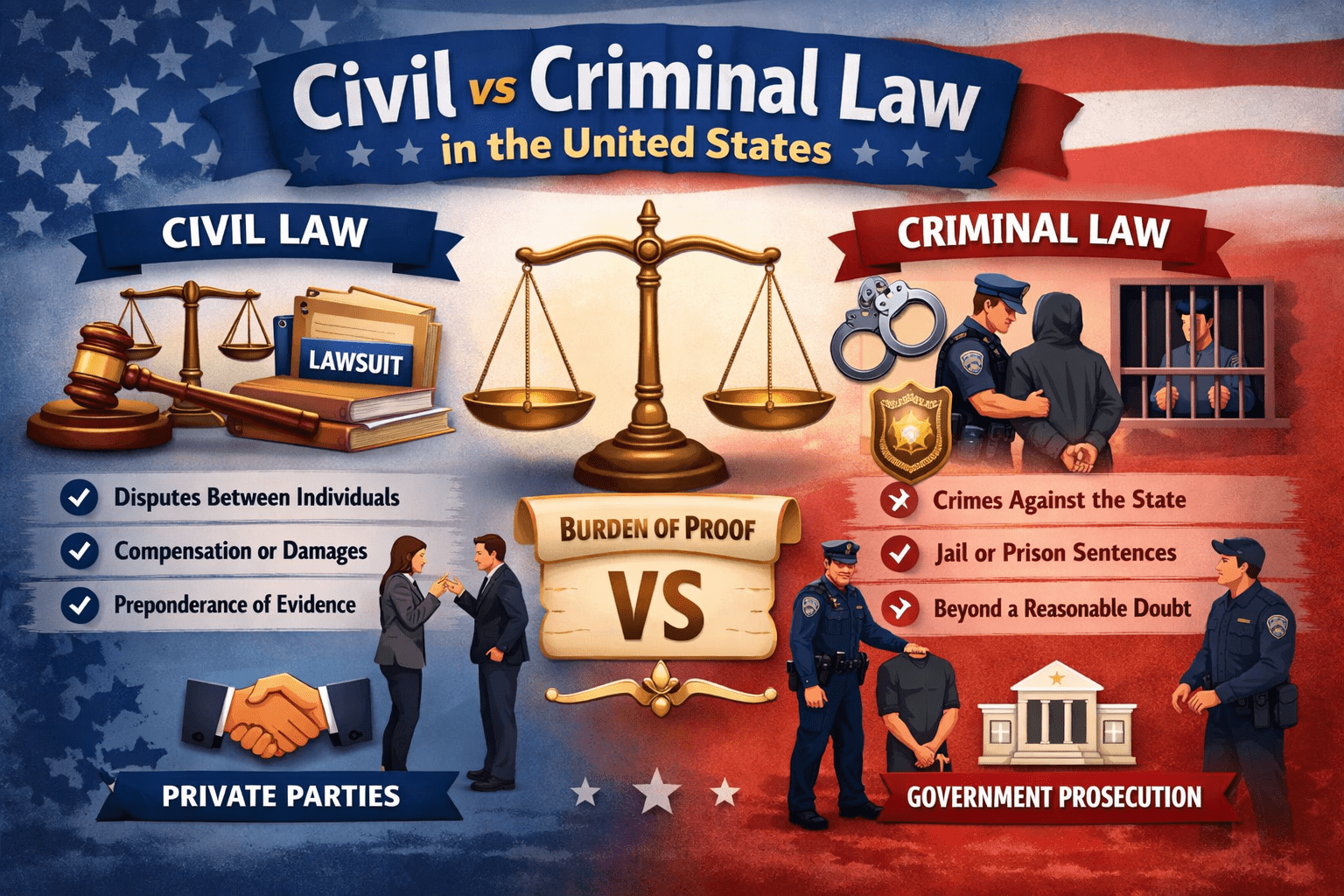
Understanding the difference between civil and criminal law starts with recognizing their core purpose. Civil law resolves private disputes, while criminal law addresses behavior that violates public laws. Although both use courts, their structure and outcomes differ significantly.
In civil cases, individuals or businesses bring the lawsuit. In criminal cases, the government prosecutes the accused. This distinction affects how cases are handled, investigated, and what consequences a person may ultimately face.
Another major difference is the burden of proof. Civil cases require proof that something is more likely than not to be true. Criminal cases require proof beyond a reasonable doubt, a much higher standard. Outcomes also differ sharply—civil cases result in compensation or court orders, while criminal cases can lead to penalties such as incarceration.
These differences exist to balance fairness, accountability, and public safety within the legal system.
Civil vs Criminal Law in Real-Life Situations
Real life doesn’t always fit neatly into legal categories. Many situations involve both civil and criminal law at the same time, which is why understanding civil vs criminal law USA is essential.
Take a car accident, for example. Situations like this often catch people off guard, especially when they are already dealing with stress or financial pressure. If one driver causes injuries, the injured party may file a civil lawsuit for medical expenses and lost wages. If the at-fault driver was intoxicated, the state may also file criminal charges. One incident, two different legal paths.
Insurance fraud is another example. A disputed insurance claim may begin as a civil matter. However, if evidence shows intentional deception, criminal charges may follow. This overlap often surprises people and leads to costly mistakes when legal advice is delayed.
Understanding how these systems interact helps individuals respond appropriately and protect their rights in complex situations.
Penalties vs Compensation
One of the clearest distinctions between civil and criminal cases is the outcome. Civil cases focus on compensation. If the court rules in favor of the plaintiff, the defendant may be required to pay money, honor a contract, or stop certain actions.
Criminal cases focus on penalties. These are designed to punish unlawful behavior and deter future offenses. Penalties may include fines, probation, mandatory programs, or jail time. The goal is accountability to society, not repayment to a victim—though restitution may sometimes be ordered.
Outcomes differ because the goals of these two systems are fundamentally different. Civil law seeks to make someone whole again. Criminal law seeks to uphold public order. Knowing this difference helps people understand what is realistically at stake in their legal situation.
When Does Each Type of Law Apply?
Identifying whether a situation is civil or criminal starts with asking one question: who was harmed? If the harm is primarily personal or financial, it is usually civil. If the harm affects public safety or violates criminal statutes, it becomes criminal.
Some cases begin as civil matters and later become criminal. For example, repeated financial misconduct may first result in lawsuits, but criminal charges can follow if intent and illegality are proven. This progression often confuses beginners.
Common misunderstandings include assuming that all court cases involve jail or believing civil cases are “minor.” In reality, civil judgments can involve significant financial consequences, while criminal cases can permanently affect freedom and reputation.
Why Understanding the Difference Matters
Legal confusion can lead to poor decisions. Misunderstanding whether a matter is civil or criminal may cause delays, missed deadlines, or unnecessary fear. Clear knowledge helps people act confidently and strategically. Clarity in these moments can make a difficult situation feel more manageable.
Understanding these differences also sets expectations. Civil cases take time and negotiation. Criminal cases move faster and involve stricter rules. Knowing what process you are entering helps you prepare emotionally and financially.
Most importantly, understanding the distinction helps you recognize when professional legal help may be necessary. Early guidance can prevent mistakes that worsen the outcome of a case, whether civil or criminal. Many people wait too long to seek guidance simply because they misunderstand what type of case they are facing.
FAQs
Is civil law less serious than criminal law?
No. Civil cases can involve large financial judgments and long-term consequences, even without jail time.
Can the same act be both civil and criminal?
Yes. Many incidents, such as assaults or fraud, can result in both civil lawsuits and criminal charges.
Do civil cases always go to court?
No. Many civil cases settle through negotiation or mediation before trial.
Who pays in a civil case?
If the defendant is found liable, they typically pay damages or compensation ordered by the court.
Does criminal law apply the same in every state?
Criminal laws vary by state, though many principles are consistent nationwide.
Do I need a lawyer for a civil case?
Not always, but legal guidance is strongly recommended for complex or high-value claims.
Can a civil case turn into a criminal case later?
Yes. If new evidence shows illegal conduct, criminal charges may follow.
Most people don’t think about the legal system or their rights until something suddenly goes wrong—an issue at work, a notice from a court, or a dispute that feels bigger than expected. In those moments, confusion is common and decisions are often made under pressure. To build clarity from the ground up, it helps to understand how the U.S. legal system works and where courts, judges, and jurisdiction fit into the picture. At the same time, knowing your basic legal rights as a U.S. resident helps you recognize what protections apply in everyday situations, long before problems escalate. Together, these guides provide a practical foundation that makes the law feel less intimidating and more manageable in real life.
Conclusion
Understanding civil vs criminal law USA gives clarity in moments that often feel overwhelming. Civil law resolves disputes and compensates harm. Criminal law enforces public safety and punishes unlawful behavior. Each serves a distinct and essential role in the U.S. legal system.
Basic legal knowledge empowers better decisions. Whether dealing with an insurance claim, a business conflict, or a serious accusation, knowing the difference between civil and criminal law helps you respond wisely and protect your future.
For readers who want a broader understanding of how the U.S. legal system works, explore our Legal Basics in the United States (Beginner’s Guide). A clear understanding today can prevent costly mistakes tomorrow. When people understand how the law works, they are less likely to panic and more likely to make informed choices. This kind of knowledge creates confidence, especially when the stakes feel high.