The United States legal system exists to create order, protect individual rights, and resolve disputes fairly. At its core, it ensures that laws are applied consistently and that conflicts between people, businesses, or governments are settled through an organized process. For anyone trying to understand how the US legal system works, the structure can feel overwhelming at first because it combines federal authority, state power, and constitutional rules. For most people, the legal system only becomes visible when something suddenly goes wrong. At that point, confusion and stress often take over.
Confusion often arises because there is no single, one-size-fits-all court system. Different courts handle different types of cases, and jurisdiction determines where a legal issue must be filed. News coverage, TV shows, and social media tend to oversimplify these concepts, leaving beginners unsure about how real cases actually move through the system. This guide is written for beginners who want a clear, non-technical understanding of how the U.S. legal system works in real-life situations.
Understanding the basics of courts, judges, and jurisdiction is not just academic—it has real consequences in everyday situations. It helps people make informed decisions during lawsuits, criminal matters, contract disputes, and business transactions. A clear foundation prevents costly mistakes and unrealistic expectations when legal issues arise.
Structure of the U.S. Legal System
The U.S. legal system is built on three branches of government: Legislative, Executive, and Judicial. Each branch plays a distinct role to maintain balance and prevent abuse of power. This structure ensures that no single branch dominates the legal process.
The Legislative Branch creates laws. Congress passes statutes that define legal rights, duties, and penalties. The Executive Branch enforces those laws through agencies, law enforcement, and prosecutors. The Judicial Branch interprets laws and resolves disputes through courts. This separation of powers is essential to fairness and accountability.
What makes the system unique is how these branches interact without overlapping authority. Courts cannot write laws, lawmakers cannot decide cases, and enforcement agencies cannot interpret constitutional meaning on their own. This design shapes how US legal system works in practice and protects individual freedoms while maintaining order. Together, these branches are designed to keep the legal system fair, balanced, and accountable.
The Court System
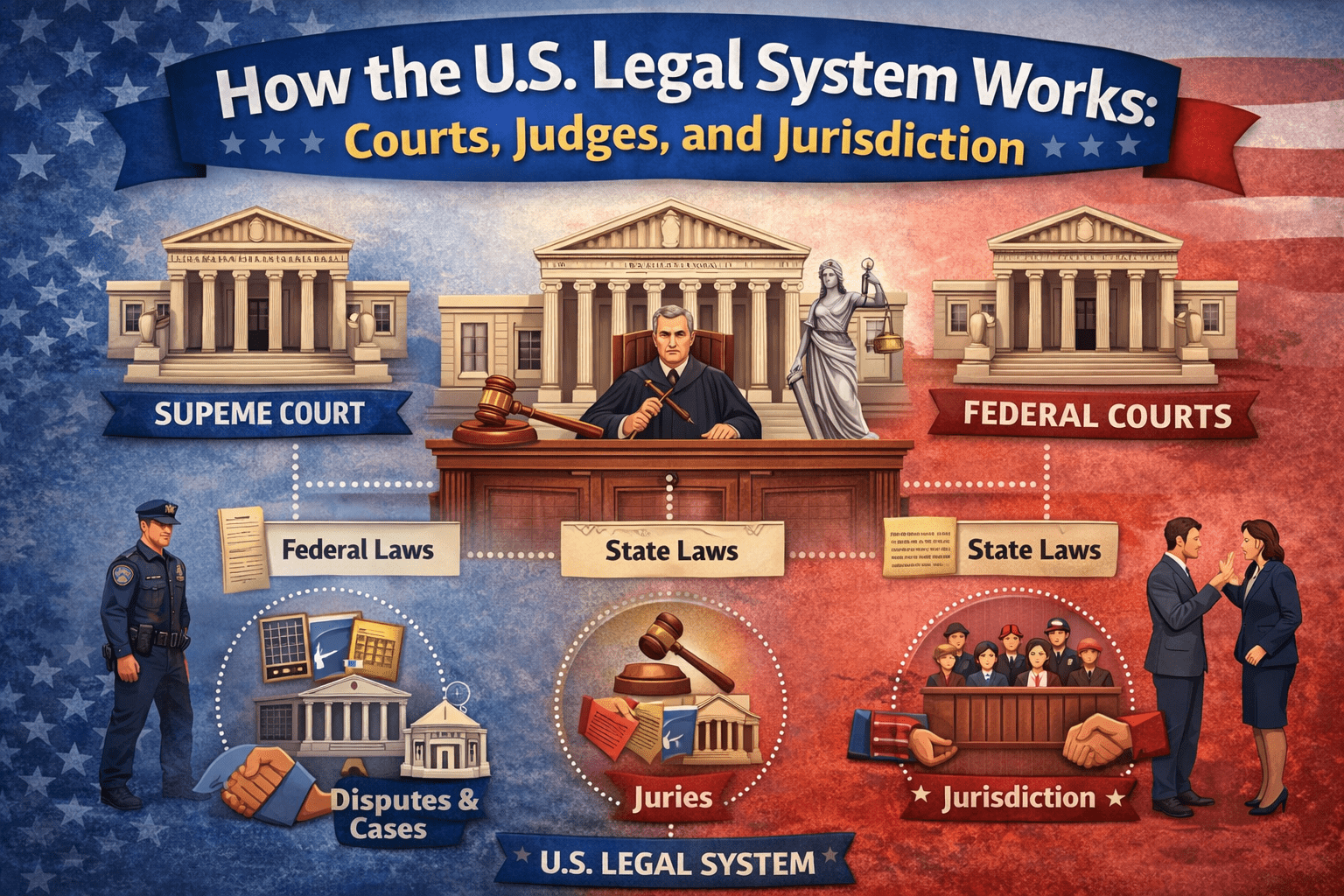
When people search for US court system explained, they are usually trying to understand the difference between federal and state courts. The United States operates under a dual court system, meaning federal and state courts exist side by side, each with its own authority.
Federal courts handle cases involving federal laws, constitutional issues, and disputes between states or citizens of different states. State courts handle most everyday legal matters, including family law, contracts, property disputes, and most criminal cases. Each system operates independently but follows similar procedural principles. This is why two similar legal problems can end up in completely different courts, depending on the type of issue involved.
Most court systems follow a clear hierarchy, which determines how cases move forward:
- Trial courts, where cases begin and evidence is presented
- Appellate courts, which review trial court decisions
- United States Supreme Court, which resolves constitutional and federal law disputes
This layered structure ensures cases are reviewed carefully and legal errors can be corrected.
How Jurisdiction Works
Jurisdiction determines whether a court has the legal authority to hear a case. In simple terms, jurisdiction in US law answers the question: “Which court is allowed to decide this matter?” For example, filing a small contract dispute in federal court instead of state court can result in the case being dismissed before it is ever heard.
There are several types of jurisdiction. Subject-matter jurisdiction refers to the type of case a court can hear, such as criminal, civil, or federal issues. Geographic jurisdiction limits courts to cases arising within specific locations. Personal jurisdiction determines whether a court has authority over the individuals or businesses involved. For example, a landlord-tenant dispute is usually handled in state court, while a case involving federal employment laws may belong in federal court.
Jurisdiction rules exist to promote fairness and efficiency. They ensure cases are heard in appropriate locations and by courts qualified to decide specific legal issues. Understanding jurisdiction is critical before starting any legal action.
How Disputes Are Resolved
Legal disputes follow a structured process designed to encourage fairness and resolution. While details vary, most cases move through similar stages regardless of court level. This consistency is a key part of how US legal system works in real life.
The process typically begins when one party files a claim or complaint. Evidence is exchanged, witnesses may be identified, and legal arguments are prepared. Many disputes resolve before trial through negotiation or settlement, saving time and expense.
If a case proceeds to trial, a judge or jury evaluates the evidence and applies the law. After a decision, parties may appeal if legal errors are believed to have occurred. For example, a contract dispute may settle during negotiations, while a constitutional challenge may progress through multiple court levels before final resolution. For many people, this behind-the-scenes process is where most legal conflicts are actually resolved.
Many people don’t think about their legal rights until something actually goes wrong—an issue at work, a housing problem, or a dispute with a company. If you want a clear, practical overview of the protections that affect everyday life—especially when problems arise unexpectedly—explore our guide on Basic Legal Rights Every U.S. Resident Should Know.
FAQs
Why do people get confused about courts and jurisdiction?
Because similar legal issues can fall under different courts depending on location, parties involved, and the type of law, which is not always obvious to beginners.
What is the highest court in the United States?
The highest court is the United States Supreme Court, which decides constitutional and federal law issues.
Can cases move from state court to federal court?
Yes. Certain cases can be transferred if federal jurisdiction applies.
Do all cases go to trial?
No. Many cases settle or are dismissed before trial.
Who decides cases—judge or jury?
It depends on the case type and whether a jury trial is requested.
Why does jurisdiction matter so much?
Without proper jurisdiction, a court cannot legally decide a case.
Are federal courts more powerful than state courts?
They are not more powerful, just different in authority and scope.
How long do court cases usually take?
Timelines vary widely based on complexity, court level, and how quickly the parties work toward resolution.
Conclusion
Understanding courts, judges, and jurisdiction provides clarity in a system that often feels complex. The structure of federal and state courts, combined with clear jurisdictional rules, ensures fairness, consistency, and accountability. Knowing how the US legal system works helps individuals navigate disputes, manage expectations, and protect their rights.
A basic grasp of US court system explained principles empowers smarter decisions in legal and business matters. Jurisdiction, in particular, determines where justice begins. For a broader foundation, you can explore our pillar guide on Legal Basics in the United States (Beginner’s Guide). Strong legal knowledge today can prevent serious problems tomorrow. When people understand how the court system works, they are less likely to feel overwhelmed and more prepared to make informed decisions.