How This Guide Helps You
This guide helps readers understand how different areas of U.S. law connect. From employment rules to civil disputes, it provides a foundation that supports deeper learning across related legal topics. It is designed to give beginners a clear starting point while also helping readers recognize when more detailed legal information may be relevant.
Understanding the legal basics in the United States is essential for anyone living, working, or doing business in the country. Yet for many people, the law feels intimidating, complicated, and difficult to approach. Legal language can seem confusing, and the structure of the system is often misunderstood. That confusion can lead to costly mistakes, missed rights, or unnecessary stress.
Whether you’re signing a lease, starting a job, or dealing with a dispute, U.S. law affects your daily life more than you may realize. This guide is written to change that. If you are new to American law or simply want a clearer foundation, this introduction to US law explains how the system works in practical, real-world terms. Whether you are a beginner seeking clarity or a professional wanting a stronger legal foundation, this article provides basic law knowledge USA residents need to navigate everyday life with confidence. For most people, the law only becomes visible when something goes wrong. But in reality, it quietly shapes everyday decisions long before any problem arises.
This content is legal information only and provided as educational legal content for general understanding
What the Law Really Is
At its core, the legal basics in the United States refer to the rules and principles that govern behavior, resolve disputes, and protect individual rights. Law is not just about courts and lawsuits. It quietly influences everyday decisions, responsibilities, and protections, often without people realizing it.
The American legal system is built on written laws, court interpretations, and enforcement mechanisms. Laws define acceptable conduct and establish consequences when those rules are violated. From signing a contract to driving a car, legal rules are constantly at work in the background.
Understanding law basics USA helps individuals recognize when they have rights, when they have obligations, and when legal guidance may be necessary. This foundation allows people to make informed choices rather than reacting to legal problems after they arise.
U.S. Legal System for Beginners: A Clear Overview
The US legal system for beginners can be understood by focusing on structure and purpose. The system is designed to be balanced, with no single branch holding unchecked power.
The system includes legislatures that create laws, courts that interpret laws, and executive agencies that enforce them. This separation ensures fairness and accountability. Courts rely on written statutes and prior decisions to resolve disputes, providing consistency across cases.
An overview of US legal system principles shows that the law is not static. It evolves as society changes, but it always operates within defined rules. This structure allows individuals and businesses to plan their actions with reasonable certainty.
Why It Matters in Daily Life
Many people assume law only matters when something goes wrong. In reality, understanding US law is about prevention as much as resolution. Knowing basic legal principles helps avoid disputes, protect assets, and recognize risks before they escalate. This is why a basic understanding of the law can be just as important as knowing your financial or professional responsibilities.
From employment agreements to consumer rights, legal rules shape everyday transactions. Even simple actions, such as renting an apartment or starting a small business, are governed by legal frameworks.
Having basic law knowledge USA residents rely on can reduce uncertainty and empower better decision-making. Legal awareness is not about confrontation; it is about preparation.
Legal System Explained USA: How the System Works
A legal system explained USA approach focuses on how disputes are handled. When a legal issue arises, the process typically begins with a claim or charge. Evidence is gathered, arguments are presented, and a judge or jury applies the law to reach a decision.
Most legal matters are resolved before trial. Negotiations, settlements, and dismissals are common. This practical reality is an important part of how the law functions efficiently.
Understanding how US legal system works provides clarity about what to expect and when legal representation may be helpful.
Introduction to US Law: Sources of Legal Authority
An effective introduction to US law must explain where laws come from. The American legal framework includes constitutional law, statutory law, administrative regulations, and case law.
The U.S. Constitution is the highest legal authority. Federal and state legislatures pass statutes, while agencies create regulations to enforce those statutes. Courts interpret these laws through decisions that form legal precedent.
This basic legal framework USA ensures stability while allowing adaptation over time.
Federal Law vs State Law: Understanding the Difference
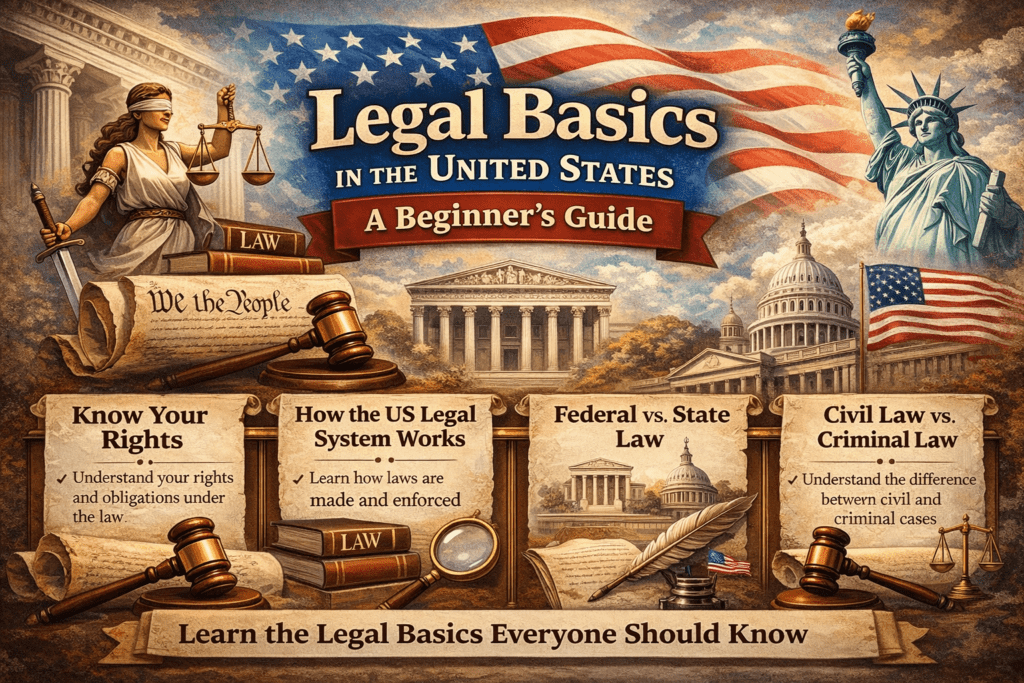
One of the most important concepts in American law is federal law vs state law. The United States operates under a dual system, meaning both federal and state governments have legal authority.
Federal law applies nationwide and covers matters like immigration, constitutional rights, and interstate commerce. State law governs issues such as property rights, family law, and most criminal offenses.
This difference is often noticed when people move to a new state and discover that familiar rules no longer apply in the same way. The difference between federal and state law USA explains why laws can vary by location. When conflicts arise, federal law generally prevails, but states retain significant autonomy.
How State Laws Differ in the USA
Understanding how state laws differ in USA is critical for residents and businesses. States have their own constitutions and legal codes, allowing them to address local needs.
For example, employment rules, liability standards, and consumer protections can vary widely. This flexibility creates diversity but also requires awareness.
The federal and state legal system USA works together to balance national consistency with local control.
Civil vs Criminal Law USA: Key Differences Explained
A core concept in civil vs criminal law USA is purpose. Criminal law addresses offenses against society, while civil law resolves disputes between private parties.
Criminal cases are prosecuted by the government and may result in penalties such as fines or imprisonment. Civil cases usually involve compensation for harm caused.
The difference between civil and criminal law affects procedures, burdens of proof, and outcomes. Understanding this distinction helps people recognize the nature of their legal issues and respond in the right way.
Examples of civil and criminal cases USA show how similar facts can lead to different legal paths depending on the harm involved.
What Is Civil Law in the USA?
What is civil law in USA refers to the branch of law that handles non-criminal disputes. These cases often involve contracts, property damage, personal injury, or family matters.
The goal of civil law is typically to restore losses rather than punish wrongdoing. Compensation is the primary remedy.
Understanding civil law principles is essential for protecting financial and personal interests.
What Is Criminal Law in the USA?
What is criminal law in USA focuses on conduct considered harmful to society. Crimes range from minor offenses to serious felonies.
The government must prove guilt beyond a reasonable doubt. This high standard protects individual rights while allowing enforcement of public safety laws.
Criminal law plays a central role in maintaining order and accountability.
US Laws Explained Simply: Common Legal Terms
For beginners, legal language can be intimidating. Common legal terms explained in plain language make the system more accessible.
A plaintiff brings a lawsuit, while a defendant responds to it. A lawsuit is a formal legal claim filed in court. A legal settlement is an agreement resolving a dispute without trial. An appeal in law asks a higher court to review a decision.
Learning legal terms for beginners USA builds confidence and understanding.
Basic Legal Rights USA Residents Should Know
Knowing basic legal rights USA residents have is fundamental. These rights include freedom of speech, due process, and equal protection under the law.
Legal rights of US residents also extend to employment protections, housing rights, and consumer safeguards. These rights apply broadly, though details vary by jurisdiction. Many people are surprised to learn how broad these protections are until they actually need them.
Understanding rights allows individuals to act with confidence rather than uncertainty.
Rights and Responsibilities Under US Law
With rights come obligations. Rights and responsibilities under US law work together to maintain balance.
Individuals must comply with laws, honor contracts, and respect others’ rights. Understanding legal responsibilities USA residents face helps avoid disputes and penalties.
Law is not only protective—it is also directive.
Is US Law the Same in Every State?
A common question is is US law same in every state. While federal law provides a national framework, state laws introduce variation.
This diversity explains why legal advice must often be location-specific. Awareness of differences is essential for compliance and protection.
Do I Need to Understand Law Basics in USA?
Many people ask, do I need to understand law basics in USA? The answer is yes. Even basic legal knowledge can reduce risk, build confidence, and improve everyday decision-making.
This level of awareness can prevent costly mistakes and help protect long-term interests.
Practical Examples of Legal Rules in Everyday Life
Legal rules affect daily activities such as contracts, driving, employment, and dispute resolution. Understanding these rules helps individuals navigate life more effectively.
Key areas include:
- Employment and workplace rights
- Housing and rental agreements
- Consumer transactions
These examples show why us laws explained simply matter in real life.
Frequently Asked Questions About the US Legal System
What is law in the United States?
Law is a system of rules created to regulate behavior, resolve disputes, and protect rights.
How does the US legal system work?
It operates through legislatures, courts, and enforcement agencies applying written laws.
What are basic laws in USA?
They include constitutional rights, federal statutes, and state regulations.
Who has more power federal or state law?
In most cases, federal law prevails when a direct conflict arises.
What is the difference between federal and state law USA?
Federal law applies nationwide; state law governs local matters.
What is civil vs criminal law explained USA?
Civil law resolves disputes; criminal law punishes offenses.
What is a legal settlement?
An agreement resolving a dispute without trial.
What is an appeal in law?
A request for higher court review.
What are individual rights under US law?
They include constitutional and statutory protections.
Is this legal advice?
No. This is general legal information USA only.
Conclusion: Building Confidence Through Legal Understanding
Learning the legal basics in the United States is not about mastering complex statutes. It is about understanding structure, rights, and responsibilities. When understanding law basics becomes part of everyday awareness, individuals are better equipped to protect themselves and make informed choices.